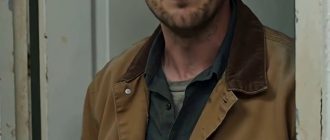
Loretta Shaw woke up at four-thirty in the morning, same as she had every day for the past twenty-three years. Not because of an alarm. Because her body had forgotten how to sleep past dawn. She lay in the dark of her small bungalow on Dogwood Lane, listening to the sound of her son Clay’s breathing through the thin wall. A low, steady rhythm she’d learned to read better than her own heartbeat.
Back when he was three and had asthma, she’d slept with a hand on his chest. Her ex-husband, Dale, had been two years gone by then. Packed a duffel bag one Tuesday afternoon and said, “Lori, you wanted this baby, not me. I’m not cut out for it.” The screen door squeaked shut behind him and never opened again.
So she worked. Waitressed at the Waffle Hut on the interstate until her arches collapsed. Stocked shelves overnight at the Piggly Wiggly. Never took a dime from the state, never asked her mama for help. Just kept moving forward, one double shift at a time, until Clay walked across a stage with a diploma and a scholarship to UT Chattanooga’s civil engineering program.
Now he was twenty-three. Five months from graduating with honors. And on a rainy Thursday evening in early March, over meatloaf and mashed potatoes, he said something that made her fork clatter onto her plate.
“Mom. Jasmine and I are getting married.”
Loretta stared at him. “Come again?”
“We’re gonna drive down to the courthouse next month. I wanted you to meet her properly first. Dinner, maybe? This Sunday?”
The way he said *we*—like it was already a done deal, like she was being informed, not consulted—hit her square in the chest. He had that same calm certainty she’d drilled into him as a boy. *A man looks you in the eye, son. Even when it’s hard.*
He was looking her in the eye now.
“Who is she?” Loretta heard the edge in her own voice. Didn’t care.
“She works at the SuperCuts over on Magnolia Avenue. She’s a stylist. And she… she’s twenty-seven.”
Four years older. The math clicked unpleasantly in Loretta’s skull. “Okay,” she said slowly. “And?”
Clay set his fork down. Took a breath like a man about to jump off a high dive. “She’s got a little boy. Tyler. He’s four.”
The kitchen went so quiet that Loretta could hear the drip of the leaky faucet she’d been meaning to fix. *Drip. Drip. Drip.* Each drop landing like a hammer on a nail.
“So you’re telling me,” she said, her voice low and tight, “that you, at twenty-three years old, still in school, are gonna marry a woman with a child? Somebody else’s child?”
“He won’t be somebody else’s. If I marry Jas, he’s mine.”
“Yours!” Loretta shoved her chair back. It scraped the linoleum like a wounded animal. “Do you have any earthly idea what you’re signing up for? Daycare fees? Doctor bills? Preschool, and then kindergarten, and then soccer cleats and field trips and god knows what else? You’re eating ramen three nights a week, Clay. I’ve seen your grocery receipts.”
“I picked up a construction gig,” he said. “Forty hours a week, even with classes. The foreman said he likes my work.”
“So you’ll break your back all day and study all night, and for what? To support a woman you barely know and a kid whose father is probably—”
She stopped herself. But not fast enough.
Clay’s jaw tightened. That muscle in his temple—Dale’s muscle—twitched. “Probably what, Mom?”
Loretta didn’t answer.
“Probably a deadbeat who ran out? Like Dad?” Clay’s voice stayed quiet, but it had a razor’s edge now. “Yeah. He did. Jas has been on her own since Tyler was six months old. No family, no help. Just her and that kid in a one-bedroom off Cherry Street.”
“And now she’s found a nice young man with a good heart and a future, and she’s gonna let you carry her load.” Loretta heard the meanness in her own words and couldn’t stop it. The fear had taken over her mouth. “You’ll be trapped before you even start living. No travel. No savings. No freedom, Clay. Just bills and exhaustion and a kid who’s not yours crying at three a.m.”
Clay was silent for a long moment. Then he said, very softly, “You did it.”
The word hung between them like a held breath.
“What?”
“You had no help. No husband. You worked yourself to the bone for me. You want me to believe that was a mistake? That *I* was a mistake?”
Loretta’s throat closed. She opened her mouth, but nothing came.
“You don’t get to tell me I can’t do it when you already proved it’s possible,” he said. “You showed me exactly how. Every single day. Now I’m gonna do the same for them.”
He stood up, carried his plate to the sink, and rinsed it. The water ran for maybe ten seconds. Then he walked past her toward his room and closed the door with a soft click.
Loretta sat alone in the kitchen and cried until her ribs ached. Not because she’d lost. Because her son had just become a better person than she’d raised him to be. And that broke something open inside her she didn’t know was sealed shut.
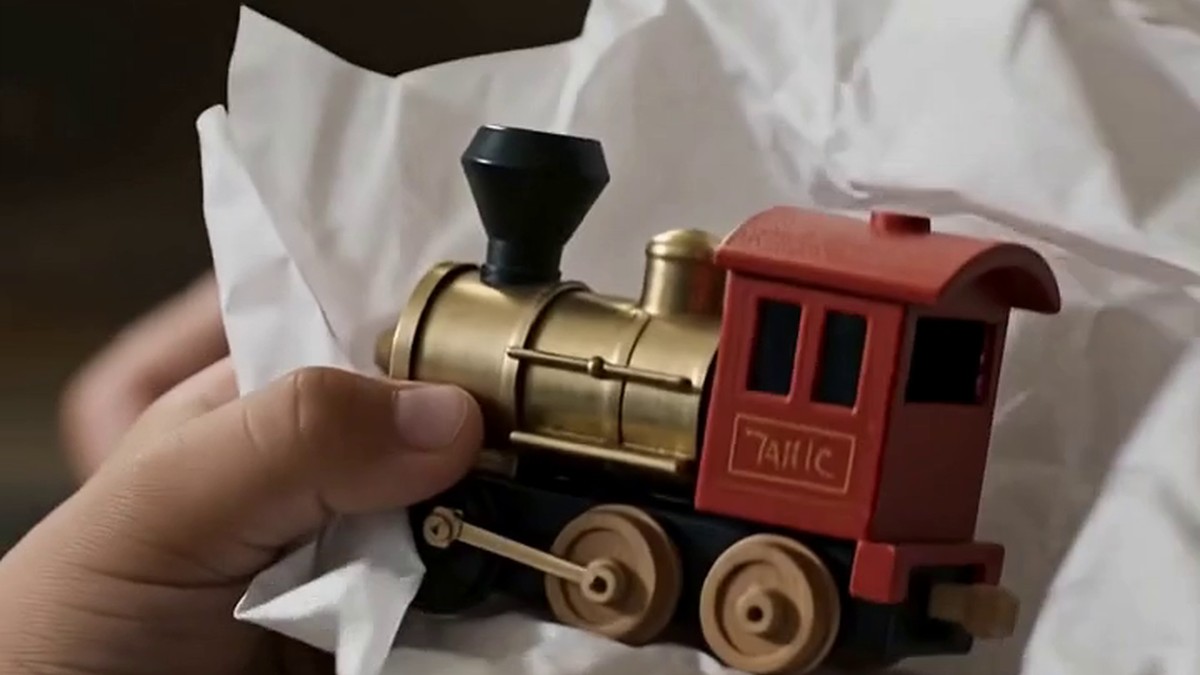
She barely slept that night. Tossed and turned, replaying every word, every ugly accusation. Sometime around three a.m., she got up and pulled a box from the back of her closet. Inside, under old report cards and Mother’s Day cards, she found the little carved wooden train engine Clay used to push around the living room floor for hours. He’d named it “Loud” because he couldn’t say “cloud.” She’d kept it for twenty years.
She wrapped it in tissue paper and set it by her purse.
At nine the next morning, she found herself standing outside a rundown apartment complex on Cherry Street, clutching the package like a lifeline. Apartment 112. Ground floor. The paint was peeling, but the doorstep was swept clean.
She knocked.
The woman who opened the door was not what she’d pictured. Loretta had imagined somebody hard. Made-up. Hungry-eyed. What she got was a slim young woman in jeans and a faded Volunteers sweatshirt, dark hair in a messy braid, no makeup, dark circles under her eyes that could’ve been Loretta’s own reflection in a twenty-year-old mirror. She looked tired. She looked gentle. She looked like a woman who hadn’t had a full night’s sleep since the Bush administration.
“Mrs. Shaw?” Jasmine’s voice was low, a little wary but not hostile. “Clay said you might… come by.”
“I should’ve called first. I’m sorry.” Loretta surprised herself by meaning it. “Can I come in?”
Jasmine stepped aside.
The apartment was tiny but immaculate. A futon with a clean blanket. A basket of folded laundry, mostly little boy clothes. A plastic dinosaur on the coffee table. And in the corner, a four-year-old with big brown eyes and a mop of dark curls was building something out of LEGOs with intense concentration.
He looked up.
Loretta’s knees nearly buckled.
She wasn’t looking at a stranger’s child. She was looking at a photograph she carried in her wallet. Not the same coloring, not the same features—but the same *focus*. The same small, furrowed brow. The same serious way of holding a toy like it was the most important thing in the world. That was Clay at four years old, sitting on the floor of their old apartment while Loretta folded aprons for her shift.
“Hi,” Tyler said. “I’m building a garage.”
Loretta knelt down, right there on the worn carpet, and held out the tissue-wrapped bundle. “I brought you something.”
He tore the paper carefully—not like a greedy kid, but like a scientist unwrapping a specimen. When he saw the wooden train engine, his whole face lit up. “Whoa. Is it real wood?”
“Birch,” Loretta said. “My son—he’s a grown man now—but he played with that when he wasn’t much bigger than you. He said it could fly.”
“Trains can’t fly,” Tyler said, very seriously.
“This one can. You just gotta believe hard enough.”
Tyler considered this. Then he set the train on the carpet and pushed it slowly. “Chugga chugga,” he whispered, and then, without looking up: “Can you help me finish the garage?”
Loretta sat down on the floor and started sorting LEGOs.
Jasmine stood in the doorway, arms crossed, watching. After a while, she brought two mugs of coffee. Sat down on the futon. Didn’t say anything. Just let the silence settle.
They played for almost an hour. Loretta built the walls. Tyler passed her bricks and approved each placement with a solemn nod. The train sat in the center of the structure like a crown jewel.
At some point, Tyler put his hand on Loretta’s knee. Just rested it there, absentmindedly, while he explained the difference between a two-door and a four-door race car. Her breath caught.
She thought about all the hands that had never been there when she needed them. Her own mother, too proud to babysit. The neighbors who never knocked. The customers at the Waffle Hut who saw her only as a coffee refill. Not a single person, in twenty-three years, had said, “I’m here for you and that boy.”
Not one.
“You okay, Mrs. Shaw?” Jasmine’s voice was soft.
Loretta looked up. Two tears had rolled down her cheeks without permission. She wiped them with the back of her hand and tried to smile.
“I just… remembered something,” she said. “My son and I, we used to do this. Build things. He’d sit on this ratty old rug we had and just… *build*. And I’d watch him and think, ‘God, please let him be okay. Please let him have an easier road than me.’”
She looked at Jasmine. Really looked at her.
“Guess he’s choosing his road,” Loretta said. “And it’s not an easy one. But maybe that’s the point.”
Jasmine’s face flickered. For a second, her composure cracked, and Loretta saw the terror underneath. The loneliness. The desperate hope that this one good thing—this young man who held her son and laughed at her jokes—wasn’t going to be ripped away by a mother’s veto.
“I’ll help,” Loretta said. “With Tyler. With… whatever you need.”
Jasmine blinked rapidly. “You don’t have to—”
“I know I don’t have to.” Loretta reached over and squeezed her hand. “I want to.”
That evening, Loretta walked home in the dusk. Fireflies were starting to blink in the yards along Dogwood Lane. She pulled out her phone and typed a message to Clay.
*Sunday dinner. Bring Jas and Tyler. I’m making chicken and dumplings. Tell Tyler I found your old T-ball trophy. He might like it.*
The response came in under twenty seconds.
*You serious?*
*Dead serious, baby. I’ll set five plates.*
She was halfway up the porch steps when her phone buzzed again.
*Love you, Mom.*
Loretta put the phone in her pocket and stood there for a beat, looking at her little bungalow with its sagging gutters and the azalea bush she’d planted the year Clay started kindergarten. The house had always felt a little too big for one person and a little too small for the life she’d imagined.
Now, she thought about filling it with noise again. Tiny LEGOs underfoot. A little boy calling her something she’d never been called before. A daughter-in-law who needed somebody in her corner for the first time in her life.
She unlocked the front door. The house smelled like yesterday’s coffee and old regret.
“Alright, then,” she said to the empty hallway. “New chapter.”
Six months later, on a sweltering Saturday in July, Loretta stood in the backyard under a rented canopy and watched her son dance with his wife. Jasmine wore a simple white sundress and flowers in her hair. Clay had finally taken off that stupid ball cap he’d been glued to since high school. They swayed to a Bluetooth speaker playing some old soul song Loretta half-recognized from her own youth.
Tyler was the ring bearer. He’d taken the job so seriously that he’d refused to let go of the pillow, even during the vows. Now he was asleep in Loretta’s arms, his head heavy on her shoulder, the wooden train engine clutched in one small fist.
Clay caught her eye across the yard and raised his glass of sweet tea. Loretta raised hers back.
She didn’t cry. She’d done her crying. Instead, she pressed her cheek to Tyler’s curls and whispered something nobody could hear.
“Welcome home, baby.”
The boy stirred, murmured something unintelligible, and settled deeper into her arms.