The penthouse at the top of 432 Park Avenue was packed, the air thick with perfume and the low hum of money. It was a showcase for Kerr & Co.’s new “Legacy” collection—the kind of event where the champagne cost more than a month’s rent, and every wrist and earlobe sparkled with enough carats to finance a small war. Not my natural habitat, not even close.
My name is Elara, I’m twenty-four, and I teach second grade in Queens. I was there because my roommate Chloe handles PR for the caterers and managed to sweet-talk my name onto the guest list as “vendor support” or some nonsense. Free champagne and a chance to play dress-up—fine, I’ll take it. I’d worn the nicest thing I owned, a navy silk dress from a consignment shop on Steinway, and as a final touch, I’d clipped on the only piece of jewelry I ever wore: a heavy gold compass pendant on a thin chain. It was old, the gold soft from years of rubbing, the engraving worn nearly smooth. I’d kept it hidden in a sock through a dozen foster placements, the one thing I never let the social workers catalog. The tiny diamond at the needle’s center still caught the light.
I was by the far window, watching city lights blur through the rain, when a voice cut through the room noise.
“Where did you get that?”
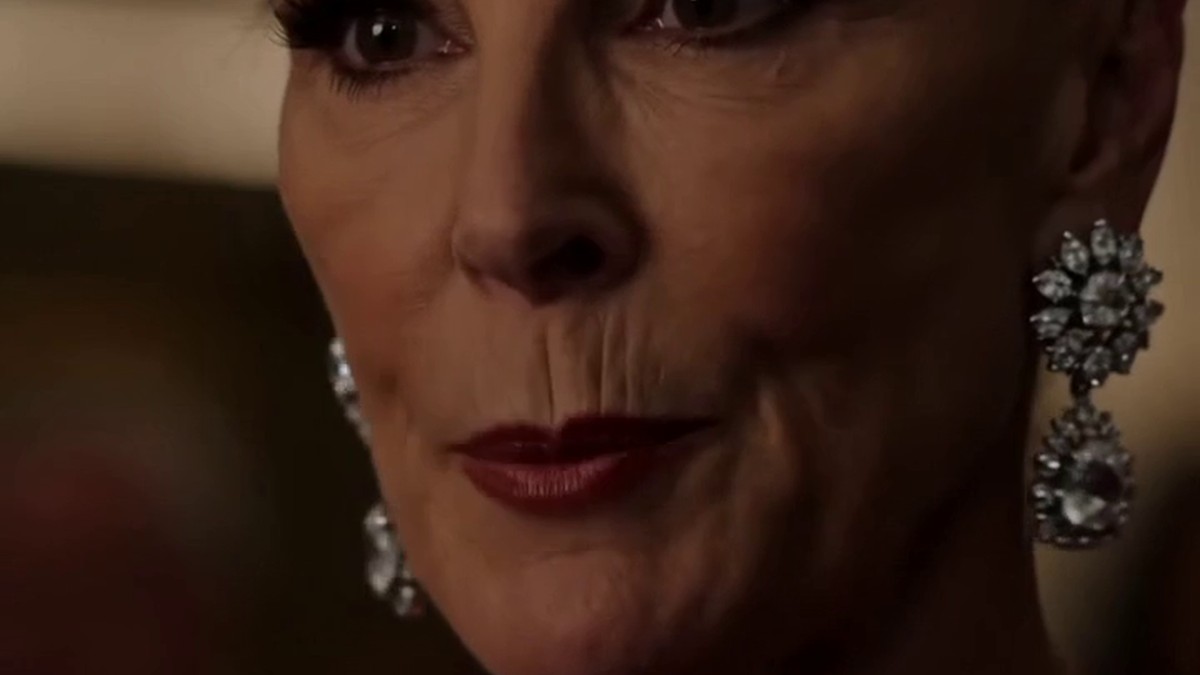
I turned. A woman was staring at my neck like she’d just spotted a cockroach on the canapés. She was maybe mid-fifties, poured into a scarlet sheath dress, diamonds the size of chicklets on her ears. Susannah Crane, I’d later learn—a socialite whose divorce settlement was apparently the stuff of tabloid legend.
“Excuse me?” I said.
She stepped closer, and her expression flipped from shock to something cold and proprietary. “That pendant. Where did you get it?”
I touched the compass, a reflex. “It was a gift. A long time ago.”
Her laugh was a short, ugly sound. “A gift. Right. That’s a Kerr piece. A *one-off*. Victor Kerr made only one compass like that, and it was for family. It would never end up around the neck of some—girl who wandered in off the street.”
Conversations around us started dying. I felt my face go hot, that prickly flush you get when a student lies to your face about homework.
“I didn’t steal it, if that’s what you’re implying,” I said, my voice tighter than I wanted.
“I’m not implying anything.” Her voice rose, sharp as a gavel. “I’m saying straight out: you’re wearing a stolen heirloom. Somebody call the police.”
A waiter froze mid-step. A silver-haired woman in Chanel openly gaped. I was being reclassified from “anonymous guest” to “threat” in real time, without a single new fact.
“That’s enough.”
The voice came from across the room. Everyone turned.
Victor Kerr stood by the elevator bank, flanked by two assistants. He was seventy-something, lean, with a shock of white hair and the kind of calm that takes decades to harden. He’d built this company from a single workbench in the Diamond District, and even now, in a room full of billionaires, he was the gravitational center.
He walked toward us, his eyes on my necklace. Susannah practically preened.
“Mr. Kerr. I was just saying—this woman clearly stole one of your exclusive pieces.”
He didn’t answer her. He stopped a foot away from me, studying the pendant. For a long moment, the only sound was the rain.
Then he reached out, carefully, and turned the compass over. On the back, almost invisible, was a tiny inscription. He read it aloud.
“*To my compass, Nora.*”
I blinked. “Who’s Nora?”
He looked at me then—really looked—and something in his face shifted. His hand dropped, and he was quiet for a beat too long.
“Nora was my wife,” he said quietly. “She died twenty-four years ago. The night our daughter was born.”
The silence that followed was absolute. Susannah’s mouth opened, then closed.
“That’s—that’s very sad,” she managed, “but it doesn’t explain the necklace. I’m just trying to protect your interests.”
“You’re trying to humiliate someone for sport,” he said flatly. “Sit down, Susannah. Or leave. That’s the only choice you get tonight.”
She recoiled as if slapped, then melted back toward the bar. I barely registered it. My mind was snagged on what he’d said. *Daughter. Born twenty-four years ago.*
Victor hadn’t taken his eyes off me. “There was a fire in the maternity wing that night. In the chaos, I was told my wife and my baby both died. Only…” He swallowed. “Only they never found the baby’s body.”
My chest got tight, like someone had cinched a belt around my ribs.
“The official report said it was lost in the fire, remains unrecoverable,” he went on, his voice roughening. “I didn’t believe it. I’ve been looking for her ever since. Private investigators. Court orders. I’ve had geneticists on retainer since before most people knew what DNA was.”
He pulled a folded envelope from inside his jacket. It was creased and worn, like it had been opened a hundred times.
“Two weeks ago, an adoption agency in Upstate New York finally answered one of my inquiries. They gave me a name. The couple who took a newborn girl out of that hospital on the night of the fire—they moved to Staten Island. They died eleven years later in a car accident. Their daughter became a ward of the state, bounced through foster homes until she aged out.”
The room tilted a degree. My parents—the people who raised me—had died in a car crash on the Staten Island Expressway when I was eleven. The kind of detail you don’t offer at a cocktail party. I hadn’t told anyone here.
“Wait,” I said, and my voice came out wrong, like I’d been running. “What—what was their name? The couple?”
He told me. It was their name. My parents’ name. I must have made some sound, because he stopped.
“They were your adoptive parents?” he asked softly.
I nodded, not trusting my voice again. The belt around my ribs tightened another notch.
He opened the envelope and slid out a photograph. A newborn, hospital blanket, tiny gold compass on a chain. That chain. My chain. The one I’d hidden in a sock for years.
“When the agency gave me your name, I hired a detective. He pulled your old medical records from the foster system—there was a hair sample attached from a pediatric checkup when you were twelve. I had it tested against my own DNA.” He paused. “I got the results yesterday morning. You’re my daughter, Elara.”
I stared at him. A man I’d only ever seen in Forbes slideshows, standing there with wet eyes and a wrinkled photo, his hand trembling just a little.
“I looked for you every single day,” he said, his voice cracking. “Every day.”
I didn’t think. I just stepped forward and hugged him. Hard. The envelope crumpled between us. He smelled like sandalwood and coffee, and I felt his shoulders shake once before his arms came around me and held on like I might vanish.
When we pulled apart, the room was quiet. Not the dramatic silence you see in movies, just the uncomfortable rustle of rich people unsure where to look. Susannah was still frozen near the windows, her champagne glass clamped in both hands.
Victor kept hold of my hand and turned to face the room. His voice was calm, quieter than before.
“This is my daughter, Elara.”
That was it. No speech, no lesson. He just said it. A few people nodded, someone murmured something I couldn’t hear. Susannah’s face went stony. She set her glass down on a passing tray with a little too much force and walked out toward the elevator, her heels clicking a sharp, defeated rhythm. Nobody clapped. It wasn’t that kind of night anymore.
Three hours later, the last guest had gone and the staff was dimming the lights. We were still there on a low sofa near the windows—Victor scrolling through photos of my mother on his phone, me telling him about my students and my crummy Astoria apartment with the radiator that banged like a shotgun. The rain had stopped.
At one point he said, “Let me send a car back with you, you can pack a bag. Stay here, in a real room for once.”
I laughed, wiping my eyes with the heel of my hand. “I have a spelling test to give at 8:15 tomorrow morning, Mr. Kerr.”
He grinned. It was the same crooked smile I saw in my own mirror. “You’re definitely my daughter.”
I stepped into a town car that smelled like leather and belonged to someone who, twenty-four hours ago, had been a complete stranger. The driver handed me a small velvet box.
“Mr. Kerr asked me to give you this, miss.”
I opened it. The compass, polished now, the engraving sharp and clear. Under the old inscription, two new words had been added.
*And Elara.*