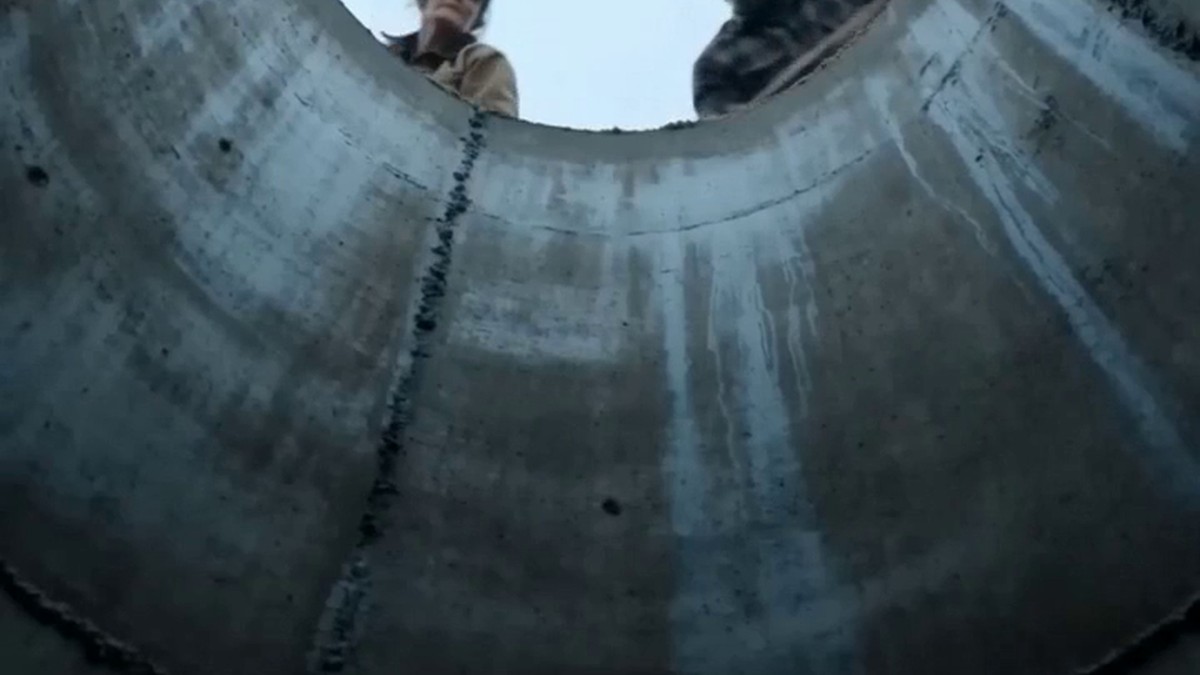
Marta Kowalczyk had run the feed store on County Road 9 outside Sheboygan for thirty-one years, and in all that time she'd never once had to bury a customer's dog. But on a Tuesday in late October, with the corn already cut and the first hard frost silvering the windshields in the gravel lot, that's exactly what she found herself doing.
The dog's name was Biscuit. He belonged to old Walt Herrera, who ran the dairy operation two farms over and who'd had a stroke back in March that left his right side dragging a little when he walked. Walt loved that dog more than he loved most people, which Marta understood, because Walt's wife had passed in 2019 and his kids lived in Phoenix and called on Sundays if they remembered.
Biscuit went missing on a Saturday. By Monday, Walt had half the county out looking, and by Monday afternoon somebody found him — alive, but stuck at the bottom of an old silage pit behind the Herrera barn, one that hadn't been used since Walt's father ran the place back in the seventies. Twelve feet down, concrete walls slick with algae, no way up.
Marta got the call from Walt's neighbor, Dale Pruitt, who said the fire department in town had looked at it and said they didn't have the right rig to get a dog out of a hole like that — not without risking a firefighter's neck on wet concrete. Walt, Dale said, was standing at the edge of that pit not moving, not eating, saying he wasn't leaving until somebody figured something out.
By the time Marta got out there with a truckload of sand from behind the store — the stuff she used for icy front steps in the winter — there were maybe eight people standing around the pit rim, and Biscuit's barking down in the dark had gone from frantic to something worse: a low, tired whine that came in bursts and then stopped.
"He's giving up," Walt said. He wouldn't look away from the hole. His cane was jammed into the mud beside him, forgotten.
Dale had the same idea Marta did, though nobody wanted to say it out loud at first, because it sounded like giving up too. The pit was going to need to be filled in eventually anyway — Walt's insurance agent had flagged it as a liability two years running. So the sand wasn't going to hurt anything even if it didn't work. Dale started shoveling first, dumping small loads down along the wall, not on top of the dog, just enough to see what would happen.
What happened was Biscuit yelped, scrambled, and — instead of drowning under it — stamped it down under his paws.
Marta had seen a lot of things at that feed store. She had never seen a sixty-pound mutt figure out, in real time, that the thing raining down on him wasn't burying him. It was building him a staircase.
"Keep going," she said, and grabbed a shovel off Dale's tailgate.
It took forty minutes. Forty minutes of six adults taking turns pouring sand down a concrete pit while an old dairy farmer stood at the rim gripping the collar of his jacket so hard his knuckles went white, and every few minutes Biscuit would shake himself off — sand flying in every direction, some of it hitting Marta right in the face — and step up onto the pile a little higher than before. By the time the sand reached knee height on the dog, he wasn't whimpering anymore. He was pacing the new floor like he'd already decided he was getting out.
At the very end, he didn't wait for a hand. He got his front paws over the lip of the pit, kicked hard off the packed sand, and hauled himself out into the weeds, soaking wet and shivering, and ran three full circles around Walt's legs before Walt got down on one knee — the bad one, the one from the stroke — and just held onto him.
Nobody said much on the drive home. Marta had sand in her boots for two days.
She thought about it a lot that week, mostly at the register, ringing up fifty-pound bags of layer feed and half-price Halloween candy that hadn't sold, because that's usually when the thinking happens — during the boring parts. She thought about how everybody standing at that pit had believed, for about thirty seconds, that they were doing something cruel. Piling weight on a creature that was already trapped and terrified. And how the only reason it worked was that the dog refused to just stand there and take it. He used the very thing that should have crushed him as something to climb.
She'd had a year like that herself, if she was honest. Her husband Ron had left in the spring of 2023, and the divorce ate through savings she didn't know she had, and her son Denny had a rough stretch with money before he got steady work at the Kohler plant. There'd been a stretch, maybe eight or nine months, where it felt like every week something else landed on her — a bill, a bad diagnosis on her mother's hip, a slow month at the store when a bigger co-op opened forty minutes up the highway and pulled half her regulars away.
She didn't come out of that stretch because she pretended it didn't hurt. She came out of it because she stopped standing still under it. She refinanced the store. She let her mother move into the spare room instead of a facility, which turned out to be less lonely for both of them than anyone expected. She quit waiting for Ron to feel bad about anything, because he never was going to, and the waiting was its own kind of quicksand.
Walt brought Biscuit into the feed store the following Saturday, both of them looking better than they had in months. The dog had a fresh bandage taped over one back paw where he'd scraped it on the concrete, and Walt had a story he told to anyone who'd stand still for it, embellishing a little more each time, until in the fourth telling the pit was practically twenty feet deep.
"Funny thing," Walt said, leaning on the counter while Marta rang up his order — fifty pounds of scratch grain, a case of canned dog food, a rawhide bone the size of a table leg. "Whole time I thought we were burying him alive. Turned out we were the only reason he had anything to stand on."
Marta didn't have a clever answer for that. She just handed him his receipt and told him the bandage should come off in about a week, and to keep it dry till then.
That silage pit got filled in for good two weeks later — a real load of gravel and concrete this time, done right, sealed over so nothing could ever fall in again. Walt paid for it himself, cash, no complaints about the cost. Said it was the best money he'd spent all year.