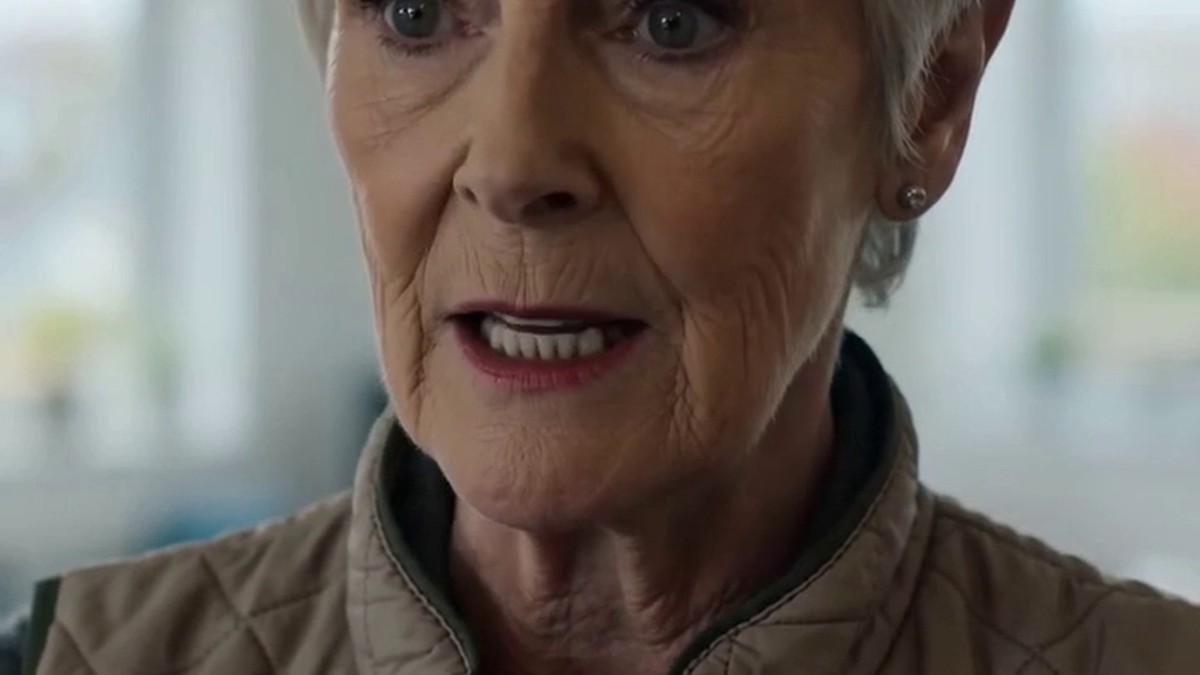
He set his coffee mug down on the counter like he was closing an argument that hadn't started yet. "You can't handle him. Sign the papers, let the state take him. It's better for everyone."
I was standing by the stove with Milo balanced on my hip, and for a second I thought I'd misheard. Ray hadn't raised his voice. He wasn't drunk — it was 7:40 on a Tuesday morning, the coffee maker still gurgling behind him, our son's oatmeal cooling in a bowl on the table. He said it the way you'd tell someone to donate a couch that didn't match the living room anymore.
That was three years ago, in a rental on Baxter Street in Youngstown, Ohio, with a radiator that banged like someone knocking to come in. Milo had colic that never really went away — screaming fits at two in the morning, doctors who shrugged, a pediatric neurologist forty minutes away in Akron who eventually said the word "spectrum" and handed me a stack of pamphlets. Ray had wanted an easy baby. He got Milo instead, and somewhere in the space between those two things, he decided the fix was to make Milo somebody else's problem.
I didn't cry that morning. I remember that clearly, because I expected myself to. Instead I just held my son a little tighter and said, "No." One word. He shrugged like I'd turned down a coupon, grabbed his keys, and left for his shift at the tire plant on Salt Springs Road.
I want to say I threw him out that day. That's not what happened. What happened is I kept going — kept driving Milo to therapy, kept picking up night shifts at the Giant Eagle pharmacy counter, kept telling myself it was a bad morning and not a preview. Ray never said it again, not exactly. But he stopped saying goodnight to Milo. He stopped coming to the appointments. Twice a week he'd sit in the car in the driveway for twenty extra minutes before coming inside, like he was waiting for the house to become a different house.
The second time he said it — really said it, not just implied it — was eight months later, and it wasn't about giving Milo away anymore. It was about the house.
His mother, Deb, had co-signed our mortgage back when Ray and I first bought the place, a small three-bedroom with vinyl siding the color of weak tea. Deb had money — not a lot, but enough, from a settlement after her second husband died. She'd never liked me much, thought I'd "trapped" Ray, and she liked Milo even less, in that careful way people have of not saying the ugly thing directly. When Ray came home that night and told me Deb wanted to refinance the house in her name only, "for tax reasons," I already knew what that meant. It meant if things between Ray and me went sideways, I'd be the one standing on the porch with a diagnosis and a duffel bag while he kept the walls around him.
I didn't sign it.
I called a legal aid clinic downtown, the one with the peeling green awning next to the check-cashing place, and a woman named Patricia Nwosu spent forty minutes with me explaining marital property law in Ohio like she was reading me a bedtime story with teeth in it. I started keeping copies of everything after that — the mortgage statement, the therapy invoices, texts where Ray called Milo "difficult" instead of using his name. I put them in a manila folder and hid it in the box of Christmas ornaments in the basement, the one place I knew Ray would never look, because untangling lights was, in his mind, my job too.
The end came on a Sunday in March, the kind of gray Ohio afternoon where the sky and the sidewalk are the same color and even the dog next door won't come out from under the porch. Milo was four by then, stacking Cheerios into a wobbling tower on the coffee table, humming to himself the way he did when he was calm. Ray came in from the garage holding a stack of papers rubber-banded together, and Deb was with him — she almost never came inside, usually just idled in the driveway in her Buick, but that day she walked right past me into the kitchen like she already owned the deed to the floor she was standing on.
"We talked to a lawyer," Ray said. "About the house. About — " he tilted his head toward Milo without saying his name, like Milo was a smell he was trying not to acknowledge. "About all of it. Mom thinks it's time you two figured out somewhere else to be. It's not working here."
Deb crossed her arms and looked at the water stain on my ceiling like it was evidence for the prosecution. "Some people just aren't built for this kind of situation," she said, not to me exactly, more to the room.
I remember Milo's Cheerio tower toppled right then, and instead of crying he just laughed — this bright, surprised laugh, like the world had done something delightfully unexpected. Nobody else in that kitchen heard it. I did.
I got up, went down to the basement, and came back with the manila folder.
I laid it on the kitchen table between the sugar bowl and Ray's phone. Inside was the letter from Patricia confirming that Ohio is an equitable distribution state and any attempt to quitclaim the house to a third party without my signature during an active marriage could be challenged and reversed; three years of therapy invoices totaling $26,400, the ones I'd paid myself out of pharmacy shifts while Ray called them "extra"; a printout of the texts where he'd typed the word "unfixable" about his own son; and, on top, a filing I'd had drawn up two weeks earlier and had simply been waiting for the right morning to use — a petition for divorce, with a request for sole physical custody and exclusive use of the marital residence pending sale.
"You can't refinance a house you don't own outright, Ray," I said. "And you," I looked at Deb, "were never on this deed to begin with. You cosigned a loan. That's not the same thing as owning a home."
Ray picked up the papers, scanned them, and I watched something in his face fold in on itself — not surprise, exactly. More like the moment you realize the door you assumed was locked was open the whole time.
"You're serious," he said.
"I filed it Thursday. You'll get served this week." I picked Milo up off the floor, propped him on my hip the same way I had that morning three years earlier, and this time it was Ray standing there with nothing in his hands.
Deb opened her mouth to say something about "a mother knowing best," and I didn't wait for the rest of it. I picked up my keys off the hook by the door — the one Ray had installed the year we moved in, back when installing hooks felt like building a future — and I said, "The house sells, we split what's left after the loan, and I use my half for a two-bedroom on the east side, near Milo's school. You two can figure out where you're not built for."
I didn't slam the door. I didn't need to. Milo pressed his face into my shoulder, still smelling faintly of syrup, and outside, Mrs. Delgado's beagle was barking at nothing the way he always did on Sundays, and somewhere down the block a lawnmower someone shouldn't have started yet in March coughed twice and caught.
Six weeks later the house went on the market. I signed my half of the closing papers at a title office on Market Street with Milo asleep in his stroller beside me, one sock missing, the way it always was by afternoon. Ray texted twice that week — once asking if I'd "reconsider," once just saying he was sorry, no context attached. I didn't answer either one.
I never did check whether Deb still parks that Buick outside the old house. I don't need to know. I have the folder, the closing statement, and a four-year-old currently insisting, with total confidence, that the moon follows our car home every night. It does, as far as I'm concerned. Let it.