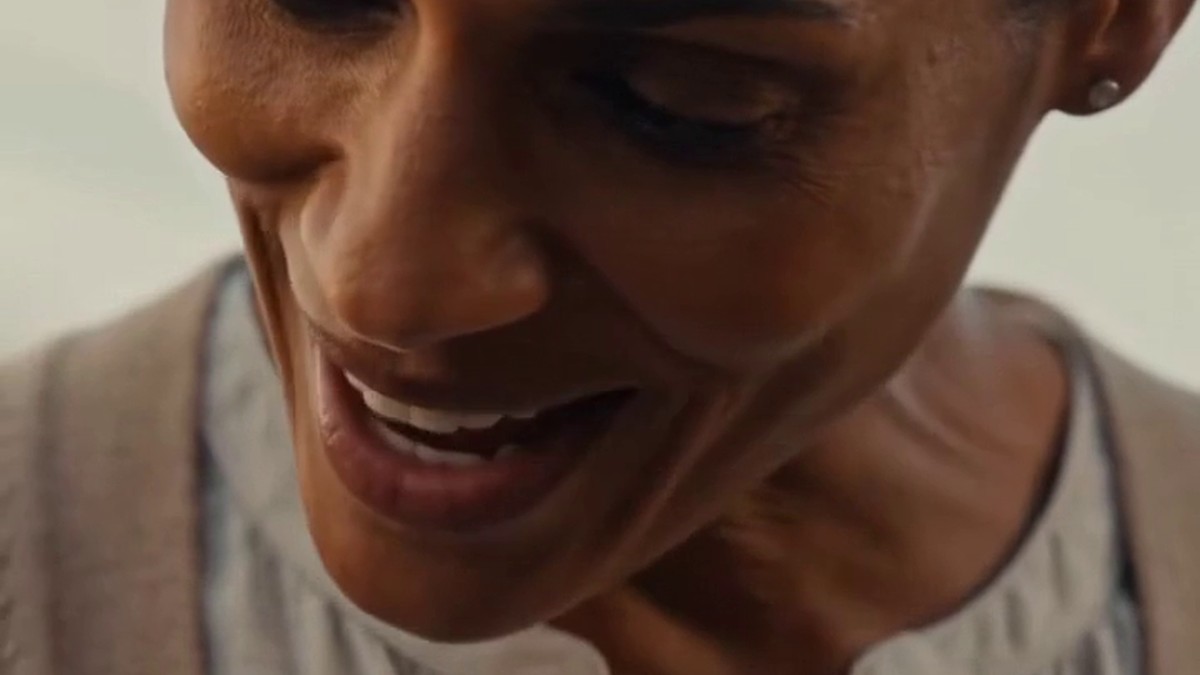
Ten past eight in the morning, and the sidewalk on Callahan Street is doing what it always does before school — moving fast, coffee cups sweating in fists, sneakers slapping concrete. Dana Whitfield had exactly fourteen minutes to drop her son off at Lincoln Elementary and make it to her shift at the billing office by eight-thirty, and the bus on Route 9 wasn't going to wait for her.
Her son, Milo, was six, missing his front tooth, and utterly indifferent to her schedule.
He stopped in front of the Grangers' yard, where somebody had planted a strip of marigolds along the fence — the same orange ones that showed up every August, right when the cicadas got loud enough to hear over the traffic. Milo crouched down. Not to pick one. Not to trample the bed. He just wanted to look, the way six-year-olds look at things that are new to them for the four-hundredth time.
"Milo. Let's go." Dana's fingers closed around his wrist and pulled.
He stumbled trying to keep pace, his backpack — the one with the dinosaur patch he'd begged for at Target — sliding sideways off one shoulder. His eyes went glassy, that particular shine kids get right before they decide whether crying is worth the trouble. He didn't say anything. He just looked back once, over his shoulder, at the marigolds getting smaller behind him.
Dana was doing the math on whether she'd catch every light on Route 9, whether Mr. Delacroix in payroll would say something again about her clocking in at 8:34 instead of 8:30, whether there was enough coffee left in the break room or whether she'd have to make a fresh pot and lose four more minutes she didn't have.
She got him to school. She got to work at 8:31, badge scanner blinking green, Mr. Delacroix's office door open this time, and he looked at his watch, then at her, and said, "Cutting it close, Whitfield," in the voice he used when he wanted her to know he'd noticed. She sat down at her desk, pulled up the claims queue, and didn't think about the marigolds again until 12:40, when her sister Renata called during lunch to complain about their mother's hip replacement and, somewhere in the middle of that, asked how Milo was doing in first grade.
"Good," Dana said. "He's good." And then, because Renata had four kids and an opinion about all of it, Dana found herself telling her about the marigolds. Just to have something to say.
Renata didn't laugh it off the way Dana expected. She went quiet on the line, and then said, "You remember when Mom used to do that to us? Drag us past the Kroger parking lot because we wanted to look at the shopping cart corral, the one with the wheels that spun?"
Dana did remember. She remembered it the way you remember wallpaper — always there, never examined.
"You're doing that," Renata said. "That exact thing." She didn't say anything else. She didn't need to.
Dana hung up and sat with that through the rest of her shift, processing forty-one insurance claims with a kind of static behind her eyes. She thought about her own childhood front lawn in Toledo, a crabapple tree she used to stand under every spring, and how her father used to say "come on, come on" from the driveway with his keys already in his hand.
The next morning she left the house nine minutes earlier. She told herself it was because of traffic on Route 9, but it wasn't. When Milo stopped at the same fence, crouched at the same marigolds, Dana crouched down next to him instead of reaching for his wrist. The concrete was still cool from the night before. Somewhere down the block, Mrs. Alvarez's dog was barking at the recycling truck, the way he did every single Wednesday without fail.
"Which one's your favorite," Dana asked.
Milo pointed to a marigold with a torn petal, the ugliest one in the row. "That one. It's trying."
Dana looked at the torn petal a second longer than she needed to, then stood, and this time when she held out her hand, he took it without being pulled. They made the bus. Barely.
It didn't stick. That was the part she hadn't counted on. Thursday there was a wreck on Route 9 and she yanked him past the marigolds without even seeing them, and Friday Mr. Delacroix stopped her in the hallway to say that 8:34 twice in one week was becoming a pattern he'd have to note somewhere, and she snapped at Milo in the car for taking too long with his seatbelt, and he went quiet the rest of the ride in a way that made her stomach hurt worse than any lecture from payroll could.
She sat in the parking lot after he went inside and didn't move for a minute. Then she called the daycare and pushed his pickup time back thirty minutes from where it had sat for the past year — an extra sixty dollars a month she'd have to find somewhere, gas money maybe, or the streaming subscriptions she kept meaning to cancel anyway. It wasn't a fix. It was just thirty minutes, bought back.
The following Wednesday she was late again, badge scanning at 8:33, Delacroix's door shut but his silence somehow louder than any comment. She didn't care as much as she thought she would. Milo had stopped at the fence that morning, and this time she'd let him, and the torn-petal marigold was gone — deadheaded, probably, by whoever kept the Grangers' bed — and Milo stood there a second, taking in the empty space where it had been.
"Where'd it go," he said, not really a question.
"I don't know, bug."
He crouched anyway, looking at the stem, and said, "The other ones are still trying," and picked out a new favorite three plants down, one with a bent stalk that was reaching sideways for the sun instead of straight up.