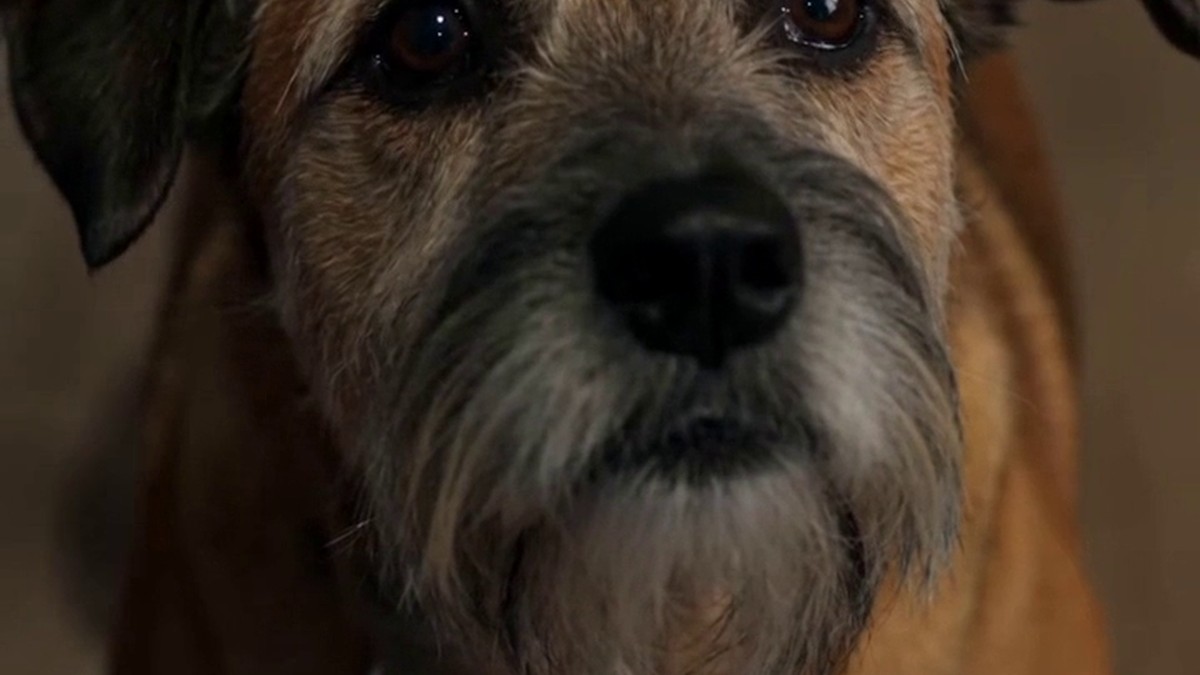
I'm the neighbor who was supposed to take care of the dog. Nobody asks me how that went. They tell the story about the old woman and the little gray mutt sitting on the church steps every evening, and the ending they tell makes people cry at dinner tables. I don't tell my version much. It doesn't come out clean.
My name's Dale. I live two houses down from where Mrs. Calloway spent her last thirty years. When the ambulance came for her in January, I was shoveling my walk. She was ninety-one. Emphysema, diabetes, a heart that had been running on prayer. The paramedics were careful with her. The dog stood in the doorway and watched the gurney slide into the back, and she did not make one sound.
You'd think a dog would whine. Follow the stretcher. Something. But Biscuit just stood there on the porch in the cold, like she understood that making a fuss wasn't allowed.
Mrs. Calloway didn't come home. Ten days later we buried her at Greenhill, in the plot next to her husband who died before I was born. I was asked to keep Biscuit. Of course I said yes. What else do you say when a dying woman asks from a hospital bed, her hands shaking, her eyes mostly gone, but that voice still sharp enough to cut through the hum of the machines? She said, "Dale, you keep her inside. She'll run to the church every night and wait for me. She's done it her whole life. Don't let her."
I promised. I meant it.
The thing about a promise to a dying woman is that it weighs about four hundred pounds. But a dog's need to keep a schedule weighs more. That first night, Biscuit sat by my front door and didn't blink. I said, "Come on, girl. Lie down." She looked at me like I'd suggested we set fire to the rug. I put her leash on. Bad idea. She pulled me the whole three blocks to St. Anne's, tail tucked, head low, paw dragging a little because of the arthritis in her hip. Do you know how fast an old beagle-terrier mix can move when something matters more than pain? I didn't until that night.
She climbed the steps, gray muzzle pointing at the big wooden door, and she sat. She didn't bark. Didn't scratch. She just sat. The door opened at six-forty-five when the prayer group let out. Six or seven older women with their coats and their rosaries. Biscuit's ears went up. She searched every face. Then she lay down on the concrete, put her chin on her paws, and looked down the street toward the house where nobody was home anymore.
I stood there with my hands in my pockets, feeling like an idiot. A grown man crying would've been less embarrassing than what actually happened: I sat down next to her and stayed until it got dark. I don't know why. Maybe I thought keeping her company would count for something.
Father Gregory found us around eight. He's a young priest, maybe thirty-five, and he talks to people like they're not projects. He sat on the steps too. "That's Mrs. Calloway's dog, isn't it?" I told him everything. He listened with his hands folded in his lap. His coat was too thin for the temperature, but he didn't shiver. He said, "Bring her whenever she wants to come."
So I did. Every evening, just before sunset, I walked Biscuit to the church. She led the way. I was just the guy holding the other end of the leash, trying not to slip on the ice. From January to March, she didn't miss a single night. Rain. Snow. Wind that came off the lake and cut through my parka like it was made of paper. Biscuit didn't care. She had to be at that door when it opened. She had to see who came out.
I started bringing a thermos of coffee. The steps were freezing, but there's a spot close to the brick wall where the wind doesn't reach. From there I could watch Biscuit and also watch the street. I noticed things I'd never had reason to notice before. Mrs. Calloway's porch light still worked, but nobody replaced the bulb when it finally went out in the middle of February. The mailbox filled up with flyers and then someone put a yellow sticker on it marking it vacant. There was a lavender bush by the side walk that had gone wild.
One Tuesday in late March, Father Gregory left the church door open on purpose. Just a crack. Biscuit got up before I could grab her. She pushed her way inside, and I followed because what else was I going to do? The church smelled like candle wax and old carpet. Biscuit walked down the center aisle, her nails clicking on the wood floor. There was a small table near the altar with a framed photo of Mrs. Calloway and about a dozen candles around it. Somebody had put fresh flowers in a coffee can wrapped in tinfoil. Daisies. Her favorite, I guess.
Biscuit walked to that table and pressed her nose against the edge of it. Then she lay down with her whole body flat, nose pointing at the picture. She didn't cry. Dogs don't cry, not the way we do. But she let out this long breath, like something inside her came loose and settled into place. From then on, that was our routine. I'd sit in the back pew, drinking cold coffee, while Biscuit kept her vigil by the photograph.
We did this for six weeks. Maybe seven. I told myself it was for the dog. But somewhere in there, I started waiting, too. Not for anyone to come through the door. Just… waiting. Letting the quiet do something.
Then one evening in May, Biscuit didn't come to my door. I called her. Nothing. I went outside. I checked the yard. I walked to the church, and she wasn't there. I walked to Mrs. Calloway's old house. The porch, the steps, the driveway. Nothing. Panic is a strange thing for a dog that isn't yours. That's what I told myself, at least. She isn't mine. I shouldn't feel the back of my neck go hot.
I found her around five-thirty the next morning. It had rained overnight, which in Iowa in May means the whole world smells like wet dirt and lilac. The sun was just coming up, all pink and orange over the water tower. Biscuit was on the bench in front of Mrs. Calloway's house. There was a cardboard box on the ground, overflowing with clothes. Somebody had set it out for the church charity pickup, and the rain had half-destroyed it. Inside was Mrs. Calloway's old gray coat, the one with the wooden toggle buttons. Biscuit had dragged it out. She was lying on it, her gray muzzle resting on the sleeve.
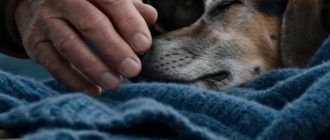
Her breathing was awful. Slow, shallow, like each one cost her something. I sat on the wet ground next to her and she looked at me with those cloudy eyes, and I understood. I don't know how to explain what I understood, and I won't try. But I knew she wasn't getting up. She'd come as far as she meant to come. The church was for the routine. The house, the coat, the sleeve that still smelled like the person who wore it—that was for the end.
I called Father Gregory. He came without his collar on, just a sweatshirt and jeans. He didn't say anything for a while. Then he said, "We'll bury her behind the church. In the garden. She'd want to be close."
We did. That afternoon, with two shovels from my garage and a prayer I only half-listened to. Father Gregory made the stone himself. He used to do masonry work with his grandfather. The stone is small, flat, gray. Etched with a straight line of letters, no flourishes. He asked me what to write, and I told him the only true thing I knew about that dog: she knew the way back. Every time. No matter what.
So the stone says: "Biscuit. She always knew the way back."
Here's what I don't tell people when they tell the pretty version of this story. I don't tell them that the church got a new security system in April, and I had to call the office and explain to a woman named Sherry that there'd be a man and a small gray dog on the steps every evening and could they please not call the police because the dog was doing something important. I don't tell them that Biscuit's food bowl sat in my kitchen until August because I couldn't bring myself to throw it out, and I don't tell them I finally used it to store paintbrushes, and that felt like a lie for about a year. I don't tell them I still walk past the bench on the way to the hardware store and slow down.
The question people ask at the end of this story is whether animals can miss a person the way we do. I've been asked it more times than I can count, usually by someone half-crying at a potluck. And my answer never changes.
I don't know what Biscuit felt. I don't know what missing means inside a dog's head. But I know she made a choice, every single evening, for most of a season. She saw the same door, the same steps, the same people coming out, and she never stopped checking. I've had two marriages end because one of us stopped checking whether the other one was coming home. So you tell me who was capable of more.
The last thing I did for Biscuit—the last thing with any mechanics to it—was this: I went to the funeral home where they'd handled Mrs. Calloway, and I asked for a copy of the program from her service. It had her photo on it, the same one from the church. I had it laminated at the copy shop on Fourth Street for three dollars and forty cents. Then I walked to the garden behind St. Anne's, and I tucked it into the earth at the base of Biscuit's stone, under a flat rock so the wind wouldn't take it.
Now when I pass that church, which I do because my doctor says I need the walk, I see that rock. Sometimes there are coins on the stone. People leave them. I don't know if that's for Biscuit or for Mrs. Calloway or for what passes between this world and the next. I've never asked. Some things you just let lie where the dog laid them down.