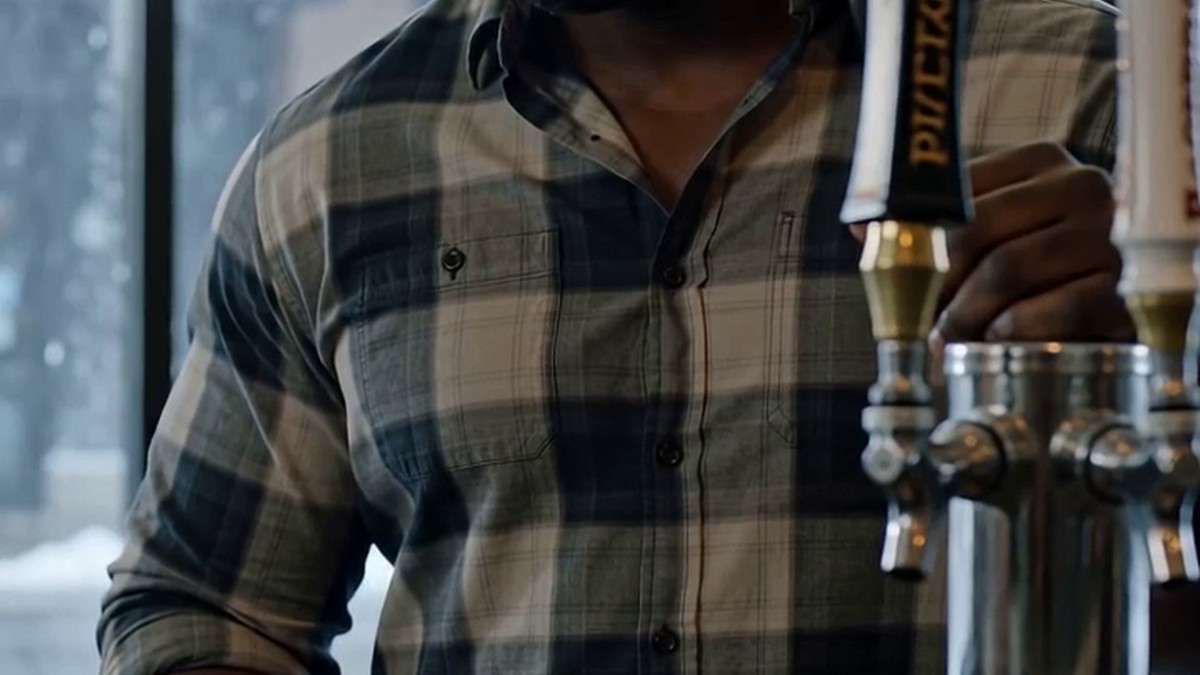
Shadows on wet asphalt — that's what caught Dana Kowalski's eye first that December night as she closed up the Chestnut Bar on Elm Street in Pittsburgh. Twenty minutes to two in the morning, sleet hammering the sign outside, and on the TV in the corner, muted, they were replaying a Steelers game — a loss, same as always this season.
The shot came muffled, like someone had dropped a crate of bottles two blocks over. A black Suburban swung around the corner of Elm and Butler, clipped the curb, and vanished toward the East End. For a second the bar went silent — even Marcus, the bartender drying the last glass, froze with the towel still in his hand. Then somebody at a table muttered something about drunk drivers, and the room settled back into itself.
Dana didn't settle. She'd grown up in a part of town where a gunshot at night meant one thing: check where the exits are. Her eyes went to the kitchen door, then the restroom hallway, then the back entrance by the dumpsters. Her fingers tightened around the edge of the register drawer.
The bell over the front door jangled. Wind and sleet blew in with it. Dana turned, already forming the words that the kitchen was closed.
The words caught in her throat.
Standing in the doorway was a woman somewhere in her sixties, wearing a black wool coat with a fur collar — the kind you don't buy, you inherit. Silver hair pulled into a tight knot, sapphire studs in her ears, leather gloves on her hands. The left side of the coat was dark with blood. Not a stain — a whole soaked panel running from shoulder to hem.
The woman's back hit the glass door and she started sliding down it. Dana vaulted the bar and caught her under the arms a second before she hit the floor.
"I've got you. I've got you."
The woman smelled of perfume — something with fig and amber in it — and under that, the copper smell of blood. Dana ran her hands along the coat, searching for the wound.
"Where are you hit?"
A gloved hand closed around Dana's wrist — cold, startlingly strong.
"No ambulance."
The accent wasn't local — something softened by decades in Pittsburgh but sharpened now by fear, an old Sicilian cadence underneath the English.
"You're covered in blood."
"It's not mine."
Dana looked again. The coat was torn at the shoulder, but the skin underneath was whole. No wound, no pulsing wet patch. Just a bruise blooming at the temple. Shock, Dana realized — two semesters of nursing school hadn't gone to waste, even though she'd dropped out when she couldn't cover the dorm fees anymore.
"You need a doctor."
"No police." The woman's grip tightened. "Please."
The last word didn't come out like an order. It came out like something foreign in her mouth — a woman who had spent her whole life giving commands, asking for the first time.
Outside the window, a black Yukon with tinted glass crawled past. The woman flinched. That was enough.
Dana got up, crossed to the door, threw the deadbolt, flipped the sign to CLOSED, and pulled the blinds. Marcus raised an eyebrow from behind the bar.
"Boiler's acting up," Dana announced to the room. "Everybody's got five minutes to finish up."
Nobody argued with the look on her face.
She walked the woman to the back booth — the one where the retired guys played cribbage on weekends — and put the kettle on. She steeped two bags of black tea, tore open three sugar packets, and grabbed the fleece blanket from the closet behind the bar where they kept spare tablecloths and the first-aid kit.
The woman stared at her own gloved hands. Dried blood crusted the leather.
"Drink."
The guest looked up.
"You give orders easily."
"I work nights. Nothing else gets people to listen."
A faint curve touched the woman's mouth and disappeared. Dana draped the blanket over her shoulders.
"Whose blood is this?"
"A man who decided my age made me an easy target."
"That sounds ominous."
"It was true. Until recently."
Dana sat across from her.
"What's your name?"
The woman studied her for a few seconds, as if weighing which was more dangerous — the truth or a lie.
"Carolina."
"Dana."
"Just Dana?"
"Just Carolina?"
Something warmer surfaced in the guest's eyes. Despite the blood, despite the trembling fingers, there was a sharpness in that dark gaze. With every passing minute she looked less like a victim and more like a queen momentarily cut off from her army.
"You're not scared enough," Carolina said.
"I'm exactly as scared as I need to be."
"You locked the door for a stranger covered in blood."
"I locked the door because a black SUV just crawled by and you looked like you were about to stop breathing."
"You noticed the truck."
"I notice everything."
Carolina finally took a sip of tea. The sugar helped — color returned to her cheeks. One customer dropped cash on the bar and hurried out. Then another. Within a few minutes the place had emptied, leaving only the sleet against the window and the hum of the old walk-in cooler.
Dana walked to the pay phone by the restrooms — Marcus kept it "for atmosphere," he always said, a relic from the nineties nobody had bothered to remove.
"You said no police. Fine. Who do I call?"
Carolina got up, moving carefully but without help. She searched the coat pockets — nothing there.
"No phone?"
"They took it."
"Of course they did."
Dana held out the receiver. Carolina hesitated for a moment.
"This call could put you in danger."
Dana looked at the blood on the coat.
"Bit late to warn me about that."
Carolina took the receiver. Dialed a number from memory. When someone answered, she said a few words in Italian and hung up.
"How long?"
"Seven minutes."
"That precise?"
"My son doesn't like uncertainty."
Dana went back to the bar and wiped down the tracked-in mess by the door.
"What happened tonight?"
"Do you actually want to know?"
"No. But not asking makes me imagine worse."
Carolina watched her work the rag over the floor.
"My driver was set up. Someone sold the route. They boxed the car in near the cemetery on Butler Street."
"Your family's in politics?"
"No."
"Finance?"
"Among other things."
"Is that 'other things' the reason people are shooting at you?"
Carolina's silence said more than any answer could have. Something tightened in Dana's stomach. She'd just given shelter to someone connected to people who controlled half the nightclubs, the construction contracts, and — rumor had it — a judge or two in Allegheny County. Everybody knew the names. Nobody said them out loud.
Headlights cut through the blinds. Not one car — several. A knock came at the door, sharp and certain.
Carolina stood. The fear had drained out of her posture. She straightened the ruined coat and turned into someone else right in front of Dana — someone used to walking into rooms she owned.
Dana opened the door. Four men in black jackets stood on the sidewalk, with the practiced faces of people who reacted to danger before anyone else even registered it. The tallest had a thin scar through his right eyebrow.
He stepped in first, swept the room, and stopped on Carolina.
"Ma'am."
One word — carrying relief, fury, and reverence all at once.
Carolina touched his arm.
"Anthony, I'm fine."
His jaw tightened at the sight of the blood.
"Who did this?"
"Later."
Only then did he turn to Dana. She felt herself being read — face, height, exits, threat level.
"This is Dana Kowalski," Carolina said. "She gave me shelter."
Anthony nodded. It wasn't gratitude. It was acknowledgment.
Carolina slid a ring off her right hand — a black stone set in small diamonds — and set it on the bar. Dana pushed it straight back.
"No."
"You don't know what it's worth."
"That's exactly why I won't take it."
"You wouldn't take money either?"
"You haven't offered any."
Carolina laughed, quietly. The sound surprised everyone, even Anthony. She closed her fist around the ring.
"You've got pride."
"I've got enough trouble already without pawning some mob grandmother's jewelry."
Anthony's eyes sharpened.
"Who said 'mob'?"
The silence in the bar thickened like sugar settling at the bottom of a cup. Carolina didn't answer — she just looked at Dana, weighing whether this woman could be trusted with more than a cup of tea at two in the morning.
"She figured it out herself, Anthony," Carolina finally said. "Stand down."
For the next three weeks, Dana tried convincing herself the whole thing had ended along with the black SUVs vanishing into the sleet. It hadn't. On Thursday a courier walked into the bar and left a package on the counter with no return address — an envelope containing the lease paperwork for the Chestnut, which technically belonged to the owner's cousins, who'd been planning to sell it off to a pawn shop chain. Inside the envelope was a new deed: the property transferred to Dana's name, free and clear, for ten years, notarized by an attorney's office on Grant Street. No note. Just, at the bottom, in pencil, small handwriting: "For the tea."
Dana took the envelope to that same attorney's office to check it wasn't a trap. The seal was real. The deed was real. Two hundred thousand dollars in market value, now hers instead of the ungrateful cousin who'd been threatening to shut the bar down for two years.
She signed the paperwork — not because she was afraid to refuse a second time, but because she understood something: sometimes payment for a cup of tea doesn't come right away, and it doesn't always come in the shape of a ring you can turn down.
A year later, when the former owner's grandson showed up demanding "what was his," threatening a lawsuit, Dana simply pulled the notarized deed out of the safe and set it on the bar — the same way Carolina had once set down a ring. The kid read the document, went pale, and left without another word. Outside, it was snowing — the same kind of snow as that December night.
And in the spring, Dana read in the paper that the man with the scar over his eyebrow had been named director of a charitable foundation funding nursing scholarships across western Pennsylvania — the same kind of program that, years earlier, she'd never managed to afford.