The doorbell rang at twelve-thirty on a Sunday.
Clara wiped her hands on a dish towel and didn’t move. She already knew who it was. The same people who’d shown up every Sunday for the past eight months, always right when the roast was coming out of the oven.
Her husband Leo shot her a look from the living room. “You want me to—”
“I got it,” she said.
She opened the door. Marcus, Leo’s older brother, stood there with his wife Tanya and their two kids. Tanya was already peeling off her coat, sniffing the air like a bloodhound.
“Something smells good,” Tanya said, stepping inside without being invited.
“Does it?” Clara said.
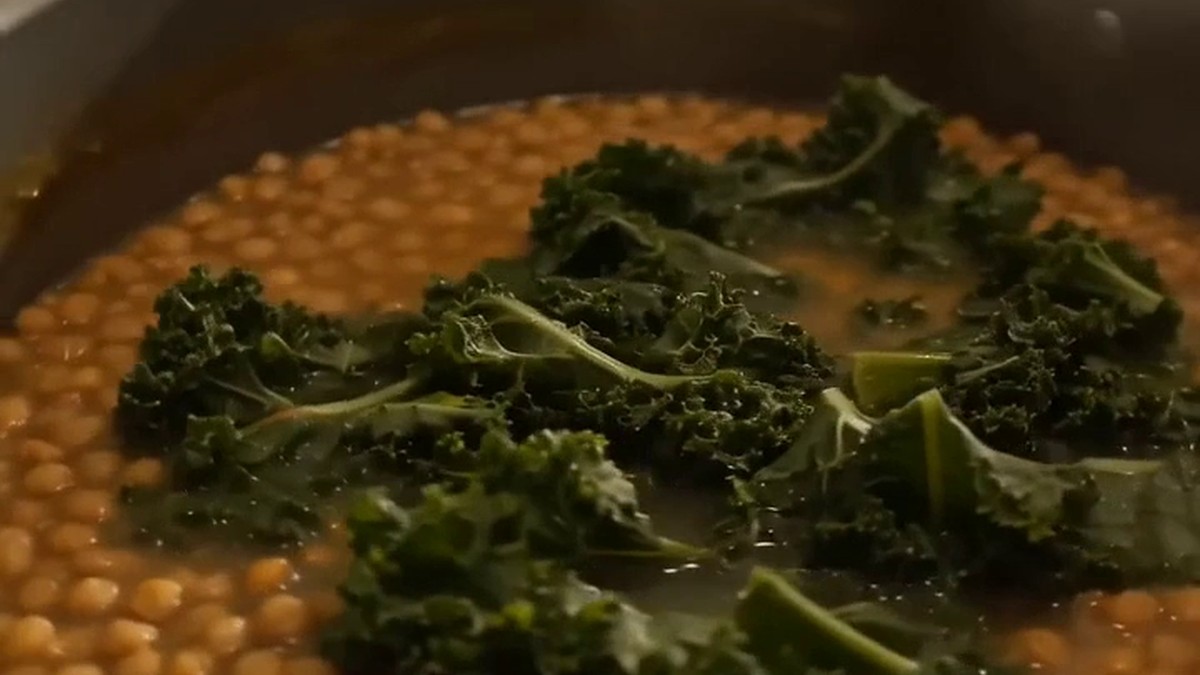
She led them into the kitchen. The table was set. A single pot sat on a trivet. Boiled lentils. No salt, no butter, no herbs. Next to it, a bowl of plain steamed kale. A pitcher of water with lemon slices that had seen better days.
Tanya’s smile flickered. She opened the fridge and stared. Closed it. Opened it again, as if hoping the contents might have changed in three seconds.
“That’s… dinner?” she asked.
“That’s dinner,” Clara said, setting out five plates.
The kids looked at the food like it had insulted them personally.
Marcus sat down slowly. “You guys doing okay? Money tight or something?”
“We’re fine,” Leo said, ladling the lentils with genuine enthusiasm. “Just eating lighter these days. Better for the heart.”
Nobody said much after that.
They stayed forty-one minutes. Clara timed it.
—
Two years ago, when Leo and Clara bought the little craftsman house on Maple Street in Oak Hollow, Colorado, they’d been thrilled. A fixer-upper with good bones, a big kitchen, and a backyard for the dog they planned to get. Leo handled the rewiring and the floors. Clara painted the cabinets a deep forest green and planted a vegetable garden.
They loved hosting. Clara was a phenomenal cook—her grandmother’s gumbo recipe, slow-cooked short ribs, biscuits from scratch. Leo made cocktails with fresh herbs from the garden. They’d have friends over on Saturday nights, and everyone would linger until midnight, bellies full and voices hoarse from laughing.
When Marcus and Tanya moved to town from Phoenix, it made sense to have them over. Marcus was Leo’s only brother. They’d grown up sharing a bedroom, fighting over the last Pop-Tart, covering for each other when report cards came home. The bond was real.
The first dinner was lovely. Tanya brought a bottle of wine. Marcus showed up with a bakery box of cannoli. The kids played in the yard and didn’t break anything. Clara made her famous short ribs, and everyone went home happy.
The second dinner, two weeks later, Tanya said they’d “forgotten” to bring anything. No big deal. Clara had plenty.
By the third month, the phone calls stopped coming. So did the wine and the cannoli. The new routine was simple: every Sunday at 12:30, the doorbell rang. Marcus, Tanya, and the kids would march in, raid the fridge for snacks, and settle at the table like they’d made a reservation.
Tanya had a habit of wandering into the kitchen while Clara was still cooking. “Oh, you’re doing the roast again? You know, my mom always used rosemary. Just a tip.” She’d lift the lid on pots, poke at whatever was simmering, and help herself to samples straight from the pan.
The kids treated the pantry like a grocery store. They’d grab bags of chips, boxes of cookies, whatever they could find, and vanish into the living room. Crumbs everywhere. Sticky fingerprints on the remote.
After dinner, nobody offered to help with dishes. Tanya would stretch and say, “Well, we should probably get going, long drive back.” They lived seventeen minutes away.
Clara would stand at the sink afterward, scrubbing pans, while Leo bagged up the empty containers and wiped down the counters. The leftovers she’d planned for Monday’s lunch—gone. The roast she’d budgeted for—demolished. The cake she’d baked for her own work potluck—devoured by two kids who’d opened the cake carrier without asking.
“They’re eating through two hundred dollars of groceries a week,” she said one night, staring at the receipt in her hand.
Leo leaned against the counter. “I know.”
“Your brother hasn’t brought so much as a bag of chips in six months.”
“I know.”
“They’re using us.”
Leo was quiet for a long moment. Then he said, “I know.”
—
The tipping point came the weekend before Clara’s mother’s sixtieth birthday.
Clara had spent three days preparing. A crown roast, scalloped potatoes, roasted Brussels sprouts with pancetta, and a three-layer lemon cake with cream cheese frosting. She’d saved for weeks to afford the prime cut, the good butter, the fresh berries for garnish. Everything was prepped and stored in the garage fridge, hidden from view.
Saturday evening, the doorbell rang. 5:45. Not even Sunday.
Marcus, Tanya, the kids. They’d been “in the neighborhood.”
“Perfect timing,” Tanya said, breezing past Clara into the house. “We’re starving.”
Clara froze in the doorway. “We actually have plans tonight—”
“Great, we’ll join you,” Marcus said, already pulling out a chair.
They ordered pizza. Clara refused to touch the birthday food. But Tanya, ever helpful, went looking for snacks in the garage and came back holding the lemon cake.
“Oh my God, Clara, you made cake? You shouldn’t have.”
“That’s for my mother’s birthday tomorrow.”
Tanya’s expression flickered—disappointment, then something sharper. “Well, you can make another one, right? You’re always baking.”
She served slices to her kids before Clara could say another word.
The crown roast was still in the garage fridge, untouched, because Clara physically blocked the door. But the cake was gone. The berries were gone. The kids ate them by the handful.
Clara didn’t sleep that night. She lay in bed at 2 a.m., staring at the ceiling, replaying Tanya’s casual shrug, the smear of frosting on her nephew’s cheek, the way Marcus hadn’t even looked up from his plate.
The next morning, she told Leo, “I have an idea.”
—
The Sunday Experiment began the following week.
Clara cooked exactly what she’d cooked for herself on a Tuesday night when she was too tired to try. Lentils. Kale. Water with sad lemon slices. No bread. No dessert. No meat.
The pantry doors stayed locked. The garage fridge was padlocked. The main fridge held milk, eggs, and a half-empty jar of mustard.
Marcus and Tanya showed up at 12:30. They ate in near silence. The kids asked for snacks; Clara said they didn’t have any. Tanya’s eyes kept drifting to the kitchen, waiting for the real food to appear. It never did.
They left after forty-one minutes.
The next Sunday: brown rice, steamed broccoli, and a pot of beans with zero seasoning.
They stayed thirty-two minutes.
The Sunday after that: boiled potatoes, plain cabbage, and a lentil soup so aggressively bland it could have been served in a hospital cafeteria.
Twenty minutes. Tanya didn’t even finish her bowl.
By the fourth week, Marcus called ahead.
“Hey, so—what’s on the menu this Sunday?”
“Split pea soup,” Clara said. “No ham.”
A pause. “Right. Uh, you know what, I think the kids have soccer. Rain check?”
“Sure,” Clara said. “Rain check.”
He didn’t call the next week. Or the week after.
—
A month passed. The Sunday doorbell stayed silent.
Clara and Leo started remembering what weekends felt like. They slept in. Drank coffee on the back porch in their pajamas. Made pancakes at eleven. Watched movies in the middle of the day without pausing to feed uninvited guests.
But something nagged at Clara. The experiment had worked, sure, but what did it actually solve? They’d driven Marcus away with bland food instead of an honest conversation. The brother Leo had grown up with—the one he’d shared a bedroom with, the one who taught him to drive stick shift in a Walmart parking lot—was now avoiding them because of lentils.
“He’s still your brother,” Clara said one night.
Leo nodded slowly. “He is.”
“Maybe it’s time we actually talk to him.”
—
Leo called Marcus the next day. Just the two of them, he said. No wives, no kids. Come over for a beer.
Marcus showed up alone on a Thursday evening. He looked uncomfortable, standing in the doorway like he wasn’t sure if he should take his shoes off.
Clara had made actual food this time. Pulled pork sliders, coleslaw, cornbread. Marcus stared at the spread.
“What’s this?”
“Dinner,” Clara said. “Sit.”
They ate. The conversation was stiff at first—work, weather, the Broncos’ disastrous season. Then Leo set down his beer.
“Marcus, we need to talk about the Sundays.”
Marcus tensed. “Look, if this is about the food thing, I get it. You don’t want us around.”
“That’s not what I said.”
“You served us boiled kale for a month, Leo. Message received.”
Clara leaned forward. “We served you boiled kale because you treated our house like a free buffet for eight months. We didn’t know how else to get you to stop.”
Marcus opened his mouth. Closed it. He looked at his brother.
“Is that… is that really how it felt?”
“You showed up every Sunday without calling,” Leo said, his voice steady. “You never brought anything. You never offered to help. Tanya went through our fridge like she owned it. The kids ate my wife’s birthday cake the night before her mother’s party. You didn’t even ask.”
Marcus’s face went red. Not with anger—shame. He pushed his plate away.
“I didn’t realize,” he said quietly.
“How?” Clara asked. There was no venom in her voice, just genuine confusion. “How do you not realize you haven’t brought a thing in eight months?”
Marcus rubbed the back of his neck. He looked smaller than he had ten minutes ago.
“I don’t know,” he admitted. “Tanya kept saying you guys loved hosting. That it was your thing. And I guess I just… stopped thinking about it.”
“It was our thing,” Leo said. “But it stopped being our thing the moment it became an expectation instead of an invitation.”
The silence that followed wasn’t hostile. It was the kind of silence where something real finally settles.
“I’m sorry,” Marcus said. “Really. I should’ve seen it. We should’ve seen it.”
Clara looked at him for a long moment. Then she pushed the plate of cornbread toward him.
“You want more?”
He let out a shaky laugh. “Yeah. Yeah, I do.”
—
Things didn’t go back to normal. They went somewhere better.
Marcus started calling before coming over. “Saturday work? I’ll bring steaks.” And he did—thick ribeyes from the butcher, a six-pack of craft beer, a bag of charcoal for the grill. He grilled them himself in the backyard while Leo sat in a lawn chair and heckled his technique.
Tanya took longer to adjust. The first time they came over after the conversation, she hovered awkwardly in the living room, visibly restraining herself from wandering into the kitchen. Clara noticed her hands fidgeting, her eyes darting toward the stove.
“You can come in here, you know,” Clara said.
Tanya hesitated in the doorway. “I’m trying to be better about… you know.”
“I appreciate that. But you can still keep me company while I cook. Just don’t inventory my fridge.”
Tanya laughed—a real one, surprised out of her. “Deal.”
She sat at the kitchen island and talked to Clara while she worked. For the first time, it felt like a visit instead of a raid.
The kids were the hardest to retrain. They still made hopeful loops past the pantry, but Clara had started keeping a designated snack basket on the counter—granola bars, apples—and they learned to ask before taking.
One Sunday afternoon, six months after the Great Lentil Rebellion, Clara stood at the kitchen window and watched Marcus and Leo in the backyard. They were building a fire pit together, arguing over the placement of stones. Leo laughed at something Marcus said—a full, easy laugh she hadn’t heard in a long time.
Tanya was inside, actually helping with the dishes without being asked. The kids were on the couch, watching a movie, their shoes neatly lined up by the door because Clara had told them once, and they’d remembered.
The doorbell rang.
Clara looked at the clock. 2:15. Nobody was expected.
She opened the door to find a neighbor from three blocks over, a woman named Diane who she knew mostly through nodding at the mailbox. Diane was holding a casserole dish.
“Hi! Sorry to drop in,” Diane said, smiling brightly. “I smelled your barbecue from my yard and just had to come say hello. I brought my famous green bean casserole. You don’t mind, do you?”
Behind her, Clara saw a minivan in the driveway with two more kids inside, already unbuckling their seatbelts.
Clara stood in the doorway. She did not step aside.
“Diane,” she said pleasantly. “It’s lovely to see you. But we’re having a family day today. How about you text me next time, and we’ll plan something?”
Diane’s smile faltered. “Oh. Well, I just thought since we’re neighbors—”
“I’d love to have you over,” Clara said, “when we’ve planned for it.”
She smiled. She waited. She did not move from the doorway.
Diane blinked. “Right. Sure. Another time, then.”
She retreated down the steps, casserole dish still in hand. The minivan doors slid shut. The engine started.
Clara closed the door and walked back to the kitchen.
Leo raised an eyebrow from the backyard. “Who was that?”
“Nobody important,” Clara said, and poured herself a glass of wine.
The fire pit was coming along nicely. The steaks were resting on the counter. And somewhere in the house, her mother’s lemon cake recipe sat tucked in a drawer, waiting for a birthday that nobody would ruin this time.
Clara leaned against the counter and watched the flames catch in the backyard, the first curls of smoke rising into a clear Colorado sky.
Some recipes, she thought, work themselves out if you just follow them exactly.