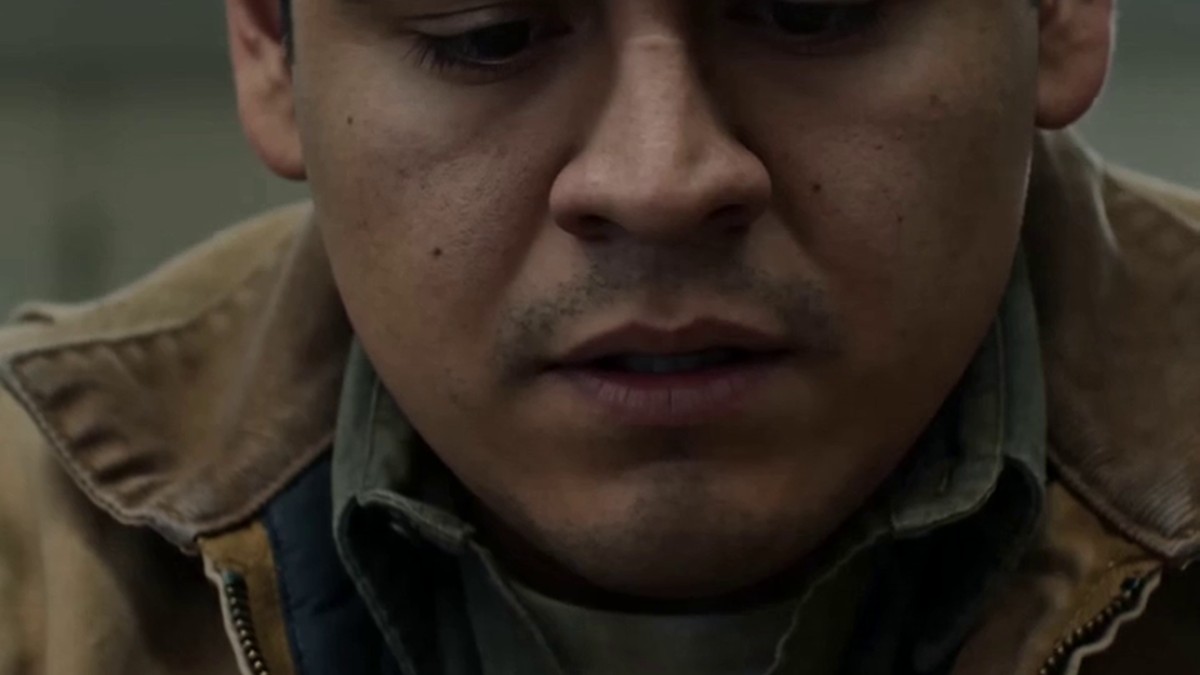
I found my father at my mother’s kitchen table at 6:40 a.m. on a Tuesday, eating Cheerios from a bowl I remembered from third grade. The bowl had a chip on the rim. He was using the spoon with the bent handle.
He had been gone twenty-six years. The last time I saw him, I was six, standing in the driveway while he backed his Ford F-150 out and said he was going to the store for a pack of Winstons. I waited on the front step until the streetlights came on.
Now he had a Carhartt jacket thrown over the back of the chair and a green duffel near the door. He looked like an old man trying to pass for local: new boots, creased jeans, a cap that still had the store sticker on the brim.
Mom stood at the stove, cracking eggs into a black skillet. The screen door had a rip in the mesh shaped like the Upper Peninsula. Lake Superior lay beyond it, gray and flat as a parking lot after rain.
“Ethan,” Darryl said. “I was hoping we could talk.”
I didn’t answer. I opened the fridge for orange juice, poured a glass, and leaned against the counter by the sink. Through the window I could see the Marquette Harbor Lighthouse, the red paint dull in the morning haze.
Mom said, “He’s staying at the Pines Motor Court, room twelve. He asked to see the cabin.”
The cabin was hers. A two-room A-frame on a dirt road off M-28, about forty minutes east, near Au Train. She bought it in 2017 for sixty-two thousand four hundred dollars, cash, after twenty-three years of baking at Huron Mountain Bakery and cleaning office buildings after dark. She started at four in the morning, six days a week, and some Sundays she made wedding cakes. I grew up in the bakery’s back room with a coloring book and a sink full of donut glaze.
Darryl never paid a dollar of child support. He never called. Mom never filed for divorce. The lawyer wanted twelve hundred dollars up front, and in 1999 that was two months of groceries, three months of heat bills, a new transmission for the Buick. So she stayed legally married to a man who walked out for cigarettes.
That little detail—the missing divorce—came back like a splinter.
Now Darryl wanted to make amends. He put down his spoon. “I know I haven’t been around. I’d like to see what you two built out there.”
I looked at Mom. She added butter to the skillet. “You can take him, Ethan. I have a wedding cake order due Friday.”
She did not tell me not to trust him. She did not have to.
When I was nine, I played right field for the Marquette Little League Pirates. I checked the bleachers every inning. In fifth grade, I wrote “father deceased” on a school form because it was easier than watching the teacher look for a second parent’s name and then cross it out.
The road to the cabin had thawed enough to drive. Mud sprayed the wheel wells of my truck. Darryl walked around the property like a man checking a fence line. He tapped the cedar siding, ran his thumb along the new roof. He asked about the lot line, the access easement, who else was on the deed. I said just Mom. He said, “Legally, I might still have an interest.” He laughed. I did not.
On the drive back, he asked me to stop at a bank. His debit card was acting up, he said.
That evening I checked Mom’s account with her permission. She had a checking account that was still joint, because no one had ever changed it. The balance was $18,240. Every dollar from renting the cabin to tourists in July and August sat in an account with Darryl’s name on it.
I went to see him at the motor court. Room twelve. He opened the door with a phone in his hand. On the bed, a manila folder. Inside, I could see a document with a legal description of the cabin and the words “Quit Claim Deed.” A notary card was clipped to the corner.
I asked what the paper was.
Darryl said, “Just clearing up the title. The bank won’t refinance without my signature.”
“What bank? Mom doesn’t have a mortgage.”
He stepped outside and let the door click shut behind him. The phone in his hand lit up. He turned it over. “She’s got assets. I’m still her husband. I’m just protecting my half.”
I did not argue. I drove straight to the county register of deeds in Marquette. The clerk, a woman named Deb, pulled the file for parcel 52-14-330-007. The cabin was still in Lorna’s name alone. But Deb leaned over the counter and said, “If they never divorced, he could file and ask a judge to divide it. Long separations don’t exist in Michigan. It’s married or it’s not.”
She handed me a business card for a family law attorney. “She should’ve done this years ago.”
Next morning, I went to Mom’s house unannounced. Darryl’s truck was already in the drive. A rusted Chevy sat next to it. Inside, a notary was at the kitchen table, a stamp pad open. Darryl stood by the refrigerator, unfolding a paper. Mom sat in the chair, a blue pen in her hand.
I hit the screen door hard. The cat, Stubbs, shot under the stove. Mom’s hand jumped. The pen left a mark on the table.
“Don’t sign that,” I said.
Darryl turned. “This has nothing to do with you.”
I picked up the deed. It was a quitclaim. Grantor: Lorna Jean Hollis. Grantee: Darryl Roy Hollis. Entire interest in parcel 52-14-330-007. No money changing hands.
“He told me it was for the property tax exemption,” Mom said. Her voice was clear.
The notary folded her arms. “I was told she agreed to the transfer.”
I looked at Darryl. “You left when I was six. You didn’t pay child support for twenty-six years. Now you come back with a notary and a piece of paper for the cabin she bought with four a.m. shifts.”
Darryl leaned against the counter. “I’m her husband. The law gives me half. If she doesn’t sign, I’ll file for divorce and take it anyway.”
Mom stood up. She took the deed from my hand, folded it in half, and dropped it into the sink. Then she hit the switch. The disposal ran for five seconds, grinding until the paper was gone. The sound filled the kitchen.
She turned to Darryl. “I was too tired to divorce you in 1999. I’m not too tired now.”
Darryl’s face went hard. “You’ll lose the cabin. You can’t prove abandonment after all these years.”
Mom opened a drawer by the stove. Inside were three years of tax returns, a stack of rental receipts from the cabin, and a paper from the state of Michigan with a child support arrearage estimate. She lifted the last one.
“I’ve got a number for that, Darryl. It’s over one hundred and eighty thousand dollars. You want half of the cabin? Fine. I’ll ask the judge to start with what you owe.”
I had never heard her say that. Not once. She didn’t raise her voice.
She picked up the landline and called the attorney whose card I had in my pocket. I could not hear the whole call, but she said, “I need to file for divorce. I need to do it this week.”
When she hung up, she said, “We’re going to the bank first.”
At Huntington Bank on Third Street, Mom asked a teller to close the joint checking account. The teller tapped keys. “There’s eighteen thousand two hundred forty dollars available.” Mom said, “Put it into a new account, just my name.” She signed the new signature card, and the teller handed her a new debit card. Mom slipped it into her purse.
Then she wrote a check to the family law attorney for four thousand five hundred dollars. She tore it from the book and put it in an envelope. On the memo line she wrote “Retainer—divorce.”
Darryl was standing outside the BP station on Third Street when we drove past. He had his debit card in his hand, tapping it against the pump. The screen flashed. He hit cancel twice. He saw our car, and he raised one hand.
Mom did not wave. She looked down at the new bank envelope in her lap and said, “Eighteen thousand, two hundred forty dollars and zero cents. That’s all mine now.”
Then she said, “Take me to the hardware store. I want new locks on the cabin.”
At the hardware store, Mom bought two deadbolt sets and a new doorknob for the cabin. She paid cash from the new account. The clerk gave her a receipt for $247. She tucked it into the same envelope as the retainer check.
We drove east on M-28. Lake Superior came into view, cold and endless. Mom did not say anything until we reached the dirt road.
“Nobody is ever going to sit in my kitchen and hand me a paper to sign again,” she said.
She took the new key from her pocket and set it into the lock. The old key she dropped into the weeds.