The bench wood had soaked through his jeans. Ray sat under the one streetlamp that still worked, the orange tom in his lap, one hand around the cat's ribs. The animal weighed maybe six pounds all bone and wet fur. Ray couldn't get past it: six pounds of nothing, and somehow it outweighed fourteen years. The phone vibrated twice in his coat pocket, then went still. CHERYL. He didn't take it out. The screen glowed once through the lining, enough to light the outline of his fingers from inside, then died.
An hour earlier, he'd carried the cat up four flights to their apartment. Cheryl stood at the kitchen counter in her lavender housecoat, the one with the missing snap at the collar and a brown stain shaped like Florida on the left hip. She didn't turn around when he shut the door.
"Take it back," she said.
The TV in the living room was running Wheel of Fortune. Somebody in the audience clapped for a trip to Aruba.
Ray opened his mouth to explain where the cat had come from. Under the dented row of mailboxes in the vestibule, curled on a pizza delivery flyer. It had been there three days. He'd walked past it every morning on his way to the bus, telling himself not to get involved, and every evening on his way back, telling himself somebody else would do something. On the third night he'd bent down and the animal had looked at him with green eyes like it had been waiting for him to get over himself.
But Cheryl didn't want the story. She turned around and folded her arms. The housecoat gaped at the neck. The kitchen smelled like canned tomato soup, tinny and sweet, with a heel of white bread going stale on the counter.
"That's final."
The cat's heart ran like a cheap watch against Ray's sternum.
From the hook by the door, Ray took his coat. Keys lay in the bowl on the little table where unpaid bills sat under a flyer for a pizza place that had closed two years ago. He put the keys in his pocket. The cat dug one claw into his flannel shirt, right through the collar, and a thread came loose and looped out like a tiny question mark.
The door clicked shut behind him.
In the stairwell, the fluorescent tube on the second floor flickered. It had flickered for as long as Ray had lived in the building. The landlord, a man named Felton who owned six buildings in Lawrenceville, had promised to replace it twice. He never had. Ray walked down. The cat flinched at every step and pressed harder into his chest. The claws went through the shirt and into his skin, not deep enough to bleed, just enough to remind him that another living thing was afraid of being dropped.
Outside, October had settled into the city like a damp jacket. The air coming off the Allegheny was cold and wet and smelled like dead leaves and exhaust. A few blocks over, somebody was burning brush in a backyard, and the thin smoke drifted between the brick fronts and down toward the river. Wet leaves pasted themselves to the sidewalk, yellow and brown, the color of old receipts. To the left, the dumpsters. To the right, a small playground with one swing that creaked whenever the wind found it. A sign on the fence said NO DOGS ON GRASS, but somebody's dog had left a mess by the gate anyway, and nobody had cleaned it up.
Ray sat on the bench. The cat settled into his lap, folded its paws, and began to purr. The sound came out uneven, like a motor that had to be coaxed. Ray ran a palm down the animal's back and felt every rib, narrow and close together, like slats on a fence. The fur was rough from the cold, but the body underneath gave off heat.
He thought about his guitar. Fourteen years ago, almost to the month, he'd bought an Epiphone acoustic with his first paycheck from the garage on Butler Street. It had lived in the corner of the bedroom for years. Cheryl said it collected dust and took up space. One night in February he'd carried it down to the curb and leaned it against the recycling bin. He stood next to it for a minute, then walked back up the stairs without looking.
After the guitar came the running shoes. Sauconys. He'd run the Pittsburgh Half Marathon in them, the year it rained so hard they almost canceled it. The shoes lived in the front closet, years after the soles had gone smooth. Cheryl said they made the apartment smell like a locker room. So he threw them into the dumpster one Sunday night and went back inside.
Before that, there was Richie Kowalski. Richie was a friend from high school, the only one who still called. He'd drag Ray out for a beer at the Hofbrauhaus on the South Side, or a Steelers game on a tiny TV in his garage. Cheryl said Richie was a bad influence, always wanting to drink and stay out late. "Tell him to stop calling," she said. Richie called for six more months. Then the calls stopped.
Ray had taken to feeding a black stray that slept under the dumpster. Every morning he'd set out a paper bowl of kibble. Cheryl caught him one day and said the neighbors were complaining. Nobody had complained. He stopped feeding the dog. It hung around for a week, then disappeared.
The year before last, his mother had asked to come up from Wheeling for Thanksgiving. Ray had almost said "of course." Then he'd seen Cheryl shake her head behind the phone, slow and firm. "Maybe after the holidays, Mom," Ray had said.
"Okay, honey," she'd answered.
The hurt in her voice was worse than if she'd yelled. She never asked again.
The phone lit up. CHERYL. The blue glow punched through his pocket. This time Ray took it out. The screen was bright against the wet grass. His thumb hovered over the green button.
Then the cat put one paw on his wrist. Not grabbing. Just resting there. The pads were rough and cool from the night air. The cat looked up at him, and its eyes were the same color as the light in the beer signs on Butler Street.
Ray pressed decline. The phone went black. Above him, on the fourth floor, the kitchen window that had been a square of amber went dark. Cheryl was done with the kitchen. She'd be in the living room now, wrapped in a blanket, the remote in one hand. She wouldn't come to the window. She wouldn't call a third time. She'd given her order, and Ray had always followed it. Fourteen years without a single real act of defiance. Why bother checking on somebody who had never once failed to do what he was told?
Ray reached into his coat pocket and took out the keys. Two of them on a steel ring, the kind that comes free with a new set of tires. The ring had a scratch across it from the time he'd dropped it on the concrete curb outside the garage. He would have known these keys by touch in a pile of a hundred others. One opened the street door. One opened the apartment.
He set the ring on the bench beside him. The wet wood soaked into the metal. Two small pieces of stainless steel. Strange how little the things that hold a man in place can weigh.
Ray stood up. He tucked the cat against his chest, felt the animal's ribs expand with every breath. Then he crossed the small yard, passed the playground where the swing still creaked, and walked toward the break in the fence that led out to the street. The sidewalk sloped toward the river. The streetlights stretched long smears of orange across the wet pavement. Under his shoes, the leaves made a sound like someone balling up paper.
The cat didn't flinch anymore. It pressed its face into the flannel shirt and kept its paws still. The loose thread from earlier had worked itself back into the fabric. Ray left it alone.
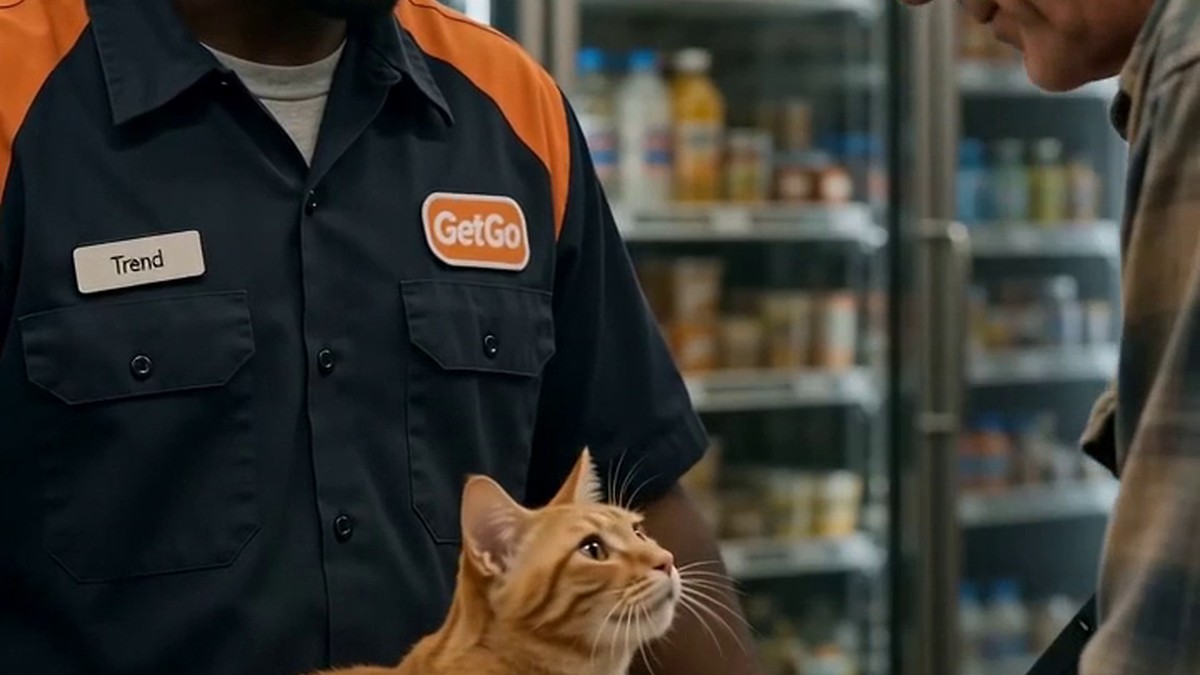
At the corner, under a GetGo sign, the door chimed. Ray set the cat on the floor by the register. The cat sat, wrapped its tail around its front paws, and waited like it had been doing this all its life. Ray grabbed a can of 9Lives and a carton of milk. The kid behind the counter, a guy with a name tag that said TRENT and a vape tucked behind his ear, looked at the cat, then at Ray, and said nothing. Ray paid. The kid handed him the bag.
"Good luck, man," he said.
Ray picked up the cat and walked back out into the night.
Behind him, the keys stayed on the bench.
Sometime past midnight, a thin rain started. The drops landed on the key ring and beaded up on the teeth of the keys, then ran off the edge of the bench into the dirt. The swing creaked once in the wind.
The next morning, before the streetlights shut off, Stan the super found the keys at nine. He was out with a bag of rock salt, checking the sidewalk for ice. The ring lay on the wet bench, and Stan recognized the scratch across it before he even picked it up. He climbed the four flights to the top floor and knocked.
Cheryl opened the door four inches. Same lavender housecoat.
"These yours?" Stan asked. He offered the keys on the flat of his palm. "Bench outside."
She took the ring. Turned it over. Her thumb stopped on the scratch. Then she squeezed the metal until her knuckles went white. For fourteen years she'd told Ray what to throw away. The Epiphone guitar. The Saucony shoes. Richie Kowalski. The black dog under the dumpster. The orange cat. And every time, the man had obeyed. This time, what left the apartment was not the thing she'd ordered gone.
She thanked Stan and shut the door.
Then she called Ray's phone. Four rings. Voicemail. No message left.
She texted him. Typed "Grow up." Sent it. Typed another: "I'm not playing." Sent it. Then a third: "Where are y—" Her thumb hovered over the question mark key. She deleted it and sent "Where are you." With a period. Not a question. An order, and there was no one left in the apartment to take it.