The Dog Who Waited in the Snow
Caleb had only wanted to see the stars.
At six years old, the fireworks had stopped an hour ago, the grown-ups were asleep, and the house in Lakeview, Minnesota, felt too warm, too stuffy. He’d slid out of the foldout bed, pulled on his parka right over his pajamas, and eased open the back door. The latch was old and stiff, and the moment the door clicked shut behind him, the night swallowed him whole.
The cold was a physical thing, a fist around his lungs. Twenty below, the weatherman had said. Snow still falling in fat, silent flakes. For a few seconds, Caleb just stood there, head tipped back, breath clouding as he stared at the winter sky. Then he turned to go inside.
The door wouldn’t budge.
He pushed. He pulled. The knob spun uselessly in his mittened hand. The old-fashioned deadbolt had slipped down inside the frame. He was locked out, and the house—with its snoring grandparents and sleeping parents and uncle slumped on the couch—was a wall of shadow and silence. No one heard his first knock, or his second, or his muffled shout.
Panic hit him like a wave of ice water. He’d read about frostbite in a school library book. He knew what twenty below could do to a kid in pajamas.
And then, through the snow, came Smokey.
The big gray dog materialized without a sound, fur already crusted with frost. He didn’t bark—Smokey rarely did—but he pressed his cold nose into Caleb’s glove, then gently took the sleeve of the parka in his mouth and pulled. Away from the door. Around the corner of the house, where the wind cut and the drifts were shallower. Down toward the old root cellar, where a remnant of straw still lay from the fall. Smokey nudged Caleb into the little alcove beside the bulkhead, out of the wind, and then he lay down right on top of the straw, a wall of warm fur. Caleb, shivering so hard his teeth chattered, curled up against the dog’s side. Smokey shifted, draping his heavy body over the boy’s legs and chest, and exhaled a long, steady breath. For the rest of that brutal night, the dog didn’t move.
That dog, the one who saved their grandson, was the same dog Martha and George Benson had spent eight years forgetting.
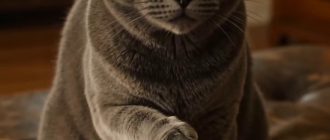
Smokey had come to them as a scrap of wet fur in a cardboard box on a county road. George found him on his way back from the co-op, a litter of five dumped in a ditch, only one still breathing. He’d intended to drop the pup at the shelter in Bemidji, but Martha had seen those terrified gray eyes and said, “Just let him stay. He’ll be a good watchdog.” So the puppy grew into a large, shaggy, smoke-colored dog who lived in the doghouse by the woodpile. He was fed twice a day from a metal bowl on the back porch, fresh water always, a pat on the head if someone happened to pass. But the house was for people. Smokey was a tool, like the axe or the snowblower. A creature who guarded the yard and asked for nothing more.
On New Year’s Eve, the house was chaos. Martha’s kitchen steamed with the scent of brown sugar and clove-studded ham, the dining table groaned with crystal bowls of mashed potatoes and green bean casserole, and laughter spilled through every doorway. Their son and daughter-in-law had driven up from Minneapolis with Caleb and his baby sister. Neighbors dropped by. Someone turned the music up loud. Martha, flushed and happy, bustled between oven and table, barking orders at George to fetch more ice cream from the chest freezer in the garage.
Not once, through the whole afternoon and evening, did anyone fill Smokey’s bowl.
Around five o’clock, Caleb had asked, “Grandma, where’s Smokey? Can I give him a treat?” Martha, juggling a hot skillet, had waved a hand. “Later, honey. Go wash up.” And later never came. The ham was carved, the champagne popped, the ball in Times Square dropped on the muted TV as everyone shouted and hugged. Outside, Smokey sat on the porch step, snow piling on his back, his empty dish a few feet away. He watched the bright windows and wagged his tail whenever a shadow moved.
By two in the morning, the house was dark. The dog’s water had frozen solid.
Smokey had been waiting by the back door when Caleb’s small figure appeared. He’d seen the boy try the handle. He’d heard the frightened whimper. And without a second’s hesitation, the dog who had never been allowed past the mudroom had become a guardian.
Just after dawn, Martha woke with a start, her head thick from too much wine. For a long moment, she lay still, staring at the ceiling, and then a cold blade of memory slid into her chest. Smokey. She’d never fed him.
She scrambled into her boots and coat, not bothering with a scarf, and yanked open the kitchen door. The yard was a white wilderness, the doghouse half-buried. No gray shape on the step. No tracks except… Martha’s breath caught. Fresh steps, small, veering toward the side of the house. She followed them, heart hammering, and when she rounded the corner and saw the two forms huddled in the straw—her grandson, pale but awake, and the big dog, curled around him like a living shield—she screamed.
George came running. Their son, barefoot, burst out the door. In seconds, Caleb was scooped up, wrapped in quilts, rushed inside. Smokey rose stiffly, shook the snow from his coat, and padded after them. No one told him to stay.
Later, as the paramedics checked Caleb’s fingers and toes and found nothing but a mild chill, the story came out in pieces. The locked door. The wind. The dog who had pulled a frightened child into safety and lain there for hours, his own body heat the only barrier between a little boy and hypothermia. George stood in the kitchen, his face gray, and looked at the dog. He remembered the cardboard box, the rain, Martha’s soft plea. All those years, he’d walked past that doghouse without ever once stopping to really see the animal who lived there. A tool. A guard. And now this creature had held their legacy in his jaws and refused to let the cold take him.
Martha, sobbing, filled the biggest bowl she could find with ham and warm gravy and set it on the floor in front of the woodstove. Smokey ate slowly, casting glances at the family as if waiting for the word to go back outside. It never came. Instead, Caleb slid down from the sofa, still wrapped in an afghan, and sat on the floor, pressing his face into the dog’s ruff. “He kept me warm, Grandma. He’s the best dog ever.”
That day, Smokey’s old doghouse came down. George dismantled it himself, board by frozen board, and carried it to the burn pile. He hung a new hook inside the back door for a leash, and he carried the dog’s food bowl in from the porch and set it on the kitchen floor, right beside the stove. Smokey, who had never put a paw on linoleum, walked in with the same quiet caution he’d used when leading Caleb to the root cellar. He sniffed the bowl, looked up at George, and wagged his tail once.
The neighborhood heard the story, of course. At church that Sunday, someone joked that the Bensons had gotten a miracle, and Martha didn’t smile. “We got a lesson,” she said, her voice tight. “One we should have never needed.”
Years passed. Smokey’s muzzle went white, and his running days slowed to a contented shuffle. He slept on an old quilt by the woodstove, and when winter arrived, he was never shut in the mudroom. Caleb, a teenager now, would come up every July and race down the dock to where the old dog dozed in the sun. They’d sit together on the porch steps, and Caleb would talk about school and baseball, and Smokey would rest his heavy head on the boy’s knee.
Another New Year’s Eve came. Ham on the table, laughter in the rooms, snow drifting past the windows. At midnight, when fireworks cracked the sky, Smokey flinched and whined, but he was lying by the fire, his head on Caleb’s feet. The boy stroked his ears and whispered something only the dog could hear. Martha, passing through with a tray of coffee mugs, paused and looked at them. She thought of the empty bowl on the porch, the years of polite neglect, the night the best part of their family had been left out in the storm. She thought of grace, how it sometimes comes on four paws and doesn’t hold a grudge.
The dog opened his eyes—cloudy now, but still deep and knowing—and met her gaze. Martha knelt and pressed her forehead to his. “You’ve always belonged here,” she whispered. Smokey’s tail thumped against the quilt.
The fire crackled. The ham was warm. The bowl by his bed was full. For the old gray dog who had once been forgotten, that was everything.