The security guard's hand closed around Daniel Miller's arm at the exact moment Sophie's name rang out across the room.
That was the detail Victoria Whitman would carry with her long after everything else blurred.
Not the applause.
Not the sea of blue graduation gowns.
Not the paper flowers the third-grade teachers had taped along the edge of the stage.
She would remember the precise instant her daughter glanced away from the microphone and found the face Victoria had spent seven years burying.
Daniel was standing near the back entrance of St. Catherine's Academy, a delivery helmet wedged under one arm, a canvas bag slumped from his shoulder. His uniform was wrinkled from hours on the road. His shoes were dark with rain. He looked worn out, unassuming, and entirely foreign among the pressed linen and pearl earrings filling the auditorium seats.
Victoria turned from the front row and felt her lungs empty.
No.
Not here.
Not today.
She rose so fast her chair shrieked against the floor.
"Get him out," she said.
Quiet, but edged like a blade. The parents nearest her heard every syllable.
The guard moved toward Daniel.
Daniel didn't resist.
Somehow, that was the worst part.
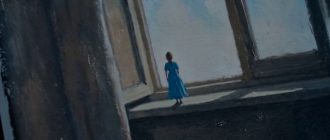
He simply looked past the guard's shoulder, scanning the stage for the little girl in the blue cap and gown, the one clutching her rolled diploma in both hands as though it might shatter.
Sophie Whitman.
Seven years old.
Soft brown hair pressed flat under her cap. Eyes lit up with the particular joy of a child who has been waiting for this day for weeks.
She had asked, that very morning, whether everyone she loved would be there.
Everyone.
Victoria had told her yes.
She had lied.
"Sophie Grace Whitman," the principal said warmly into the microphone.
The room applauded.
Sophie stepped forward.
Then she saw him.
The smile fell off her face.
For one suspended second she looked bewildered — the way a child looks when her heart understands something her words haven't caught up to yet.
Then, into the narrow silence between one wave of clapping and the next, she said it.
"Dad?"
Not loud.
It didn't need to be.
Victoria felt it pass through the room like current through water.
Daniel went still.
The guard's grip was still on his arm. Around him, heads began turning. A few children on stage craned sideways to see what was happening.
Victoria pressed a smile onto her face until her cheekbones ached.
"Sophie," she called, soft and careful, fighting to sound like a mother rather than a woman whose secret had just walked through the door in a delivery jacket. "Sweetheart. Stay on stage."
Sophie looked at Victoria.
Then she looked at Daniel.
Then she ran.
The principal reached out instinctively, but Sophie slipped past him — her gown snapping around her knees, her cap sliding halfway off her head, her diploma spinning away across the stage until it came to rest against the base of the microphone stand.
"Sophie, stop—" Victoria breathed.
But the child was already down the stage steps, burning through the center aisle, flying past rows of motionless parents, heading straight for the man in the back.
Daniel's bag dropped from his shoulder as Sophie launched herself at him.
He caught her like gravity.
For one moment, something in his face gave way.
Not loudly.
Not with any performance.
Quietly. The way men crack who have spent years teaching themselves not to.
"You came," Sophie choked into his jacket.
Daniel shut his eyes and pulled her close.
"I told you I would, Button."
Several parents turned to look at Victoria.
Button.
A father's name for his child.
Not a stranger's word.
Not a delivery man's.
A father's.
Victoria's hands went cold at her sides.
The security guard stepped back, suddenly unsure, faintly ashamed of having touched him at all.
Sophie pulled back just far enough to study Daniel's face. She pressed her small palm to his cheek, like she was confirming he was solid and real and actually there.
Then she turned around.
The entire auditorium was watching.
Her eyes moved to Victoria in the front row.
"Why did Mom say you weren't my real father?"
The room stopped breathing.
Daniel's expression shifted.
Victoria stood without moving — cream silk dress, pearls at her collarbone, every surface of her the composed, elegant mother she had constructed so carefully over seven years.
But composure is only architecture. Truth is the earthquake.
A woman in the second row whispered, "Oh my God."
Victoria opened her mouth.
Nothing came out.
Then, slowly, the man sitting beside her rose to his feet.
Edward Whitman.
Her husband.
The man Sophie called Daddy at school events.
The man whose signature appeared on every tuition check.
He looked at Sophie. He looked at Daniel. And then, last of all, he looked at Victoria.
"What did she just say?"
The color drained from Victoria's face.
Daniel lowered his gaze, his arm still curved around Sophie like a shield.
And up on the stage, the principal bent to retrieve the fallen diploma — and noticed something tucked beneath the ribbon.
A folded envelope.
Daniel's name written across the front.
CHAPTER 2 — WHAT THE ENVELOPE HELD
The principal straightened slowly.
He held the diploma in one hand and the envelope in the other, the way a man holds something he knows is above his pay grade.
He set both gently on the podium and stepped back.
Nobody moved to collect them.
Victoria's eyes went from the envelope to Daniel to Edward — and landed nowhere she wanted to stay.
Edward Whitman was not a man who raised his voice. He had never needed to. He was the kind of man who made rooms go quiet simply by adjusting his posture, and right now he stood with both hands loose at his sides and his jaw set at an angle that Victoria recognized from every argument they had never quite finished.
"Victoria," he said.
One word.
Her name in his mouth like a period at the end of a sentence she had been running from for years.
"Not here," she said.
"You don't get to choose where." His voice was still low, still controlled, but something underneath it had shifted — a tectonic thing, deep and slow and irreversible.
Around them, the auditorium existed in a kind of suspended state. Parents sat perfectly still, arms crossed over programs they had stopped reading. Teachers stood at the margins, stricken. A child somewhere near the middle of the room began to cry softly and was immediately, quietly hushed.
Sophie had not moved.
She stood in the back aisle with her arms locked around Daniel's waist, her cap fully off now, dangling from her fingers by its elastic. She was watching her mother with an expression that no seven-year-old should have had to build yet — something caught between love and the first cold knowledge that love alone does not explain everything.
"Sophie," Victoria said, stepping into the aisle.
She made her voice warm. She made it steady. She had practice.
"Come here, sweetheart."
Sophie didn't move.
"Button." Daniel's voice was barely above a murmur. "Go."
"No." Sophie's fingers tightened in the fabric of his jacket.
Daniel crouched down until he was level with her. He kept his voice low, private, a thing between just the two of them.
"I'm not going anywhere," he said. "You hear me? I will be right here."
Sophie searched his face.
"Promise."
"Yeah," he said. "Promise."
She looked at him for another long moment. Then she released him, inch by inch, and walked toward Victoria with her cap trailing behind her along the carpet like a small blue shadow.
Victoria gathered her daughter, put one hand on her back, and pointed her gently but firmly toward the stage.
"Go sit with your class," she said. "I'll be right there."
Sophie looked back once.
Daniel was still crouched where she'd left him, watching her go.
He didn't smile.
He nodded — just barely, just enough — and Sophie turned and walked back up the aisle and climbed the steps to the stage and sat cross-legged beside a girl named Claire, who handed back her crumpled diploma without being asked.
Victoria turned to face the auditorium.
She did not apologize. She did not explain. She simply looked at the room with the particular composure of a woman who has spent years making sure no one looks at her too closely — and then she said, quietly and precisely, "I'm sorry for the interruption."
Then she looked at Daniel.
"Hallway. Now."
—
The hallway smelled of crayon wax and industrial cleaner and the sugar-paper cutouts the kindergartners had made for spring.
Paper suns. Paper flowers. Paper bluebirds suspended from the ceiling tiles on loops of fishing line, turning slowly in the draft from the exit door.
Victoria crossed her arms.
Edward stood six feet from her with his hands in his trouser pockets. He had followed without being asked. She had known he would.
Daniel leaned against the opposite wall, arms loose, helmet still under one arm, the way a man stands when he has already decided he has nothing left to perform.
The three of them breathed.
Outside the auditorium doors, they could hear the principal's voice returning to script — thanking parents, calling names, filling the silence with ceremony.
"How long have you known where we were?" Victoria asked.
Daniel looked at her. "Since February."
"And you waited until today."
"You told her I was dead."
The words landed flat and clean.
Victoria's jaw tightened.
"I told her what made sense."
"You told a six-year-old her father was dead."
"I told her what was safe." Her voice didn't crack. She had been rehearsing some version of this conversation for three years. "You were gone, Daniel. You chose to be gone. You left us — "
"I left you," he said. "Not her. And you know that."
Edward made a sound — not a word, just a sound — and both of them turned.
He stood very still, looking at Daniel with the focused attention of a man doing arithmetic he already knows the answer to but needs to verify.
"How old were you," he said to Daniel, "when Sophie was born."
"Twenty-two," Daniel said.
Edward nodded once.
He turned to Victoria.
"She was seven months old," he said. "When we met."
"Edward — "
"Seven months." He pulled one hand from his pocket, rubbed the back of his neck. "You told me the father wasn't in the picture."
"He wasn't."
"Because you made sure of it."
Victoria said nothing.
"Victoria." His voice carried the particular weight of a man whose world has just reorganized itself without his permission. "Did you tell him I existed?"
The paper bluebirds turned overhead in the draft.
"He knew I had moved on," she said.
"That is not what I asked you."
She looked at the window at the end of the hall. Afternoon light. A parking lot filling with the first families to slip out early.
"No," she said. "I didn't tell him you existed."
The hallway absorbed it.
Daniel was quiet. He had known, or suspected, or told himself it didn't matter — and now he was discovering that knowing and hearing confirmed were not the same thing.
Edward turned away from both of them, walked six steps toward the window, and stood there looking at the parking lot.
"She asked me last year," he said, "why she didn't look like me."
Victoria closed her eyes.
"I told her it worked that way sometimes." He paused. "She seemed satisfied. She trusts easily." Another pause, smaller. "She trusted me."
The past tense sat in the air like smoke.
Daniel said, "She still can."
Edward turned.
The two men looked at each other for a moment — across the crayon-wax hallway, across everything between them.
"I'm not your enemy," Daniel said.
"I know what you are," Edward said. Not cruel. Just honest.
"Then you know I'm not trying to take anything from you."
"What are you trying to do?"
"I'm trying to not be dead," Daniel said, "to my daughter."
—
Inside the auditorium, the ceremony continued.
Names were called. Diplomas were handed over. The third-grade class performed a song about seasons that they had been practicing since February, and several parents cried without fully understanding why — the way adults do at children's performances, something about the small seriousness of it, the way children do not know yet that they are practicing for things that will actually cost them.
Sophie sat in her row and sang along.
Her voice was quiet. Her eyes moved, every few measures, to the auditorium doors.
Claire leaned over and whispered, "Is that really your dad?"
Sophie thought about it.
"Yes," she said.
"I thought you said your dad died."
Sophie looked at her diploma.
"I thought he did too," she said.
—
CHAPTER 3 — THE EARTHQUAKE'S AFTERMATH
Daniel was the first one to suggest they go back inside.
"We're missing her," he said.
Victoria looked at him.
"You don't get to say that."
"I know." He didn't flinch. "But she asked if everyone she loved was going to be there. You told her yes. We should at least make that true before the day is over."
The silence stretched.
Then Edward turned from the window.
"He's right," he said quietly.
Victoria looked at her husband.
Something passed between them — not forgiveness, not yet, not close to it yet — but something more functional than that. A shared recognition. The child in that auditorium was the fixed point. Everything else was renegotiable. Everything else would have to wait.
Victoria uncrossed her arms.
"The envelope," she said, looking at Daniel.
He reached into the inner pocket of his jacket and produced the original — this one unsealed.
"I wrote it three months ago," he said. "When I found out where you were. Before I decided whether to come." He held it out to her. "It's not angry. I want you to read it. But not today."
She looked at the envelope for a long moment.
Then she took it.
They walked back into the auditorium in a line — Victoria first, then Edward, then Daniel — just as the principal was presenting the final student.
A few parents turned.
Most pretended not to.
Victoria returned to her seat in the front row. Edward sat beside her. He did not take her hand.
Daniel found an empty chair near the back, set his helmet on the floor, and settled in.
Sophie was watching from the stage.
She saw all three of them — each in their place, each still there.
Something complicated moved across her face.
Then the principal said, "And that concludes our ceremony."
The room erupted.
Children exploded off the stage in a blur of blue gowns and flying caps, and the auditorium dissolved into the beautiful chaos of people who love each other finding each other in a crowd.
Sophie came down the steps like a small comet.
She reached Victoria first — threw herself in, arms around her neck, face buried in the cream silk shoulder — and Victoria held her hard and long, and said nothing, because there was nothing that would fit inside the moment without breaking something else.
Then Sophie pulled back.
She looked at her mother's face with those clear, watchful eyes.
"You lied to me," she said.
Victoria's throat worked.
"Yes," she said. "I did."
Sophie considered this with the grave practicality of a child who has not yet learned to dress the truth in anything softer.
"Why?"
"Because I was scared," Victoria said. It was the truest thing she had said in years. "I was scared, and I made a bad choice, and I am sorry, Sophie. I am more sorry than I know how to tell you right now."
Sophie was quiet.
Then she nodded — once, slowly — in the way that children nod when they are not finished but they are willing to continue.
She turned.
Edward had crouched down to be at her level. His eyes were red at the rims but dry. He opened his arms and she went into them without hesitation.
"Am I still your dad?" she asked against his shoulder.
"Always," he said. No pause. No caveat.
Sophie pulled back.
"Okay," she said.
Then she straightened her diploma under her arm and walked to the back of the auditorium.
Daniel was standing, helmet in hand, already beginning the careful geometry of a man who is preparing to give someone space.
Sophie walked up to him and stopped.
She looked up at him.
"You said you weren't going anywhere," she said.
"I'm not," he said.
"You live far."
"I know."
"How far?"
"Two hours," he said. "Maybe two and a half."
Sophie processed this.
"That's not that far," she decided.
Something flickered in Daniel's face that wasn't quite a smile but was close enough to one that it counted.
"No," he agreed. "It's not."
Sophie reached into the small pocket stitched inside her graduation gown — the one she had made her teacher add specially, for the certificate she had written herself and presented to Victoria one Sunday morning, designating Victoria permanently as Best Mom Even When Strict.
She pulled out a crumpled piece of paper.
She held it out to Daniel.
He took it and unfolded it carefully.
It was a drawing — crayon on wide-ruled paper, clearly done some time ago. A stick figure man with a delivery helmet. A stick figure girl with a blue cap and gown. They were standing in front of a building labeled SCOOL in large, uncertain letters.
Beneath it, in the painstaking capitals of a child who has recently mastered every letter:
I SAVED YOU A SEAT.
Daniel stood very still.
He folded the paper back along its original creases, once, twice, with the exact care you give something irreplaceable.
He tucked it into his inner jacket pocket, next to where the envelope had been.
"Okay, Button," he said, and his voice was not entirely steady. "Then I'll come sit in it."
—
They did not resolve it that afternoon.
No one does, really.
Victoria and Edward would spend the next six months in a different kind of ceremony — not the kind with programs and paper flowers, but the harder, quieter kind. The kind that involves lawyers and counselors and very long silences in a kitchen where the coffee goes cold. They would not make it. But they would arrive at something that functioned — a shared custody arrangement, a mutual respect for the small human between them, a polite distance that hurt less as it hardened.
Daniel would drive two hours to St. Catherine's on the first Saturday of every month. He would sit in the bleachers for soccer games. He would learn which cartoon Sophie was obsessed with and watch seventeen episodes before their second visit so he could have an opinion.
He would never be the father in the front row. That seat was taken and it had been filled with genuine love, and he was honest enough to know the difference between what he'd missed and what he could still offer.
But he would be there.
And Sophie would know it.
That, it turned out, was the only thing she had ever actually asked for.
On the morning after the graduation, she woke early and padded downstairs and found Victoria standing at the kitchen window with a coffee mug in both hands, looking at nothing.
Sophie climbed onto the stool beside her.
Victoria looked over at her daughter — at the sleep-tangled hair and the serious eyes and the diploma propped on the counter like a trophy, because she had refused to let anyone put it away.
"Mom," Sophie said.
"Yes, sweetheart."
"I'm not mad anymore."
Victoria set down her mug.
"Sophie — "
"I'm not," Sophie said, with the serene finality that seven-year-olds occasionally achieve, the kind that makes adults feel briefly and helplessly young. "But don't do it again."
Victoria pulled her daughter close and pressed her face into the mess of brown hair and breathed.
"I won't," she said.
"Okay," Sophie said.
Outside, the morning was grey and beginning.
A paper bluebird from the hallway had somehow found its way home — pressed flat against the kitchen window by the overnight wind, its fishing line gone, its wings spread wide against the glass as if it had arrived from somewhere and wasn't yet ready to say where.
Sophie looked at it.
"It found us," she said.
Victoria looked at it too.
"Yeah," she said softly. "It did."