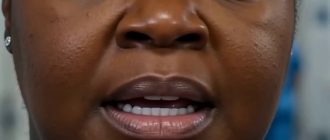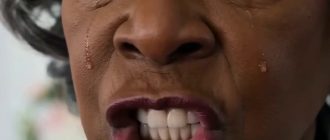
"When your husband gives you a necklace," she breathed, voice barely above a whisper, "leave it in water. Overnight."
The subway car swayed. The doors opened. The woman was gone.
She stood there on the platform, pulse unsteady, telling herself it meant nothing. A stranger. A city full of them. Half were strange.
But the seed was already in.
That night, she unclasped the necklace — the one he'd pressed into her palm across a candlelit table, their anniversary, his eyes soft and certain. She held it over a glass of water for a long moment.
Then she let it drop.
She went to bed. She didn't sleep well.
Morning light spilled gold across the kitchen tiles when she padded in. Coffee still brewing. House still quiet. Everything exactly as it always was.
She picked up the glass.
The water had gone the color of dirty milk.
She tilted it slowly toward the light.
The coating had dissolved — whatever lacquer or resin had given the pendant its shape and warmth — and in its place, sunk to the bottom like a stone thrown into a well, sat something else entirely. Small, dense, precisely engineered. Metallic. Cold in a way that had nothing to do with temperature.
Not a pendant.
A tracker.
Her breath left her body all at once.
Every dinner. Every errand. Every quiet afternoon she thought was hers alone. He'd known. He'd always known. The gift wasn't love.
It was a leash.
Her hands wouldn't stop shaking.
She set the glass down carefully. The way you set down something that might shatter — or might already have.
The coffee maker beeped. Normal. Obscene.
She pulled her phone from her robe pocket and stood very still, staring at it. Thinking about every time she'd used it near him. Every search. Every message to her sister in Portland, the one he called *too intense*, the one he'd gradually, quietly, architecturally removed from her life over the course of three years.
She put the phone face-down on the counter.
Then she went to the bathroom, ran the shower hot, sat on the edge of the tub, and thought.
—
His name was Daniel Marsh. She had loved him the way you love a house — not for what it is, but for what it makes you feel standing inside it. Safe. Chosen. Held. He had a jaw that looked carved from something deliberate and a way of listening that made you feel like the most important frequency in the room.
He worked in *logistics*. That was always the word. Logistics. She'd never pressed. She'd thought that was trust.
Now she understood it was compliance.
—
She didn't confront him that morning. Or the next.
She became a scientist instead. Patient. Cold in a new way, a useful way, a way that surprised her with its steadiness.
She borrowed her coworker Priya's phone during lunch and searched his name in combinations she'd never let herself try before. *Daniel Marsh logistics.* *Daniel Marsh Chicago.* *Daniel Marsh Hargrove Capital.*
The third search opened a door.
A lawsuit, three years old, buried under corporate filings and legalese. A woman named Colette Voss. Fraud. Surveillance. Intimidation. Dismissed — *insufficient evidence* — but the filing was still there, dry and damning in the way that court documents are, stripped of all emotion except the specific, numbered weight of accusation.
Colette Voss had been his girlfriend before her.
Colette Voss had also, apparently, been about to testify before a federal oversight committee regarding Hargrove Capital's shell accounts in three countries.
She had recanted. Moved to Scottsdale. Gone quiet.
She sat in the break room with Priya's phone and felt the shape of her own life rearrange itself, the way a room looks different once you realize the wall you thought was load-bearing is actually just drywall over nothing.
—
It took her two weeks to find Colette — two weeks of library computers, carefully worded searches, and a personal email account she created under a name that meant nothing to anyone. The message she finally sent had been rewritten eleven times. Short, in the end. *I think we were given the same necklace. I think I understand why you went quiet. I'm not going quiet.*
Colette replied in four minutes.
*Don't use that phone again. I'll call you from a number you won't recognize. Pick up.*
—
Colette's voice was flat and careful, the voice of someone who had burned all the excess away.
"He puts them on everyone," she said. "Not just the tracker. The whole architecture. The dinners, the softness, the way he makes you feel like you finally found the one person who really sees you." A pause. "That's the product. You're the product. He needs proximity to people who ask questions, and he needs to know the moment they start asking the right ones."
"What questions was I asking?"
A longer pause this time.
"Your firm audits pension funds," Colette said. "One of them is a feeder into Hargrove. You flagged an irregularity fourteen months ago. Remember?"
She did. She remembered it the way you remember a dream that bothered you without knowing why. She'd flagged it, sent it up the chain, been told it was a rounding error, moved on.
"He was assigned to you," Colette said. "Before the candlelit dinner. Before the anniversary. Before any of it."
The kitchen floor felt very far away.
"There's a congressional subcommittee," Colette continued. "They've been building a case for two years. They need one more source — someone inside, with documentation. Someone he hasn't already neutralized." Another pause, weighted differently. "I couldn't be that person. I was too afraid. I had a daughter. I still do." Her voice didn't break, but it bent. "I'm not asking you to do anything. I'm just telling you the shape of it, so you know what you're actually standing inside."
—
She made her decision in the produce aisle of a grocery store on a Tuesday, which was not a dramatic location but was, she thought, appropriate. Most real decisions happen somewhere unglamorous. The body just quietly chooses and the mind catches up later.
She bought oranges. She came home. She began.
For six weeks she documented everything — the irregularity she'd flagged fourteen months ago, the chain of correspondence where Hargrove's CFO's assistant had asked her supervisor to bury it, the financial threads connecting the shell accounts to the pension fund. She worked on borrowed devices, in libraries and coffee shops, building something careful and irrefutable. By the time she was finished, she had worn the tracker for eight months total. She had known the truth for six weeks of them. The distance between those two numbers was something she tried not to think about too much, and mostly failed.
—
Daniel came home at seven-fifteen.
She was sitting at the kitchen table with a glass of wine she hadn't touched, and in front of her, arranged with a precision that was its own kind of statement, were three things: a printed copy of the Colette Voss lawsuit filing. A USB drive. And the glass from that first morning, refilled with clean water, the tracker sitting on the bottom like a small ugly truth.
He saw her face before he saw the table. She watched him process it — the micro-adjustment behind his eyes, that logistics mind already running scenarios, calculating.
"Rough day?" he said. Easy. Warm. Horrifying.
"Sit down, Daniel."
He sat. He looked at the table. She watched something shift in him — not guilt, she realized. Not even fear. *Calculation.* The question behind his eyes wasn't *how did she find out.* It was *how do I contain this.*
That made it easier.
"The USB drive goes to the subcommittee tomorrow morning," she said. "I've been documenting for six weeks. The irregularity I flagged fourteen months ago, the chain of correspondence where your CFO's assistant asked my supervisor to bury it, the connection between Hargrove's shell accounts and the pension fund. All of it." She paused. "Colette Voss has agreed to un-recant. In writing. Dated yesterday."
His jaw tightened. "You don't understand what you're—"
"I understand exactly what I'm doing." Her voice was steady. She hadn't known it would be steady. She was grateful. "There are two copies of everything on that drive. One goes tomorrow. One is already somewhere you cannot reach it, with someone you don't know, who will send it automatically if I don't check in." She tilted her head slightly. "That part I learned from you."
Silence.
The refrigerator hummed. Somewhere outside, a car passed.
Daniel Marsh looked at her for a long moment — and for just a second, beneath the calculation, beneath the logistics, she saw something that might have been the closest he could come to being caught off guard. Not remorse. But recognition. She had become, briefly, a variable he had not accounted for.
"You should call your lawyer," she said. "I'll sleep at Priya's."
She stood, picked up her bag — already packed, she'd packed it that morning — and walked to the door.
"How long?" he said. Quiet. The tone was almost human.
She stopped. Didn't turn around.
"Which part," she said. "How long was I wearing your tracker, or how long did I know?"
He didn't answer.
"I wore it for eight months," she said. "I knew for six weeks. The difference between those two numbers is the only thing I'm still angry about."
She opened the door. The night air was cool and indifferent and hers.
—
The hearing was a Tuesday in March, pale winter light coming through institutional windows, the room smelling of old carpet and bad coffee.
She gave her testimony in a clear, measured voice. Colette sat two rows behind her. They didn't speak — they'd agreed not to, on legal advice — but when she walked back to her seat, she felt Colette's eyes, and she understood that some forms of solidarity don't require words.
Daniel Marsh's attorney filed three motions to have the testimony excluded. All three were denied.
Hargrove Capital's CFO resigned before the week was out. Two others followed. The shell account structure unraveled the way these things do — slowly at first, then all at once, the whole architecture collapsing into the public record where it would live forever, dry and factual and damning.
—
She didn't think about Daniel often after that. When she did, it was without the shape of grief she'd expected. More like the feeling of pressing your tongue to the place where a tooth used to be. Something was gone. The space it left was its own kind of clean.
The old woman on the subway — she thought about her more.
She never saw her again. She looked, in the idle way you look for things you don't expect to find. She had the sense, irrational but persistent, that the woman had known exactly what she was saying — had perhaps said it before, to others, in other cars on other lines, some quiet network of knowing passing its warnings through the city like a current running beneath the streets. She thought: *how many women has she warned, hoping one of them would leave the necklace in water.*
She hoped the number was rising.
Her sister called from Portland on a Thursday night, late, the comfortable kind of late between people who have re-learned how to talk to each other.
"You sound different," her sister said.
"Good different or bad different?"
A pause, thoughtful and warm. "Like yourself," her sister said. "Like you finally stopped apologizing for taking up space."
She looked at the kitchen, her kitchen, the tiles still catching the last of the evening light.
"Yeah," she said. "Something like that."