# You'll Shrivel Up Without a Man
The box was waiting on my welcome mat when I got home from the food truck lot Tuesday night. One of those clear plastic bins, the kind you use to store Christmas decorations, only this one had a sticky note on the lid: *"Found this in the garage. Didn't want to just toss it. — Marcus."*
I hadn't seen him in eight months, since the divorce papers turned final. He'd moved Lana into the house before the ink was dry. And now he was thoughtful enough to drive across town to the little apartment off Hawthorne, the one where the sump pump groans whenever it rains, just to give me back my own things.
I carried the bin inside, thumb still sore from pulling double shifts at the upholstery shop. The lid popped off, and the whole thing smelled like the cinnamon pinecones they used to sell at that craft store in Sellwood. On top was a photo album from our trip to Cannon Beach, back when we still pretended we were good for each other. Underneath: a handful of scarves I'd crocheted myself, a half-empty bottle of lavender lotion, a collection of bike tire patch kits I'd left in his shed. At the bottom, wrapped in a brown paper towel, was a single piece of sea glass, frosted and green. I didn't remember keeping it.
That sea glass sat on my kitchen windowsill while I brushed my teeth, while I tried not to think about Marcus. By midnight I was on the kitchen floor, dancing barefoot in my pajamas to an old Motown station on the radio, the way I always did when my brain wouldn't shut off. The floorboards hummed under my feet. Through the wall, the steady whirr of Eli's pottery wheel filled the gaps between songs. Our building is a split-level Craftsman converted into four units, and Eli's basement studio sits right next to my kitchen. Every night, the same low drone — wet clay spinning, his hands shaping something. I'd never met him, but I knew his noise better than I knew any playlist.
I danced until my calves ached, until I couldn't remember which parts of that plastic bin were mine and which were just Marcus's excuse to knock.
I should have been suspicious of Darcy a lot sooner.
She and I had been friends since community college up in Seattle. After the divorce, she was the one who brought over a growler of IPA and a ziti bake and let me cry on her couch for two straight weekends. She told me I deserved better, that Marcus was a gaslighter, that leaving him was the smartest thing I'd ever done. And then she'd text him.
I didn't know that then. In my head, Darcy was still the woman who'd held my hair back at a Phish concert in '09. So when she heard about Marcus dropping off the bin, she sounded furious on my behalf.
"He's just trying to worm his way back into your head," she said over the phone. "He wants to make sure you still think about him. You aren't, are you?"
"I threw the whole bin in the alley," I said, which was true.
"Good. You don't need his crap."
I heard the relief in her voice and mistook it for loyalty.
The invitation came a month later. Our mutual friend Jamie was throwing a housewarming at her new place in the Alberta Arts district — backyard barbecue, bring a plus-one. I'd promised myself I wouldn't let Marcus scare me off from my own friend group, so I went.
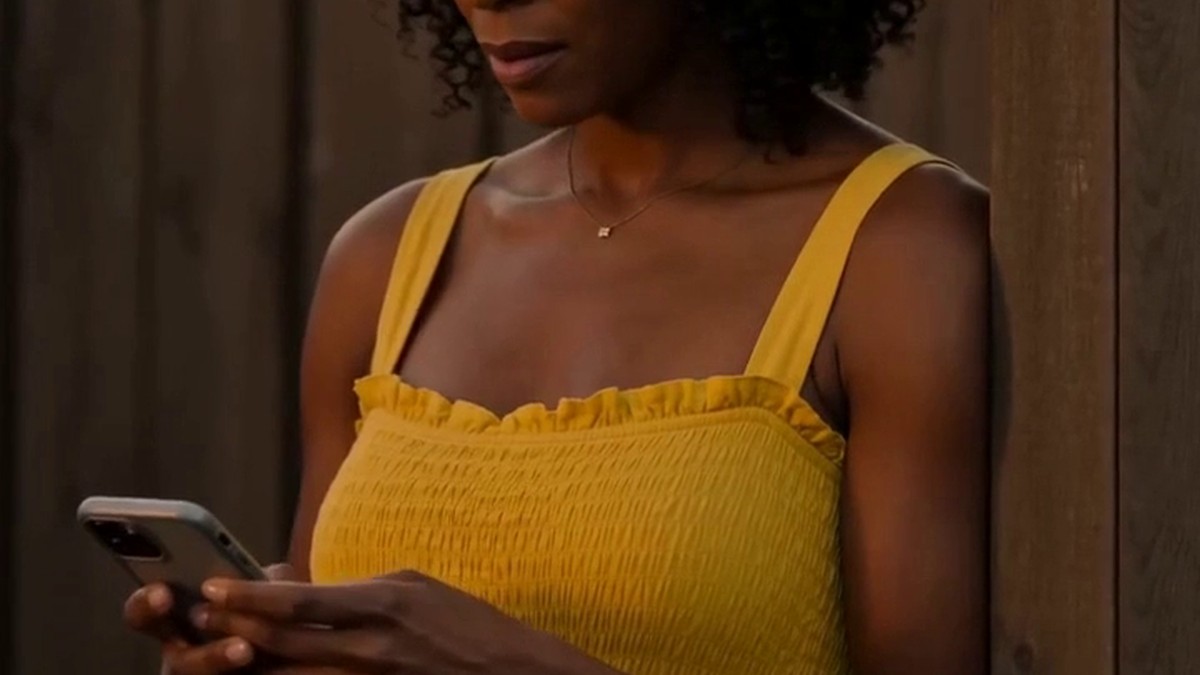
Marcus was already there when I arrived, a plate of smoked brisket in his hands. Lana hung off his arm like a pale-gold trophy, her sundress the exact shade of a Meyer lemon. He'd grown a beard since I'd last seen him, one of those carefully sculpted ones that take more upkeep than a rescue dog.
The first hour was fine. Small talk about the Blazers, the price of lumber, the new cheese shop on Division. I stayed at the far end of the picnic table, picking at coleslaw, while Darcy chattered about her cat's recent surgery, glancing at her phone every few minutes.
Then Marcus decided to be the center of attention.
"You know what Callie used to make for dinner?" he said, loud enough to slice through three separate conversations. "Cereal. Just cereal. The woman can reupholster a vintage wingback chair with her eyes closed, but she once burned a pot of water. I'm not kidding. I survived three years of marriage on Honey Nut Cheerios and takeout."
Lana giggled and squeezed his arm. "Poor baby. I make him grilled salmon three times a week now. He's spoiled."
A few people laughed. I didn't. Marcus caught my eye and waited for the reaction. That was the thing about him — he didn't want me to break down. He wanted me to fight, to scream, to prove he still mattered. I'd given him nothing in the divorce, and the nothing was eating him alive.
I set down my fork. "You always did love cereal. It was the one thing you couldn't criticize me for, so you had to invent something. That's dedication."
The table went still. Marcus's jaw tightened, but before he could respond, Darcy jumped in with another cat story, and the moment passed.
Later, Lana excused herself to the restroom, and Marcus slid onto the bench next to me, close enough that I could smell his cedar-heavy cologne. He put a hand on my shoulder like we were old teammates.
"You need a man, Cal," he said quietly. "Seriously. You're gonna shrivel up on your own. Lana's brother is still single. He's not picky — you'd be perfect for him."
"Perfect for him," I repeated. "Not the other way around."
"See? That's the problem. You twist everything. I'm trying to help."
He squeezed my shoulder once, then walked off toward the drink cooler.
A few minutes later, Darcy's phone buzzed on the table. She'd gone to help Jamie with the dessert table and left the screen up, unlocked. I wasn't snooping. I just happened to look down at the exact moment a notification slid onto the screen.
*Marcus: She still sitting alone? Keep me updated. You know why.*
My stomach dropped, but I didn't move. Another message appeared, then a third — a whole thread, visible in the preview.
*Darcy: She's by herself, barely talking. No one's with her. I'll call you tonight with the rest.*
*Marcus: Good. Let me know if another guy even looks at her. I don't want her finding someone before Lana's brother makes his move. The apartment's mine, the crowd's mine — she doesn't get to just walk away into a happy ending.*
The screen dimmed, but the damage was done.
I'd spent ten months telling Darcy everything — the nights I couldn't sleep, the panic attacks in the grocery store parking lot, the money I'd borrowed from my mom to start the upholstery business. And every word of it had gone straight to the man who'd left me for his dental assistant.
I didn't cry at the party. I didn't make a scene. I stood up, picked up my purse, and walked to the edge of the yard, where Jamie was setting out a lemon meringue pie.
"Your backyard's beautiful," I said. "Thank you for having me."
"You're leaving already? But—"
"I'm fine. Just one quick thing." I raised my voice enough for the whole yard to hear. "Before I go, I want to clear something up. Marcus, you've been feeding off updates about my life from Darcy for almost a year. She's been telling you when I cry, when I'm lonely, when I'm doing well — everything. And you've been passing that on to Lana like it's some kind of power trip. That's not concern. That's ownership. I left you the house, I left you the mutual friends, I left you the life. But you can't leave me alone. So here. You win. I'm done."
I held up my own phone, opened to the group chat we were all in, and read the two Darcy messages out loud. The silence was so sharp I could hear a neighbor's wind chimes two houses down.
Then I looked at Lana. Her face had gone the color of skim milk. She stared at Marcus, then at her phone, and without a word, walked inside the house.
I left through the side gate. One of Jamie's planters had tipped over, soil spilling onto the brick path, and I stepped around it. I didn't look back.
That night, I danced for over an hour. Not from pain, but from release. The Motown played, my feet slapped the linoleum, and I spun until the scars on my heart felt less like wounds and more like tattoos. Through the wall, Eli's wheel whirred steadily, almost in rhythm.
The next morning, I woke up to a package on my doorstep. A small, lidded clay pot, the kind you'd use for a succulent, and a note folded inside:
*I've been listening to your kitchen concerts for nine months. They're the best part of my evenings. — Eli (the pot guy next door)*
I read the note three times in the hallway. Then I did something I'd never done in my entire adult life: I marched into my kitchen, took the sea glass off the windowsill, buttered two pieces of sourdough toast, and walked to Eli's studio.
The door was open a crack, the air thick with wet earth and kiln heat. He was at the wheel, sleeves rolled up, hands moving over a cylinder that was slowly becoming a bowl. He looked up when I cleared my throat.
"I brought breakfast," I said. "And a question."
Eli wiped his forehead with the back of his wrist, leaving a smudge of clay on his skin. "What's the question?"
"Do you dance?"
He laughed, a deep, surprised sound that made the room feel warmer. "I do now."
I handed him the sea glass as a thank-you for the pot, and he set it on the windowsill of his studio, next to a glaze jar and an old subway token. Then he kicked the wheel back into motion, nodded toward the empty stool by the workbench, and I sat down with my toast while the clay spun between his palms.
I heard about Lana leaving Marcus before the weekend was out from Jamie, who heard it from someone else at the party. The house he'd fought so hard to keep, apparently, felt very big and very empty. Darcy texted a long apology a few days later, something about how she'd thought she was "helping everyone heal." I read it once, standing over the recycling bin with the empty plastic tub from Marcus in my hands. I dropped the tub in, blocked her number, and went back to my toast, which had gone cold, and to the sound of the wheel still turning through the wall.