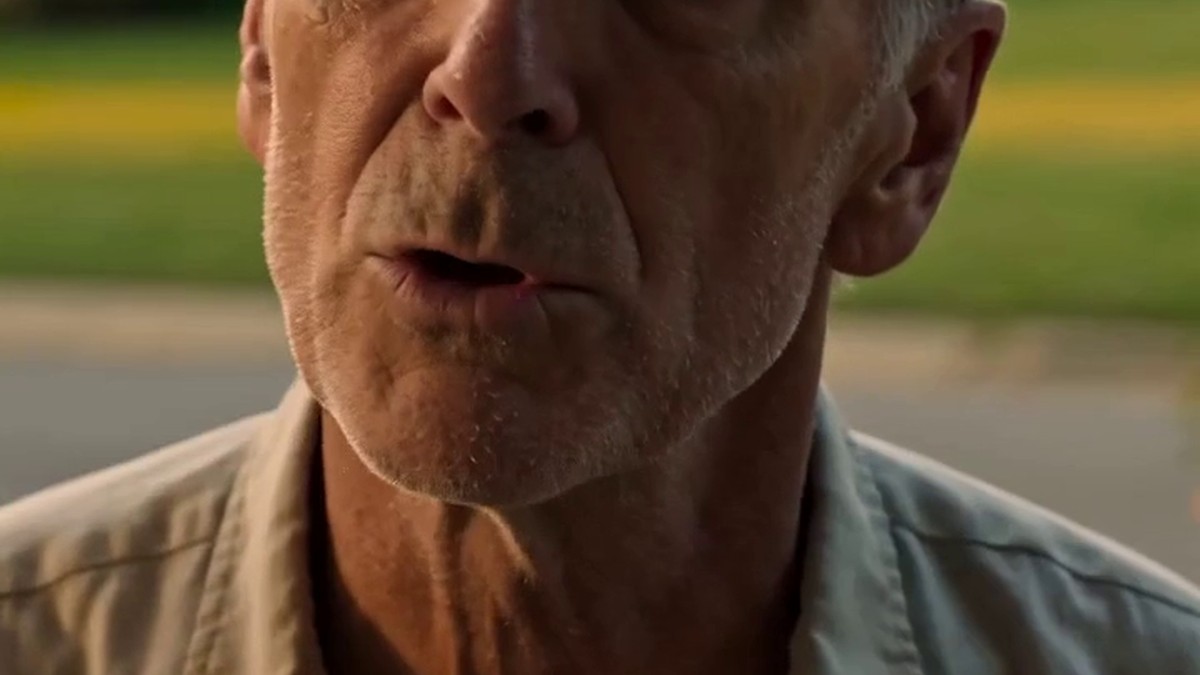
Richard showed up on a Tuesday, the same way he’d left — unannounced, with a duffel bag in one hand and a look in his eyes I hadn’t seen in years. I opened the door in my old gardening shorts, dirt still under my nails from the geraniums I’d been repotting on the porch. He looked thinner. Tired.
“Nora, I want to come home,” he said.
I didn’t step aside. Didn’t smile. I just leaned against the doorframe and let the silence stretch, because fifty-six years on this earth had finally taught me that not every silence needs to be filled by a woman.
A little over two months earlier, he’d stood in almost the same spot with a suitcase and told me he was done. “I can’t live like this anymore. You’ve let yourself go, Nora. You’re not the woman I married. I’m sick of the exhaustion on your face every time I walk in the door.” He said it like he was reading off a list he’d been rehearsing in the car.
Here’s what twenty-nine years of marriage had taught him to see: a waist that wasn’t a size six anymore, lines around my mouth, hands that looked like they’d done some living. What he didn’t see, what he’d apparently never seen, was the life those hands had held together. The year he tore his rotator cuff and I drove him to every physical therapy appointment, sitting in that vinyl chair with a lukewarm coffee, never once sighing. The three Christmases his business nearly went under and I maxed out my own credit card so the kids wouldn’t feel it. The thousand small ways I’d absorbed his bad moods, his late nights, his sharp words, and still managed to set a table that felt like a safe place. I’d guarded his dignity even when he’d thrown his own away, and he was telling me I’d let myself go.
A week after he left, a mutual friend sent me a screenshot. His Instagram post. There he was, arm around a woman with beach-blonde hair and a nervous smile — Kelly, twenty-eight. The caption read, “Fresh start.” I stared at the photo for probably twenty minutes, my coffee going cold on the counter. He looked so eager, the way a man looks when he’s trying to prove the calendar hasn’t caught up with him. And she was beautiful, the kind of beautiful that doesn’t know what it costs yet.
I spent the next several weeks moving through my own house like a tenant who’d just been evicted. The mornings were the worst — I’d wake up and for about seven seconds I’d forget. Then my hand would drift to his side of the bed, hit that smooth, cold sheet, and it would all come crashing back. The kitchen clock sounded louder. The second mug in the cabinet felt like an accusation. I stopped opening the photo albums.
Then one rainy Saturday, I was digging through a box in the back of the hall closet, looking for an old tax return, when my fingers hit a spiral notebook I didn’t recognize. It was wedged between a macaroni necklace our daughter made in second grade and a crayon drawing of our dead golden retriever. I opened it and saw my own handwriting from almost thirty years ago, loopier and more hopeful.
*I want to be a woman whose heart never hardens. I want a home where silence feels easy, not heavy. I want to be the mother my kids come back to out of love, not obligation. I want to love so deeply that the people around me stop being afraid of their own weakness.*
I sat on the hallway floor and cried — not the kind of crying you do at a funeral, but the kind that cracks something open you didn’t know was sealed shut. Because for the first time since he’d walked out, I saw the real math. He hadn’t discarded a worthless woman. He’d walked away from a woman so full, so layered, he couldn’t even comprehend what he was holding. My body had changed because life had moved through it. My face had lines because I’d laughed through sixteen-hour days and wept at two in the morning when nobody was watching. These hands had mixed pancake batter, filled out a hundred permission slips, held his mother’s hand when she passed. And he’d reduced all of it to a waistline.
That afternoon I drove to the farmer’s market downtown and bought myself sunflowers — big, messy, unapologetic ones that didn’t match any vase I owned. I put them on the dining table and for a solid five minutes I just stood there looking at them. It was the first time since he’d left that the house felt beautiful, and I was the only person in it.
So when Richard showed up on that Tuesday with his duffel bag and his practiced regret, I already knew what I was going to say. He launched into his speech before I could get a word in, the one he’d clearly rehearsed in the car this time around.
“I messed up, Nora. Everything with Kelly — it’s perfect in pictures, but it’s not real. She doesn’t know how to just *be* with someone. She doesn’t get me. You’re the only one who ever made a real home for me.”
I let him finish. I even felt a little flicker of something — not pity, exactly, but maybe recognition. He was drowning, and for the first time in nearly three decades, he was looking at me like a life raft.
“Richard, you had a home,” I said, my voice steadier than I expected. “You packed a bag and you yanked the door shut yourself.”
“I made a mistake — ”
“You did.” I nodded. “But your mistake isn’t my job to fix anymore.”
He looked at me like he was seeing a stranger. And I realized, with a strange, quiet pride, that he was. The woman who would have opened the door wide because she’d been trained to absorb everyone else’s regret — that woman had spent two months learning how to let the silence be.
I closed the door. A soft click, nothing dramatic.
Later that night, I made a pot of chamomile tea and carried it out to the front porch, where the geraniums were still damp from the afternoon rain. The air smelled like wet earth and someone’s distant woodfire. I sat on the wicker chair, wrapped both hands around the warm mug, and just listened — to the cicadas winding up for the evening, to the neighbor’s wind chime two houses down, to the small, steady rhythm of my own breathing. The loneliness didn’t feel like a punishment anymore. It felt like a room I’d finally stopped being afraid to sit in alone.
I was fifty-six, with sunflowers in my kitchen and dirt under my nails and a whole unwritten calendar stretching out in front of me. Not an ending. Not some sad epilogue to someone else’s story. I was the beginning I’d been waiting almost three decades to meet.