I found out about the other woman eleven days ago. Rick was in the shower and his phone lit up on the kitchen counter. The message said, “Baby’s kicking like crazy today. Can’t wait for our little family. Love you more than anything.”
I read it three times. Then I put the phone back exactly where it was and went back to chopping onions for his meatloaf.
Eleven days. I kept making his meals, folding his undershirts, listening to him complain about traffic on I-90 every evening. He had no idea that every word out of his mouth had already turned to ash in my ears.
The worst part wasn’t the cheating. It was the slow-motion realization that I’d spent twenty-six years building a life with a man I didn’t know. And the even worse part—I was fifty-three, and the thought of sitting alone in this house every night made me so sick to my stomach that I’d spent years pretending not to see what was right in front of me.
This morning, Rick left for “work” at seven-fifteen, same as always. I called the school library and told them I had a stomach bug. Then I spent the next three hours repotting African violets on the kitchen table, my hands buried in cool, dark potting soil that smelled like a wet forest after rain.
At exactly eleven, the doorbell rang.
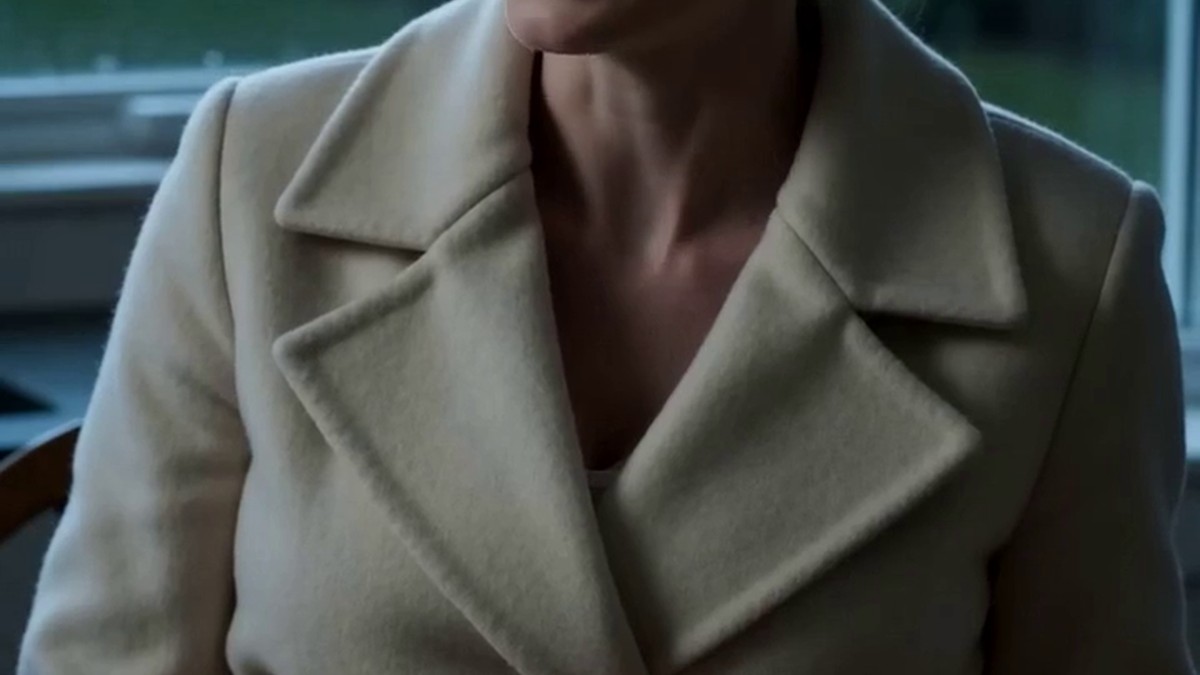
On my front porch stood a young woman. She couldn’t have been more than twenty-six. Her cream trench coat hung open over a big, round belly. Her hair was slicked back in a tight bun, a thin gold necklace rested at her throat, and she carried a leather bag that looked like it cost more than my yearly property taxes. Her eyes were what got me—flat, appraising, like someone reading a listing sheet.
“Margaret, right?” she said, skipping the hello entirely. “I’m Tessa. Richard’s future wife. We need to talk.” A pause. “You gonna let me in?”
Through the front window, I could see my neighbor across the street, Mr. Patterson, walking his beagle up the edge of my azaleas. The old habit kicked in fast—no scenes, no raised voices, don’t let the neighbors hear anything ugly.
I stepped aside.
Tessa walked in like she’d already bought the place. Her wet boots clicked on my grandmother’s oak floors. The hem of her coat brushed against the shoe bench and left a damp streak. She kicked off her boots, shoved my house slippers out of the way with her toe.
“Where’s the bathroom?” she asked, as if she’d been here a hundred times.
“Down the hall. Second door on the left.”
While she was in there, I went to the kitchen and scrubbed my hands at the sink. The dark water swirled down the drain. My fingers wouldn’t stop trembling.
When she came back, she ran a hand along my kitchen counter, inspected the cabinet handles like she was pricing a listing. She took a chair, lowered herself into it, and placed both hands on her belly.
“I won’t offer you coffee,” I said, sitting across from her.
“Good. Caffeine makes the morning sickness worse.” She settled in. “Richard is a gentle man. He doesn’t want to hurt your feelings. That’s why he keeps putting off the divorce talk. So I decided to handle it myself.” Her mouth curved. “We’re adults, right? No need for games.”
I waited.
“We’re having a son,” she went on, smoothing the coat over her stomach. “He needs room to grow. And this house—well, it’s got three bedrooms, a nice yard, good schools. My apartment is seven hundred square feet with a kitchen the size of a closet.” She reached across the table without asking and helped herself to a huckleberry scone from the covered dish I’d baked that morning.
She took a huge bite. Chewed. Then made a face. She dug a berry seed out from between her teeth with a manicured nail and flicked it onto my white linen napkin. Then she wiped her sticky fingers on the same napkin.
“I can’t stand it when there’s junk in my food,” she mumbled, reaching for another scone.
Something inside me—some old, tired, people-pleasing part that had spent decades swallowing every sharp edge—snapped clean in half.
“Anyway,” she continued, crumbs on her lip, “we’ve talked it over. The smartest thing would be for you to move out to the lake house. Richard said it’s a little dated, but perfect for a woman your age. Fresh air, quiet, room for a garden. We’d stay here with the baby. There’s a good pediatrician three blocks away, and the park is right around the corner. It’s the logical choice.”
The lake house. She meant the cabin my parents left me, the one with the leaking roof that Rick refused to fix because he didn’t want to spend the money.
I looked at the wind chime hanging by the kitchen window—a silly thing my mother made out of old silver spoons. It never made a sound because the spoons were too heavy to clink together. It just hung there, silent and stubborn, for thirty-one years.
And that’s when I felt it—not panic, not tears. A cold, clear understanding that I was sitting in my own kitchen, allowing a stranger to wipe her feet on me.
I stood up. I walked to the window and closed it, shutting out the rain that had started to blow in over the sill. Then I turned back to the table. I didn’t sit. I planted both palms on the edge of the counter and looked Tessa straight in the eye.
“Richard didn’t tell you the most important thing,” I said.
Her hand froze halfway to the scone plate. “What’re you talking about?”
“He didn’t tell you that this house was never his.” A pause, watching her face shift. “It belonged to my grandmother. She left it to me in her will, three years before Richard and I even met. His name has never been on the deed. Not once. He’s not even registered to vote at this address.”
Her eyes went wide. The color drained from her lips.
“You’re lying,” she said. “Richard showed me receipts from the remodel. He paid for the kitchen renovation. This is his house!”
“He wrote some checks for the kitchen,” I said. “Seven years ago. The money came from a home equity loan that I co-signed because he said he needed it for his business.” I let that sink in. “Did he happen to mention that his business went under? That he hasn’t had a real job in almost two years? That he’s got a hundred and eighty-four thousand dollars in debt, and collections agencies have been calling this house three times a week for the last six months?”
Tessa’s jaw went slack.
I walked to the buffet by the window and picked up a thick manila folder. I dropped it on the table in front of her.
“Every fancy dinner he took you to. Every bouquet of roses. Every weekend trip to the coast. All on my credit cards, Tessa. Cards he ran up in my name. I’ve got the statements right here.”
I leaned forward, my voice dropping low enough that she had to strain to hear.
“Richard didn’t tell you that I packed his suitcases two nights ago and put them on the back porch. And he didn’t tell you that I’ve already met with a divorce attorney. So tonight, when he shows up at your seven-hundred-square-foot apartment, he won’t be coming with keys to a big house. He’ll be bringing two beat-up suitcases and a stack of debt-collection letters.”
Her whole body went still. Then her face crumpled. Black streaks of mascara ran down her cheeks. Her shoulders shook, and she gripped the edge of the table like the floor had dropped out from under her.
“You’re lying,” she said, her voice barely a breath. “You’re just saying that.”
“Open the folder,” I said. “Or don’t. Go home and ask Richard yourself. But you might want to do it before the baby comes, because once he’s born, Richard’s going to have to explain why he can’t afford diapers.”
She stood up so fast the chair tipped over backward. She snatched her bag off the floor and ran for the front door. I heard her fumbling with the lock, her breath coming in ragged gasps. The door slammed hard enough to rattle the silent wind chime.
Then silence.
I stood in the kitchen for a long moment, looking at the empty chair, the half-eaten scone, the stained napkin. Then I moved.
I took the napkin and dropped it in the trash. I wiped down the counter where her sleeve had left a smudge of flour. I swept the floor where her wet boots had left prints. Then I opened the junk drawer, found the spare key to the front door—the one Rick always forgot to take—and dropped it in the trash too.
At two-forty that afternoon, I walked into Ace Hardware on 29th Avenue and bought a Schlage deadbolt for $38.95. The cashier, a kid with a name tag that said “Dylan,” asked if I needed help installing it. I told him no, I could handle it. When I got home, I took a screwdriver from the drawer and did it myself. Took me about forty minutes. I tested it four times to make sure it clicked.
Then I went out to the back porch, where two suitcases sat in the rain. I dragged them to the front, down the steps, and left them by the mailbox. I went back inside, locked the new deadbolt, and hung the new key on the hook by the door where the old one used to be.
At six-forty-two, a pair of headlights swept across the living room wall.
I was sitting in the dark, watching the rain run down the front window. I saw Rick’s old Ford F-150 roll into the driveway. I saw him get out, pop the collar of his jacket, and walk to the front door. He reached for his key. He tried it once. Twice. Then he stood there, frowning, turning the key this way and that.
He rang the doorbell. I didn’t move.
He rang it again. Then he started knocking, calling my name.
I stayed in the chair by the window, the new key warm in my palm.
On the porch railing, a gray tabby cat sat watching him, its tail flicking back and forth in the rain. It had been sitting there every morning for a month, waiting for me to put out food. I’d named him Jasper.
Rick knocked one more time, then turned toward the driveway. He stopped when he saw the suitcases by the mailbox. He stood there for a long minute, the rain soaking through his jacket, his breath rising in little clouds.
Then he picked them up, one in each hand, and walked back to his truck. He tried the key one last time in the door of his own house. It still didn’t turn.
The cat watched him drive away.
I sat there for a long time after that, listening to the rain, feeling the new key press into my palm. In the morning, I’d call the locksmith to rekey the back door too. And I’d call my attorney to make sure the divorce papers went out before the end of the week.
But for now, I just sat there in my house—my grandmother’s house, my name on the deed—and a door locked behind me that no one else could open. Not after twenty-six years. Not ever.