I was thirty-four when Kayla tossed the engagement ring across the table.
The box was cheap navy velvet, the kind a kiosk jeweler uses, and she opened it with two fingers like she’d found a bug in her salad.
The restaurant sat on the nineteenth floor of a tower off South Tryon in Charlotte. Below, a light-rail train whined past the Duke Energy Center. Across the street, a valet in a bow tie parked a black Escalade under the awning. Kayla ordered the $68 filet, told the server to bring extra béarnaise, then pushed the plate away after three bites.
“Cole, tell me this is a joke.”
She used the edge of her butter knife to nudge the box back across the white tablecloth. “You fix transmissions. You live in a one-bedroom off Sugar Creek. I’m twenty-eight. I am not splitting rent with a guy who keeps a floor jack in his kitchen.”
The ring — a quarter-carat, clean, thin gold band — sat beside her untouched glass of sparkling water. She stood, straightened the dress I had paid for two nights earlier, and said she had better options.
“Maybe an extra brake job tonight covers it.”
Then she tossed the box. It hit the rim of the water glass, flipped, and the ring rolled under the table. I remember the clink of glass, then the soft tick of metal against the floor.
I didn’t call after her. I crouched, found the ring near the leg of a dining chair, pocketed it, and dropped $300 on the table without reading the check. Outside, the air smelled like diesel and fried dough from a food cart.
The thing is, I was not just a mechanic.
I had been one once. I grew up in my grandfather’s brake shop on Wilkinson Boulevard. When he died, he left me the building and a line of credit I almost didn’t use. By the night Kayla tossed the ring, I owned Mercer Auto Group: four luxury dealerships between Charlotte and Raleigh, a parts distribution hub, and the building next to the restaurant? Not that one, but close.
I’d hidden the money on purpose. My previous girlfriend — a second-grade teacher with a soft voice — had told her sister I was “a walking ATM with a decent jawline.” I heard it from the sister’s ex at a bar. I didn’t want that again.
So with Kayla, I drove a 2012 Honda Accord with a cracked dash and a coffee stain on the passenger seat shaped like Florida. I wore $16 jeans from Target. I said I worked the service line.
I wanted her to pick the guy, not the dealership.
She didn’t.
The next morning I sat in my office above the showroom off Independence Boulevard, across from a Bojangles, next to a used-car lot with a dancing tube man. A church van with a flat tire idled in bay three. Someone had left a half-eaten pack of Lance peanut butter crackers on top of the vending machine.
Dana Whitfield knocked on the glass. She was our logistics director, twenty-nine, six months in. She wore a gray sweater with sleeves too long and kept her hair in a tight knot. She fought parts suppliers like a pit boss.
“Mr. Mercer, you got a minute?”
I told her to come in without looking up.
She didn’t sit. She set her phone on the desk, screen up. It showed an Instagram story — Kayla at a cocktail bar downtown, wearing the bracelet I’d paid for, clinking a glass with a man who had “real estate developer, married to his third wife” written all over him.
“Her caption says ‘upgrade in progress.’ I thought you should know before Monday’s staff meeting.”
I didn’t say anything. I turned the pen between my fingers until the cap cracked.
“Also,” Dana said, “she called the parts counter this morning and asked if your employee discount covered a brake job on her boyfriend’s Range Rover.”
I told her to leave. “I don’t pay you to monitor my personal life.”
She slid the phone into her pocket and left. The door clicked.
I sat there until the ice in my drink melted.
By evening, I knew I’d been a jerk. Dana had warned me and I’d made her the target. I went down to parts to apologize. The floor manager said Dana had left early, looked pale, said something about a landlord changing the locks.
I opened her file. She lived in a complex off Nations Ford Road, second floor. I drove there in the Porsche I usually kept hidden two blocks away.
She was outside, loading a laundry basket full of books into the trunk of a rusted Corolla. Her hair had come loose. A guy in a red hoodie was unscrewing the door hinges behind her.
“Let me guess,” she said, not looking at me. “You need me to work Sunday.”
“No. I came to apologize. And to help.”
We moved her stuff in two trips. The condo was a furnished unit I’d bought as a rental near the light-rail stop in South End. It smelled like fresh paint, and the refrigerator hummed one note too high.
I made coffee in the Mr. Coffee. She sat on a box, cradling the mug with both hands.
“I owe you an explanation,” she said. “I saw you speak at a logistics conference in Greenville three years ago. You wore a suit that cost more than my first car. I applied here because I wanted to learn from you. When I got here and saw you in that greasy coverall, I didn’t understand. Then I figured it out.”
I set my mug down. “You’ve known this whole time?”
“Six months. I didn’t care. I needed health insurance. My mom’s medical bills ate everything. And I liked watching you be a normal person. Nobody in that showroom knows their boss can rebuild a transmission.”
The coffee went cold. We sat there until the light-rail train rumbled past the window.
Eight months later, the Saturday before my wedding to Dana, I was in the glass office above the showroom. Across the desk stood a girl from Central Piedmont Community College, there to pick up a donated car for their auto program.
The car was the Accord. The same sun-faded, cracked-dash, 2012 Accord Kayla had refused to ride in. The title sat between us. I uncapped a pen. On the line for sale price, I wrote “one dollar ($1.00).”
Dana stood behind my chair, her hand on my shoulder.
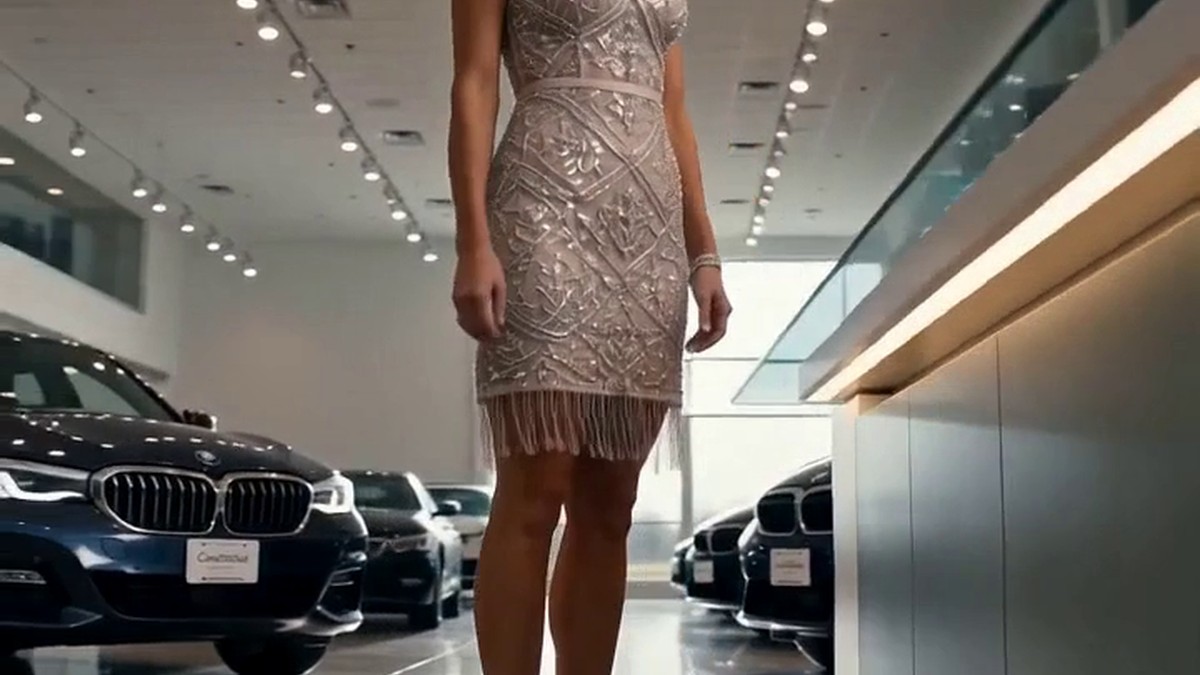
Then I heard heels on porcelain tile. Kayla walked into the showroom, hair smelling like vanilla, carrying last year’s designer bag. She went to the reception desk.
“Is the mechanic working today? The tall one who drives the old Honda.”
Marcus, the twenty-year-old sales assistant, pointed through the glass. “You mean Mr. Mercer? He’s the owner. That’s him in the office with his wife. They’re donating his personal car this morning.”
Kayla turned. Our eyes met through the glass.
I didn’t move. I finished signing, slid the title across the desk to the girl, and shook her hand.
Then I stepped out, folded the carbon copy, and tucked it into Kayla’s hand.
“The car you said wasn’t good enough,” I said, “just paid for a scholarship. Blue book was nine hundred and ten dollars. I took one.”
She didn’t speak. Her fingers closed around the paper. I walked back inside, took Dana’s hand, and we left through the side door. The last thing I saw was Kayla standing by the reception desk, the receipt in her fist, the light from the showroom windows moving across her face.