I worked the manager’s desk at the First Atlantic branch on Exchange Street for twelve years, and you get a sense for when money is about to tear a family in half. It’s never the amount. It’s the way a person touches the pen.
Megan came in on a Tuesday in late October. The kind of Portland morning where the fog off Casco Bay sits in the bricks and won’t leave. She was wearing a raincoat that had seen better days, a toddler on her hip—little girl, maybe two, clutching a stuffed lobster with one of the claws chewed off. The girl’s name was Lily. I remember because Megan kept saying it under her breath, a sort of quiet anchor. *You’re okay, Lily-bug. We’re just at the bank.*
She sat down across from me and pulled a folder from her bag. Not a designer bag. The canvas one they give you at the farmers’ market in Deering Oaks. Inside the folder was a death certificate, a trust document, and a letter from an estate attorney named Mr. Caldwell. The man who’d died was her father-in-law, Harold. I’d seen his name in the business section of the *Press Herald* a few times. Commercial real estate, the kind that shapes a downtown. A man who planned ahead.
“I need to understand the trust,” Megan said. “The one for my daughter.”
I pulled up the accounts. Harold’s will had been executed six months prior. The bulk of his holdings—a controlling share of Brennan Properties—was locked in a voting trust until Lily turned twenty-one. Megan’s husband, Patrick, got a thirty-percent stake, but he couldn’t touch it, sell it, or leverage it for a loan. The board had operating control. And there was a separate account, a custodial trust for Lily, seeded with four hundred and ten thousand dollars. The custodian wasn’t Patrick.
It was Megan.
A figure like that changes the air in a room. Megan looked at the screen, and her face didn’t relax. It got still. The kind of still a woman learns when she’s been told, for years, that she doesn’t quite count.
“So he can’t take it,” she said. Not a question.
“No, ma’am. He can’t. You’re the custodian. The funds are for the minor. Any withdrawal over five thousand requires a co-sign from the trustee, and the trustee is…” I checked the note on file. “Eleanor Brennan. Your mother-in-law.”
Megan let out a breath that had been held since, I’m guessing, the funeral. Lily squirmed and dropped the lobster. I leaned down, picked it up, and handed it back. The girl grabbed it and hid her face in her mother’s neck.
“My husband moved out in March,” Megan said, flat, like she was ordering a coffee. “He’s been living with his paralegal in a condo on the Eastern Prom. His mother told me to pack our things and vacate the house by Thanksgiving because ‘the family needed the space.’ She used those words. ‘The family.’”
My coffee had gone cold. I didn’t say anything. People tell bank managers things they can’t tell priests anymore, and the job is just to be a witness. The broken coffee machine in the break room was buzzing behind the wall, a low, constant complaint.
“Patrick came by last night,” she continued. “Said the house was technically owned by the company and the company was under his mother’s say-so now, and if I didn’t leave quietly, he’d file for full custody. Said a single mother with no income couldn’t fight a Brennan.”
“Do you have an attorney?”
She shook her head. “I used what was left in our joint checking to buy groceries. He emptied the savings on his way out the door. A hundred and twelve bucks. That’s what I’ve got. Plus the old Mazda.”
She wasn’t asking for pity. She was cataloging, the way you do right before you make a choice you didn’t know you had. Outside, the fog was finally breaking. A thin, yellow autumn light hit the teller windows.
“Can you print me a statement?” she asked. “Of the trust. All the pages. Everything that says ‘custodian’ and my name.”
I did. Eight pages. She took them, stood up, adjusted Lily on her hip, and walked out onto Exchange Street. Her raincoat caught the wind. That was it. I finished my shift and didn’t think about her until three days later, when the whole mess walked in through my door.
—
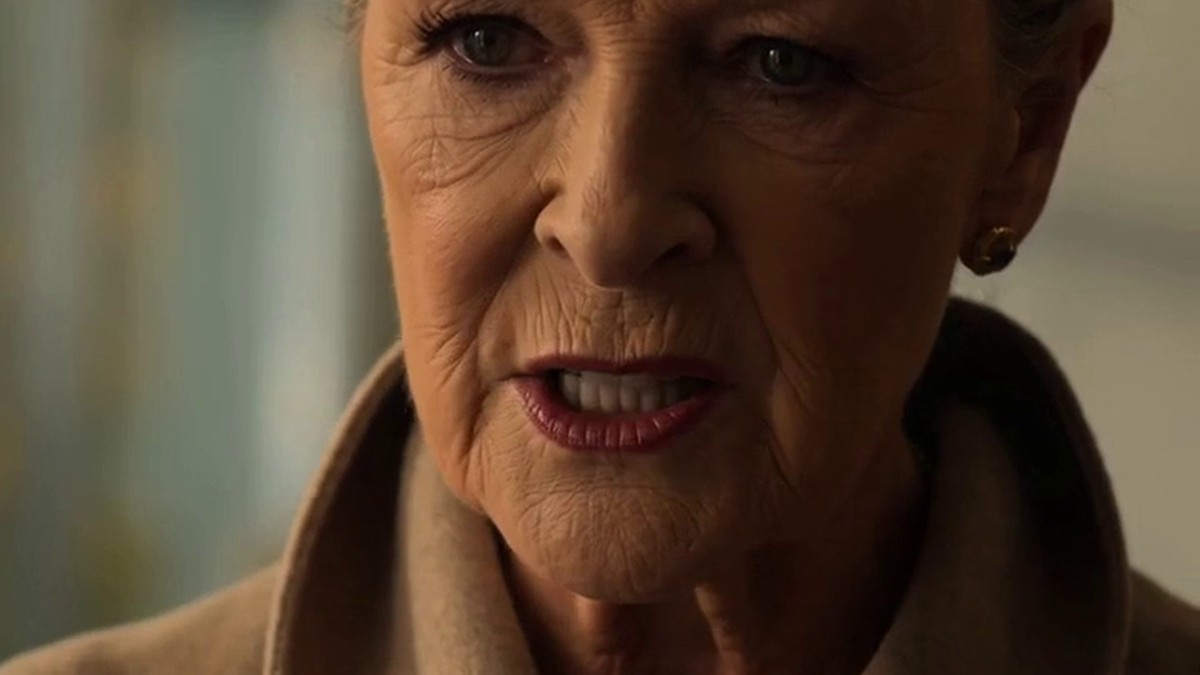
Friday afternoon. 4:15. I’m about to lock the drawer when Eleanor Brennan herself marches in. I’d seen her photo in the society pages—she was on the board of the art museum, the kind of woman who wears a cashmere wrap indoors and takes it as a personal insult when the world doesn’t comply. She was trailed by Patrick, a man in a Barbour jacket who looked like he’d just been told his car had been scratched.
“We need to discuss my granddaughter’s trust,” Eleanor said, sitting without being asked. “There’s been a… misunderstanding regarding the custodian designation.”
Patrick hovered by the door. He didn’t sit. He was scanning the lobby, a man who’d lost the script and hadn’t been given a new one. His phone buzzed. He glanced at it and his jaw tightened. The paralegal, probably, wondering where the money went.
“There’s no misunderstanding, Mrs. Brennan,” I said. “The documents are clear. Megan is the custodian.”
Eleanor’s smile didn’t reach her eyes. “My husband was not in his right mind during his final months. The medication made him confused. He didn’t intend to give that woman control over a sum this large. She’s irrelevant. She’s not a Brennan.”
“She’s the mother of the beneficiary.”
“She’s a gold-digger who trapped my son.”
Patrick flinched. Took a step forward. “Mom.”
“Don’t ‘mom’ me, Patrick. You’re the one who let her stay in the house this long.” She turned back to me. “I want to contest the custodian designation. I have Mr. Caldwell on standby.”
I leaned back. A city bus rumbled past on Exchange, shaking the window. “Mrs. Brennan, you’re welcome to speak with our legal department. But as it stands, I’ve already provided the account holder—Megan—with full documentation. The trust is active. The funds are segregated. Are you also the co-trustee on file?”
“Yes.”
“Then any disbursement over five thousand dollars requires both your signature and hers.”
The room went quiet. The kind of quiet where you can hear the fluorescent lights humming and the faint, sour smell of old coffee from the break room. Eleanor wasn’t used to quiet she didn’t control.
“You’re telling me,” she said, each word a separate, icy unit, “that I need *her* permission to access my own granddaughter’s money?”
“No, ma’am. I’m telling you that you can’t access it at all without her. And the disbursements are for the benefit of the minor. Not for legal fees. Not for property taxes on a family residence.” I held her gaze. “The framework is very clear. Your husband built it that way.”
Patrick finally spoke, his voice a little cracked. “He didn’t trust me.”
No one answered him. His mother didn’t even turn around. I watched him realize, in that moment, that the silence *was* the answer. His father had built a cage of paper and patience, and Patrick had walked right into it, chasing a paralegal and an idea of himself that didn’t involve a tired wife and a toddler with a stuffed lobster.
Eleanor stood up. The interview was over. “We’ll see what the probate court has to say.”
They left. Patrick’s loafers squeaked on the tile. I saw them through the front window—Eleanor gesturing at him on the sidewalk, the wrap billowing, and Patrick just standing there, not arguing, a man who had been reduced to a regret his mother was already managing.
—
The next time I saw Megan, it was the week before Thanksgiving. No Lily this time. She came alone, wearing a wool blazer I didn’t recognize, and she sat at my desk and placed a single sheet of paper on it. A cashier’s check request. Payable to Southern Maine Community College. For four thousand nine hundred dollars. Just under the threshold.
“I’m enrolling in the digital design program,” she said. “Starts in January.”
I smiled. Couldn’t help it. “That’s a precise amount.”
“I learned to read the fine print.” She tapped the trust statement. “And Eleanor won’t co-sign a penny. Doesn’t matter. My daughter needs to see her mother build something. That’s a benefit to the minor.”
The coffee maker in the break room had finally been fixed. Someone had brought in a box of Munchkins from Dunkin’. A normal Friday. Except it wasn’t—it was the day I watched a woman who’d been told to pack her things and disappear calmly, methodically, use the very weapon her enemy had tried to take from her.
“The first of many,” I said.
“The first of many,” she agreed.
She stood, shook my hand, and left. I filed the receipt in a separate folder—a habit I have, keeping things I might need to prove seven years from now. Cold harbor light filled the branch. I remember thinking that Harold Brennan, wherever he was, had known his son. But more than that, he’d known his daughter-in-law. He’d seen the woman who held the family together with a canvas bag and a quiet voice, and he’d handed her the only thing that mattered. A locked door. A key no one else could touch. And the power to decide what happens next.