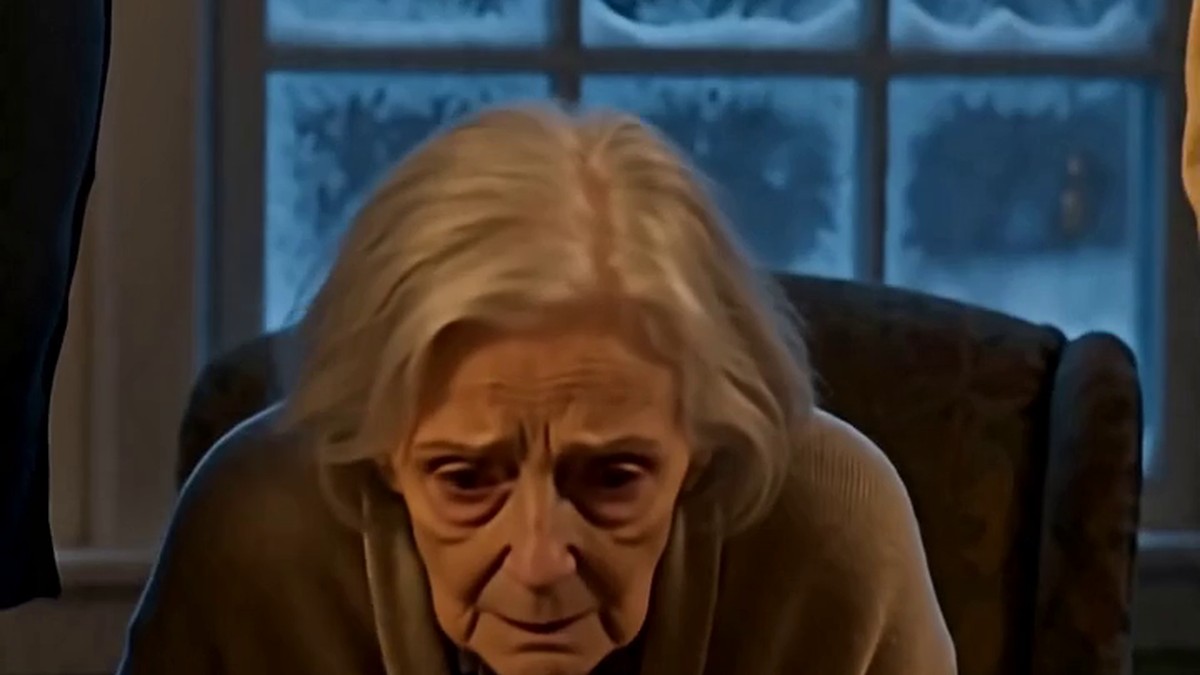
The sharp, early-morning chill had already seeped through Eleanor’s three blankets. She could see her own breath misting in the cold air of the sunroom. When she plugged in the old ceramic space heater, its fan rattled to life, sending a weak ribbon of warmth toward her legs—until the kitchen door flew open.
“Mom, you turned that thing on again?” Megan stood there with a dish towel slung over her shoulder, the smell of frying bacon trailing behind her. “The electrician said one more overload and we’d blow a circuit.”
Eleanor pulled her cardigan sleeve down over her hand. “I’m freezing, sweetheart.”
“So put on another sweater,” Megan said, turning back toward the stove.
Brad appeared in the doorway, a half-eaten bagel in his thick fingers. “Eleanor, be reasonable,” he said, chewing as he walked. “We’re not made of money. The mortgage is killing us, the truck payment’s late. That little heater of yours burns through fifty bucks a week.” He riffled through the mail on the counter and tossed an electric bill onto the table. “It’s got to stop.”
Only a year ago, none of this would have been possible. This was Eleanor’s house. She and her late husband, Charles, had spent twelve years paying for it—every brick, every window, every oak tree in the front yard. But after Charles passed, Megan’s voice grew softer, more insistent. *“Mom, let us come live with you. We’ll take care of everything. And while we’re at it, why don’t you sign the deed over now? No paperwork headaches later, just one family under one roof.”*
She’d signed it. Her whole house, given freely.
Three months ago, Brad started a remodeling project upstairs—right in Eleanor’s original bedroom. Her furniture was rushed into the glass-walled sunroom that wasn’t meant for winter. “Just temporary, Mama,” Megan had said. “We’ll have heated floors and wallpaper so pretty you’ll forget all about this.” But the renovation stalled the moment the old drywall came down. Brad was always too tired after work; Megan complained about the cost of paint. So Eleanor remained in the sunroom, with its warped window frames and fiberglass walls that held the cold like a meat locker.
“That sunroom was built for potting plants, not sleeping in January,” Eleanor said quietly, looking from Brad to her daughter. “My hip aches all night. I haven’t slept in three days.”
Brad wiped crumbs from his lips and shook his head. “We’ll get to it in the spring. Construction supplies are crazy expensive right now. You’ll be fine under a couple more comforters. Cold is good for the circulation anyway.”
Eleanor didn’t argue. She rose, pulled her worn bathrobe tighter around her thin shoulders, and stepped out into the frozen yard. The snow crunched under her wool-lined clogs. Across the fence, her neighbor Carol was shoveling her walkway.
“Eleanor, you look half-dead,” Carol said, straightening up with a frown. “Sleeping in that glass box again? My grandson said he saw the glow of your heater every night till dawn.”
“They’re doing a renovation,” Eleanor said, trying to smile.
“Sure they are,” Carol muttered. She lowered her voice. “You know I saw a delivery van at your house yesterday. Huge box. They bought a new gaming console. Brad was tearing into it like a kid on Christmas morning. Must have cost seven hundred dollars, easy.”
A cold heavier than the winter air settled into Eleanor’s chest. She walked back to the sunroom and sat on the edge of her sagging daybed. She didn’t plug in the heater. Not then. She just waited.
That evening, when the house filled with the sound of the garage door and Brad’s laughter from the kitchen, she rose calmly. She unhooked the heater’s cord from the wall, dragged her heavy down mattress off the daybed, and began the long, slow journey through the connecting door into the main house. She deposited the mattress directly on Megan’s cream-colored living room rug. Next came the faded quilts, the flattened pillow, the worn slippers. Finally, she positioned the old heater beside the expensive leather sofa and plugged it into the wall. She went to the kitchen, retrieved a pot of leftover beef stew from the fridge, and set it—without a trivet—on the polished coffee table.
Then she lay down, pulled the covers over her head, and fell asleep in real warmth for the first time in months.
“What the *hell* is this?” Brad’s roar woke her. He stood in the doorway, still in his coat, his face crimson.
Behind him, Megan dropped her keys. “Mom! The coffee table—you’re going to ruin the finish!” She rushed forward in her boots, dabbing at the ring of condensation with her sleeve.
“So wipe it up,” Eleanor said without moving.
“Get this mess out of my living room, right now,” Brad snarled, taking a step forward. “This is my house.”
“Then throw me out,” Eleanor replied quietly. “Go on. Drag an old woman across the yard in the snow. Carol’s out shoveling again—I’m sure she’d love to see how you treat your mother-in-law.”
Brad’s bulk halted. His fists clenched, but he said nothing.
Eleanor sat up. “I’m not leaving this room until my bedroom is livable. No renovation, just a clean floor, finished walls, and a heater. You have two days. Or I’ll invite Carol and a few other neighbors over for coffee right here on this carpet. I might even repot my succulents on this gorgeous table.”
The threat of exposure worked better than any legal document. Within two days, the construction debris in her old bedroom was gone. Brad grudgingly glued down cheap linoleum and installed a second-hand baseboard heater. The walls remained bare drywall, but the room was warm. Eleanor moved back in, and for a week, an uneasy truce held. Megan and Brad spoke in whispers. They averted their eyes. That was fine—silence was the least she could endure.
But a month later, a new sound filtered through the thin walls: murmured arguments in the kitchen after midnight. Then one night, louder than usual, Megan’s voice cracked. “We can’t just *sell* it out from under her! Where will she go?”
Brad’s reply was ice-cold. “She’ll go to a facility. We’ll find her a state room somewhere. It’s not our problem. We own the house, we’re drowning, and she doesn’t contribute a dime.”
Eleanor’s hand paused on the hallway light switch. So they intended to sell her home and stash her in a nursing home. She inhaled slowly, forcing her heart to steady, and backed away from the door. The next morning, she put on her best coat and walked to Carol’s house.
Carol listened with grim satisfaction. “I told you, that one’s a snake. Here’s what you do: my nephew is an elder-law attorney. He’ll talk to you for free.”
The consultation changed everything. The attorney explained that, under state law, a transfer of property to a family member could be voided if the grantor was induced by fraud, misrepresentation, or undue influence—especially if the grantee then refused to provide promised care. Eleanor had a strong case. He helped her draft a demand letter and, critically, she began keeping a careful log of every incident: the frozen sunroom, the gaming console, the whispered plans to sell, the refusal of basic warmth.
She waited until the following Saturday. Brad was lounging on the leather sofa, Megan half-heartedly folding laundry. Eleanor walked to the center of the room and placed a thick envelope on the coffee table, right over the faint stain the stew pot had left.
“What’s this?” Brad grunted, not looking up.
“A legal petition to void the deed on this house,” Eleanor said. “On the grounds of financial exploitation and failure of promised care. My attorney has already filed it. You’ll be served officially on Monday.”
Brad shot upright, the remote clattering to the floor. “You can’t be serious.”
“Oh, I’m deadly serious.” Eleanor’s voice didn’t waver. “The court will examine how you moved me into an uninsulated sunroom, denied me heat while purchasing luxury electronics, and then conspired to sell the property and commit me to a public facility. I have witness statements, bank records, and a neighbor who saw you enjoying a brand-new console the very week you told me we couldn’t afford a gallon of paint.”
Megan’s face had gone white. “Mom, you wouldn’t—this is just a misunderstanding!”
“It’s exploitation,” Eleanor said, turning to her daughter. “And you stood by and let it happen. So here’s my offer, and you’re going to listen very carefully.”
Brad took a menacing half-step forward, but Eleanor’s gaze stopped him cold. “If you put a hand on me, I’ll call 911 and add assault to the list. Sit down.”
He sat. The power in the room had shifted, inalterably.
“You will sign a new deed returning this house to my name, with a life estate for me alone. You may stay here as long as you pay a fair rent and respect my home. If you don’t agree, I’ll see you in court, and I will win. That console will be exhibit A.”
The silence stretched for a full minute. Megan was crying, but they were tears of shame and fear, not sympathy. Brad’s jaw worked, but he finally gave a single, sharp nod.
The legal papers were signed the following week, under a lawyer’s supervision. For the first time in over a year, Eleanor held the title to her own house again. Megan and Brad moved into the sunroom for the remainder of the winter—a fitting, temporary reversal that taught them the precise texture of cold they had forced on her.
On the last frosty morning before spring, Eleanor stood in her warm bedroom and folded the old woolen shawl that had kept her alive through that terrible season. She tucked it onto the top shelf of the closet, behind a box of memories. She wouldn’t need it anymore. Not because the weather had turned, but because she’d learned once and for all that the only person she could trust to keep her safe was the woman staring back at her in the mirror—and that woman had just taken back her kingdom.