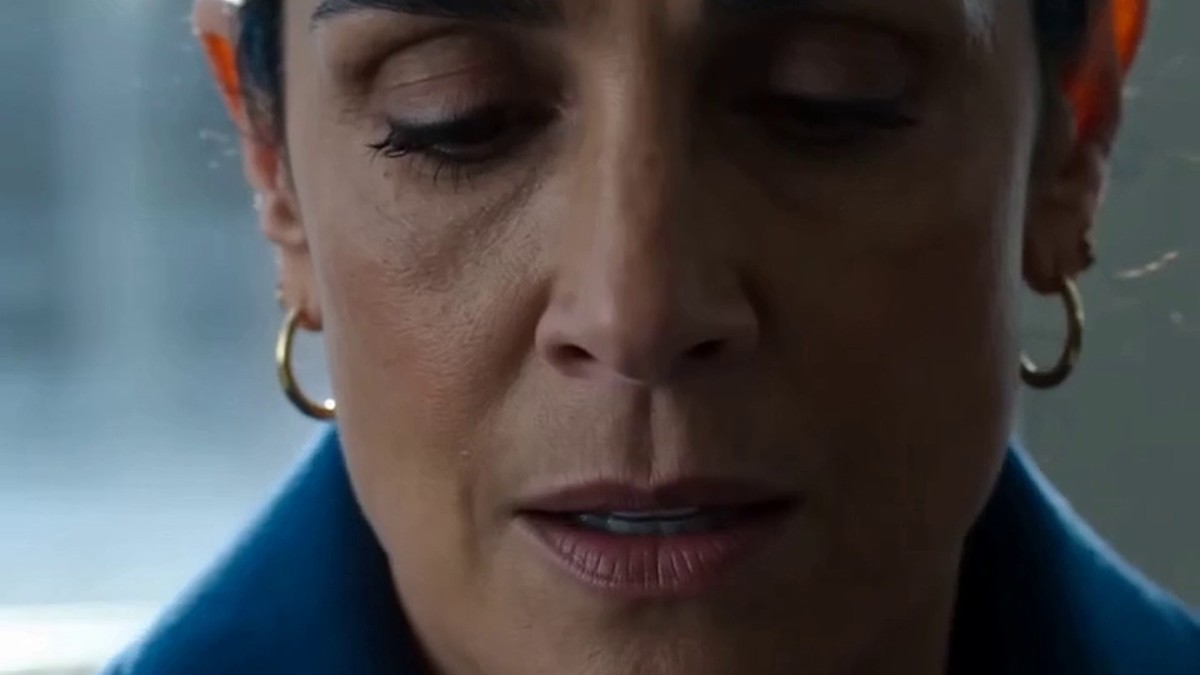
The hallway of the Elise Fontaine Academy still smelled the same: a mix of floor wax, rosin, and the faint metallic bite of radiators from the 1920s. I stood with my back against the same cracked plaster wall where I’d waited twenty-six years earlier, my daughter Avery’s hand damp in mine. Through the tall door, I could hear the piano—a Chopin étude—and the sharp clap of the accompanist’s bench.
Avery shifted into fifth position without thinking, her pointe shoes whispering against the linoleum. She was twelve, with legs that went on forever and a calm I’d never possessed. I’d spent the whole morning biting the inside of my cheek to keep from telling her about this building, this exact hallway, this exact woman.
Madame Fontaine had been old even then, and now she was ancient and carved from something harder than wood. I’d watched her destroy a fourteen-year-old at my own audition when the girl misstepped a *grand jeté* and started to cry. “Ballet doesn’t need weepers,” she’d said, and the girl was cut from the list before lunch.
My turn came an hour later. I’d nailed the adagio, but when I spotted my mother in the audience—her face a mask of hope—I lost it. Tears, a wobble, one ugly slide into the barre. Fontaine’s voice sliced through the music: “Get her out. Next.”
I never danced again.
Now Avery was in there, executing a series of *pirouettes en dehors* while the panel—Fontaine at the center, flanked by two stone-faced accompanists and a choreographer with a clipboard—watched like vultures. I had permission to observe from a small folding chair in the corner, a privilege I’d had to beg for through three layers of administrative gatekeepers.
Avery finished, her chest barely moving, and took the required curtsy. Madame Fontaine tapped a pen against the table. The choreographer whispered something; she nodded.
“Very promising,” Fontaine said. Her voice was a dry rasp. “Flexibility, turnout, musicality—yes. You have what’s needed. You’ll begin in September.” Then, without looking at me: “Her residence is confirmed. Boarders arrive August twenty-eighth.”
My throat tightened. I’d rehearsed this. “Actually—I live in the city. I have an apartment on Belmont. I was hoping Avery could stay with me and commute.”
Silence. The accompanist’s fingers froze above the keys. Madame Fontaine rotated her head slowly, as if the air had turned to molasses.
“We do not make exceptions,” she said. “Every student boards. It’s the only way to build discipline, to break the coddling. Your daughter has rare potential, but it will evaporate the moment she runs home to Mommy every night.” She pointed the pen at me. “Either she moves into the dormitory, or you withdraw her before the ink is dry. The choice is yours.”
Avery’s face went pale. I saw her jaw clench—the same way mine used to clench right before I’d crumble. She didn’t crumble. She just whispered, “Mom, please.”
I felt the weight of Fontaine’s rejection from decades ago pressing on my chest like a box of old bruises. I couldn’t speak. I just nodded, grabbed my purse, and led Avery out of the hall. The glass door swung shut behind us with a pneumatic sigh.
Outside, on State Street, the January wind cut through our coats. Avery pulled her hand away. “You’re going to ruin this for me. You know that? She hates you now. She’ll take it out on me.”
I wanted to tell her that woman had hated me long before today, that some grudges are older than the people who hold them. But Avery was already walking ahead, shoulders up. A city bus rumbled past, its exhaust clouding a street musician playing a saxophone near the corner. I stood there, my fingers wrapped around a secret I’d been carrying for hours.
—
Three days later, the acceptance list appeared on the academy’s website. Avery’s name was on it, and she let out a single sharp laugh before spinning in her socks across our living room floor. I hugged her, told her how proud I was, and then locked myself in the bathroom.
I pulled out my phone and opened the video I’d recorded that day. I’d slipped my phone into the front pocket of my purse, angled through a small hole I’d cut in the leather, and captured the whole audition and Fontaine’s outburst. The audio was crisp: “She moves into the dormitory, or you withdraw her.” Every word.
I wasn’t proud of it. But I’d spent twenty-six years letting that building make me feel like a failure, and I wasn’t about to hand Avery over to the same machine without a backup plan.
I called the director of the Roth Institute in New York, a smaller but fiercely respected contemporary ballet program I’d been researching for months. I described Avery, sent the audition footage—just the dance, not the confrontation—and asked if they’d consider her for their upcoming season. I explained our housing situation: she could live with me if we relocated; I worked remotely as a medical coder and could move anywhere.
Forty-eight hours later, a scholarship letter arrived in my inbox. Full tuition, plus a stipend for relocation. Fourteen thousand dollars for the first year alone. The letter stated that the Institute believed Avery could be given “a more holistic training environment” than larger academies often provided.
I printed the letter at a FedEx on Clark Street, slid it into a manila folder along with the academy’s withdrawal form I’d downloaded that morning, and took the Blue Line to the Fontaine Academy one last time.
—
Madame Fontaine’s office was on the third floor, a room with floor-to-ceiling windows that looked out onto a courtyard of dead ivy. I didn’t knock. I just opened the door and found her behind a vast oak desk, annotating a pile of sheet music.
She didn’t look up. “Reconsidering already? I told you, no exceptions.”
I laid the folder open on her desk. The scholarship letter was on top, with the Roth Institute’s letterhead. Then the withdrawal form, signed and dated.
Fontaine’s pen stopped moving. She read the letter, then the form, then read the letter again. Her mouth pinched into a tight line.
“You’re taking her to New York? To *that* place? They’re a workshop, not a proper academy. You’re making a catastrophic mistake.”
I pulled out my phone, queued up the video to the moment she’d said *coddling*, and held the screen toward her. “I have every word you said, and if you try to blackball her with your contacts—because I know you do that—I’ll send this to the board and to *Pointe* magazine. I have no vendetta, Madame. I just want my daughter to dance without being afraid of the person who’s supposed to teach her.”
The radiator behind her clanked, filling the room with a hiss of steam. Fontaine’s face was unreadable now, but her left hand had begun to tremble against the desk. She didn’t speak.
I picked up the folder, leaving the withdrawal form with her. “Avery starts in New York on September third. I’ll be there every morning to drive her. Have a good summer.”
I turned and walked out. The stairway smelled of the same floor wax, but the weight had shifted. I didn’t feel triumphant. I felt like someone who’d finally stopped paying for a ticket to a show that had closed decades ago.
Avery was waiting on the bench outside, earbuds in, hood pulled up against the wind off Lake Michigan. When she saw me, she pulled one bud out. “Did you do it?”
I nodded. “Pack your things. We’re moving next week.”
She looked at the granite façade of the academy, then back at me. “You had a recording the whole time?”
“I had a backup,” I said. “That’s all.”
She stood, and we walked toward the train together. Behind us, a saxophone player near the entrance launched into a melody I couldn’t name, and the sound carried all the way to the station stairs before the wind finally ate it.