The folder was still there.
I knew it the second I pulled my Lexus to the curb on Sycamore Street and saw my mother’s pearl-white Cadillac parked wrong, half on the sidewalk, like she’d slammed the gearshift and bolted. The rain was the kind Pittsburgh does best in March—a cold, needling drizzle that makes everything smell of wet brick and old garbage. The alley next to the building had a collapsed gutter I’d pointed out to myself the last time I dropped off money, feeling a twist of satisfaction that I didn’t have to live here.
That satisfaction was gone now. My hands were sweating against the leather steering wheel. I’d been at Nicole’s condo in Shadyside, her legs across my lap, a half-empty bottle of Caymus on the coffee table, when the text from Mrs. Giannini buzzed my phone. *Your mother was by, asking about Sarah. Said something about a bank statement. She looked upset.* I’d nearly knocked the glass over. Because I knew what a retired judge like Elaine Whitmore does when she’s upset and suspicious: she digs. And if she’d found the lease payment to the property manager, she’d know the address. And if she came here, she’d see Sarah, Lily, Jake. And if the kids got to talking…
I left Nicole without an explanation, ran two red lights on Butler Street. The whole drive I kept replaying the night six months ago when I’d shoved the black accordion folder into that closet. I’d meant to take it, but Jake had been crying, Sarah had been arguing about the heat being off, and I just wanted out. I forgot it under a pile of winter coats. The folder with copies of the deed, the trust documents Dad had set up, the power of attorney I’d had a guy on Carson Street help me with. That folder was a grenade with the pin already loose.
Now my mother’s silhouette was moving behind the grimy second-floor window. I checked my watch—quarter past six, already dark. I got out of the car and the rain hit my face. The building’s front door was propped open with a chunk of broken cinder block. Inside, the stairwell smelled of mold and fried bologna. The landlord still hadn’t fixed the light on the landing, so I climbed in near darkness, my two-hundred-dollar oxfords scraping on cracked linoleum.
I could hear them before I reached the door. Lily’s voice, high and thin: “Is that really mine?” Then Sarah, brittle: “Yes, baby. From your grandmother.” My mother’s voice came next, controlled but with a tremor I’d only ever heard once before—the day of my father’s funeral. “And when did your daddy tell you he’d be back?”
The door wasn’t fully latched. I pushed it open and stepped inside. The apartment hit me with the same wave of stale cold and damp that I’d always hurried past before. The kitchen table held a loaf of white bread, a package of off-brand mac and cheese, a bag of apples with brown spots. Lily, six years old, was clutching a doll still in its box. Nine-year-old Jake stood barefoot by an old wooden wardrobe in the corner, his hand on the door, knuckles white. Sarah turned from the window, her face pinched, hollowed in a way I didn’t remember from before. And my mother, Elaine Whitmore, in a tailored navy pantsuit and pearls, was holding the folder.
My folder.
She looked up. I’d seen her handle mediation hearings in Allegheny County with less ice in her gaze.
“Mark,” she said. Not a question. “What are you doing here?”
A smarter man would have crafted a story about checking on the lease, about being the concerned dad. But my eyes went to Jake, who didn’t run to me, didn’t smile. My son just pressed his back against that wardrobe as if I might take something else.
“I came to see my kids.” The words tasted like cardboard.
Jake’s jaw tightened. “You said we weren’t supposed to tell anyone about this place.”
Sarah’s laugh was a raw thing. “He told us a lot of things.”
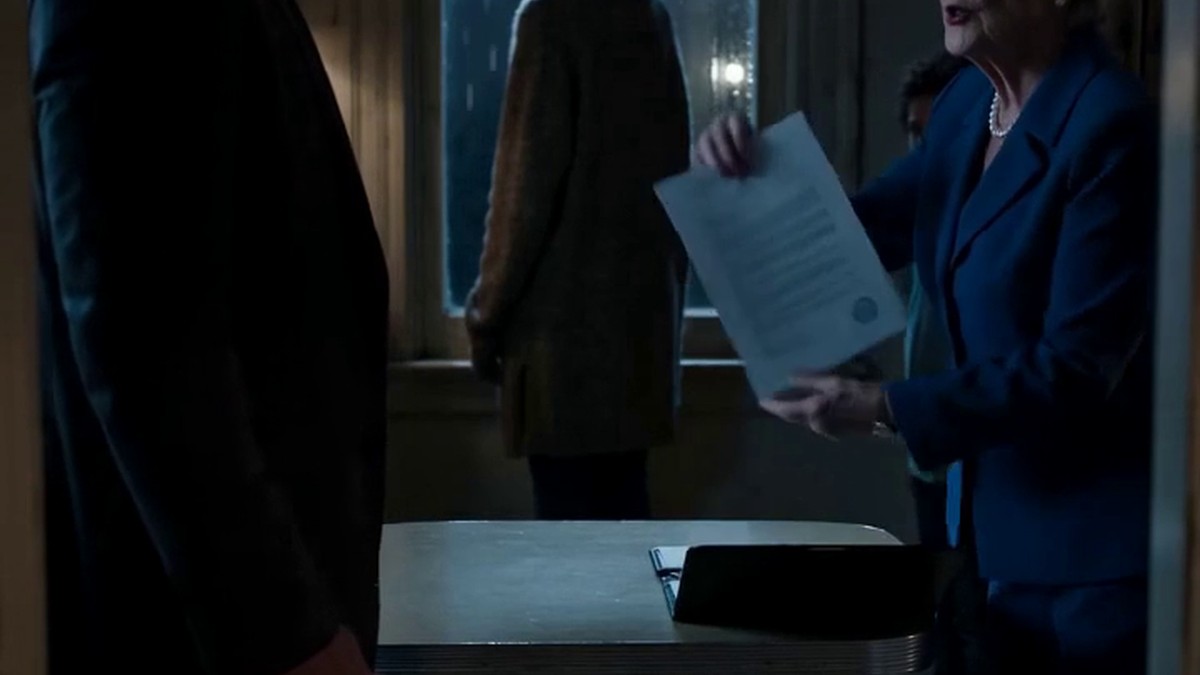
My mother set the folder down on the wobbly card table where the kids ate. She opened it again, deliberately, as if reading a verdict from the bench. The deed was on top—the one for the house on Maplewood Drive in Fox Chapel, the house I’d told Sarah I owned. She’d signed page after page without reading them two years ago because she trusted me. Because after the miscarriage, after the postpartum depression, she’d been in a fog and I’d told her these were “routine refinancing.”
But the original trust document from my father was older. It was typed out by his estate lawyer in 2011, a year before he died, and it named Sarah Whitmore as sole beneficiary of that property, “in trust for the protection of any children of the marriage.” Dad had never trusted me, not since the DUI and the investment scheme that lost his brother twenty grand. He’d put the house in Sarah’s name so I couldn’t touch it.
I’d known that at the wedding. I’d resented it. And I’d spent the first six years of marriage making sure Sarah never found out.
My mother held up the last page—the power of attorney, dated the same week Sarah had been in UPMC Presbyterian having a fallopian tube removed. Her signature was on it, neat and round, but I’d practiced it fifteen times on a legal pad before I got it right.
“This is a forgery,” my mother said, to no one in particular.
The heat in my face went cold. “Mom, let me explain—”
“Did you sell the house?”
I didn’t answer. The truth was, I’d closed the sale eight weeks ago. Four hundred and sixty thousand, wired to an account in Nicole’s name.
Sarah hadn’t moved from the window. Rain snaked down the cracked pane, dripping into a mop bucket I recognized from a dollar store. “He moved us here the same day he told me the house was being ‘renovated.’” Her voice was flat. “I thought he was protecting us.”
My mother closed the folder and walked past me to the door, and for a split second I thought she was leaving, just leaving me to deal with the mess. But she didn’t open it. She pulled out her phone, the screen lighting up her face—every one of her seventy-one years visible in the blue glow. She thumbed a number I knew: Chief Garvey, old family friend, retired Pittsburgh PD, now a private investigator who sometimes picked up witness work for her old court contacts.
“Elaine,” he answered on speaker, tinny in the damp room.
“Frank, I need you to come to 1729 Sycamore, apartment four. I’ve got a situation—felony fraud, dependent neglect. Bring a patrol officer who can take a statement.”
The line went dead. I heard the tick of rain in the bucket. Jake was watching me with the kind of steady, unwavering look that a nine-year-old shouldn’t have mastered yet. Lily had put down the doll and was pressing her face into Sarah’s sweater. Sarah’s breathing was shallow, the way a person breathes before a blow lands or just after it misses.
I opened my mouth to speak—to demand explanations, to spin, to rage—but my mother raised one hand, palm out, index finger pointing at my chest like a gavel. “You will wait on those stairs until the police arrive. And if you so much as look at Sarah or these children, I will add witness tampering to the list.”
It was the same voice she’d used twenty years ago when she caught me stealing cash from her wallet. I hadn’t won then, and I didn’t win now.
I backed into the hallway. The door swung shut, and through the thin warped wood, I could hear my mother’s heels crossing the linoleum, then the creak of her knees as she lowered herself to the floor. Lily asked something I couldn’t quite catch. And my mother—the woman who had once told Sarah over a wedding toast that “some girls just get lucky”—said, “Nobody’s going to take you anywhere, sweetheart. I’m right here. We’re going to my house tonight.”
The stairwell light finally flickered on, exposing the water stains on the ceiling and the old Pennsylvania Turnpike token someone had glued to the bannister years ago. I sat down on the top step, rain seeping through a broken window over my shoulder. My Lexus keys were still in my hand. I turned them over and over, the little chrome ring cold and expensive. A neighbor’s dachshund started barking through the floorboards below. Somewhere down the block, a police siren wound up, not urgent yet, just a low growl building. I stayed on that step until the blue and red started painting shadows across the hall. When the heavy boots landed on the landing, I didn’t look up.