By the time the MARTA announcement crackled through the train car, I already knew I was dead. Signal failure at Five Points. All northbound trains holding. My meeting was at ten o'clock, and the clock on my phone read 9:31.
I was Claire Vasquez, a court-certified Portuguese interpreter out of Atlanta, and this was supposed to be the contract that changed everything. The kind of corporate negotiation where the fee alone would cover my mother's next six months of medical bills. Instead, I stood in a train car that smelled like wet wool and pine cleaner, listening to a voice over the intercom suggest we "seek alternate transportation."
Alternate transportation. In Atlanta. During a storm that had been dumping sideways rain since dawn.
I bolted up the stairs at North Avenue station and called my rideshare from beneath the awning of a CVS. The first driver canceled after four minutes. The second driver's icon moved in a direction that made no sense until I realized he had picked up someone else. I canceled that ride too, ate the cancellation fee, and started jogging toward Peachtree. The rain wasn't falling so much as it was being thrown horizontally between the towers. My umbrella turned inside out before I reached the next block and I shoved it into a trash can because I didn't have time to wrestle it closed.
At the corner of Peachtree and 14th, a black Escalade plowed through a lake-sized puddle in the right lane. I saw the wave coming—roof-high, opaque, filthy—and I threw my portfolio against my chest a half-second before the water hit me. Cold that stole breath. I stumbled backward into the alcove of a deserted Greek restaurant. Water ran from my hair into my mouth, down my back, into my shoes. My navy blazer was now mostly water, and my carefully pressed white blouse clung to my arms like second skin. I peeled a strand of hair off my cheek and caught my own reflection in the restaurant's dark window.
Twenty-three minutes. I had been preparing for this assignment for three days. The client was Kade Logistics, a shipping empire built by Donovan Kade, a man whose name the Atlanta Journal-Constitution printed only alongside words like "alleged" and "unconfirmed." The agency, Peach State Interpreting, had sent me the preparation materials on Sunday evening, heavily redacted—entire paragraphs blacked out, leaving only fragments like "port access fees," "exclusivity clause," and "non-compliance penalty structure." I had spent hours building glossaries from the scraps. I had not slept well. And now I was going to walk into a room full of attorneys and executives looking like I'd been pulled out of the Chattahoochee.
I pressed the portfolio against my chest and kept running.
The lobby of One Atlantic Center smelled of wet marble and money. Beneath the chandeliers, my soaked heels made a sound like I was walking across a drained bathtub. The security guard, a man with a neck thicker than my thigh, lifted one hand before I reached the desk. "Name."
I gave it. He checked a tablet, then his eyes moved from my face to my chest, to my legs, and back up. He didn't hide the assessment. "They're waiting on you upstairs." He said it like he was announcing the weather before a hanging. He pointed toward the private elevators, and I stepped inside a mirrored box that smelled of leather and ozone. The doors closed. My reflection in the polished steel showed me exactly what I was walking into: a thirty-one-year-old woman with pupils too wide, a soaked blouse, and dark hair plastered to the sides of her neck, looking like she'd just survived a car accident.
Thirty-eighth floor. Fortieth. Forty-second.
I pressed my fingers flat against the folder until they stopped trembling. The man I was about to interpret for had been investigated four times by the FBI and convicted of nothing. He owned six port terminals and half a dozen politicians. I had read the un-redacted rumors in the archives of business journals: that nobody who crossed Donovan Kade ever signed a second contract; that a CFO from a rival shipping firm had gone missing for eleven days before turning up at a hospital in Macon with no memory of how he got there. The details were probably embellished. Probably.
When the elevator opened, two men in dark suits stood on either side of a set of heavy double doors. One of them checked his watch. "Fourteen minutes is a long time."
"I'm aware," I said.
"Mr. Kade doesn't like to wait."
"Mr. Kade doesn't control the MARTA signal system."
The man's eyebrow lifted a fraction of an inch. He touched his earpiece, murmured something I couldn't hear, and then pulled open one of the doors. The conference room beyond was long and cold, with floor-to-ceiling windows that looked out onto the rain-slicked towers of Midtown. Sixteen men sat around a polished table. At the far end, beside the windows, one man stood.
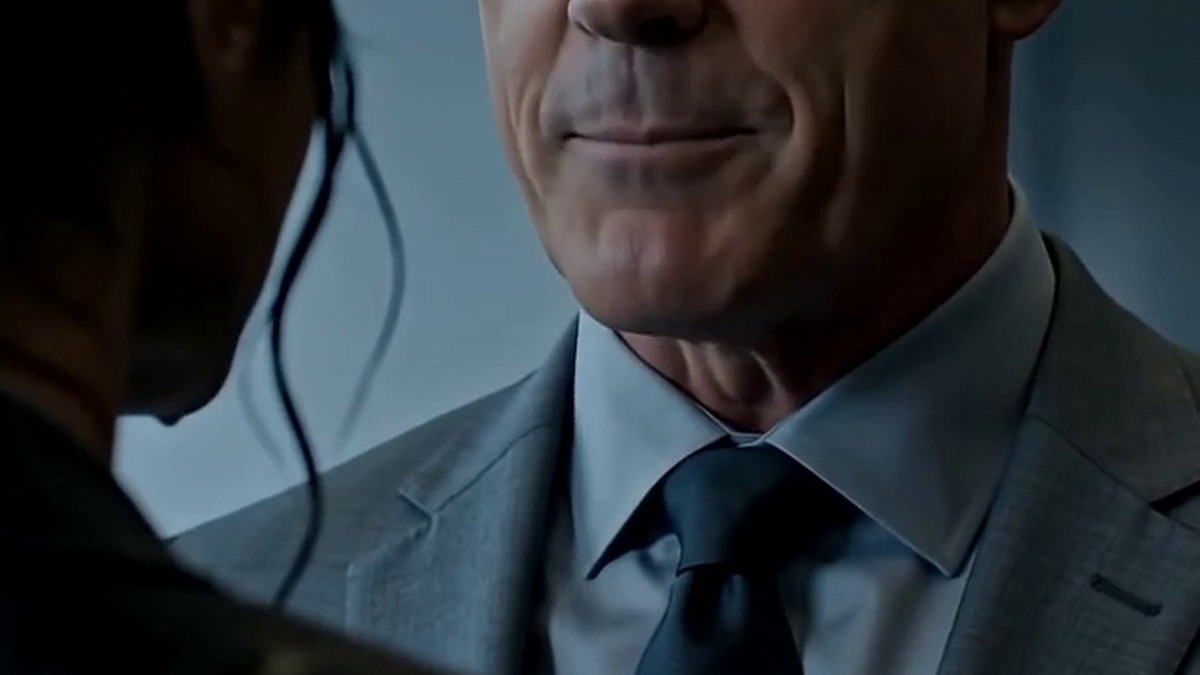
He wasn't the largest man in the room, not by a wide margin. But he occupied the space like he owned the air inside it. His black jacket hung open over a shirt the color of charcoal. One hand rested inside his pocket. The other held nothing. He didn't turn when I entered; his gaze was fixed on a point somewhere above the skyline, as though he were watching a ship only he could see. But the moment the door clicked shut, that gaze shifted and landed on me like a weight.
Donovan Kade looked at my wet clothes, my trembling fingers, the smudge of mascara I knew was sitting beneath my right eye. He didn't check his watch. He looked at my face—direct, intentional, unhurried. The men around the table stopped shuffling papers.
A silver-haired attorney near the center of the table cleared his throat. "Now that our interpreter has decided to honor us with her presence—"
Donovan lifted one hand. The man's mouth closed so fast it made a soft popping sound.
"Clear the room," Donovan said.
Nobody moved. A man with a notepad blinked twice. "Mr. Kade, the delegation from São Paulo is scheduled to—"
"They'll wait next door with coffee and my apology. This won't take long. Everyone out. Now."
Chairs scraped back. Leather folders snapped shut. Men in tailored suits glanced at each other, then at me, then at their phones, as if checking to make sure the world hadn't ended while they weren't paying attention. The silver-haired attorney was the last to leave. He paused in the doorway and said, quietly, "Donovan, this isn't the time for an impulse."
"I haven't had an impulse since 1998," Donovan replied without looking away from me. "Close the door."
The door clicked. We were alone. My heart was beating in my throat, my fingertips, the inside of my ears. I could still feel the cold rainwater seeping down my back. Donovan crossed the room toward me, his shoes making no sound on the thick carpet. He stopped about three feet away, close enough that I could smell cedar and something faintly metallic, and tilted his head.
"You walked into my meeting fourteen minutes late. You're soaking wet. Your hands won't stop shaking." His voice was calm, like he was describing a set of shipping manifests. "And yet you still came through that door, set up your station, and got ready to work. That's interesting."
I didn't speak. I didn't have a defense for being terrified. It was simply true.
"Before I let anyone back into this room," he said, "tell me exactly who sent you."
The question landed in my stomach like a swallowed stone. I blinked. "Peach State Interpreting. You contracted them. I'm the assignment."
"That's the story on the paperwork. I want the story under the paperwork."
I gripped my portfolio tighter. "I don't know what you're asking me."
Donovan took a step closer. "Two weeks ago, a competitor tried to place a listening device in my office inside a flower arrangement. Last week, someone paid a courier to deliver a box of chocolates to my house that turned out to be filled with micro-transmitters. So when an interpreter arrives to my most sensitive negotiation of the year, wet, shaking, and fourteen minutes late, I ask myself: is she a professional who had a terrible morning, or is she the third attempt?"
My mouth opened and closed. My brain, the part trained to receive language and parse meaning, was struggling to keep up with the implication. He thought I was a plant. A spy. A wire.
I unzipped my portfolio and pulled out the redacted prep materials. My fingers still shook, but I held the pages out to him. "Read them. Your people sent these to my agency. I spent three days trying to interpret contracts I couldn't see. I didn't even know your name until I showed up in this lobby. I'm a substitute—the original interpreter had a family emergency yesterday afternoon. The agency e-mailed me Sunday night and said, 'Clear your Monday, we need you for a big one.' That's all I know."
Donovan took the pages and scanned them, his eyes moving down the blacked-out lines. Something flickered across his face—the smallest shift in the set of his jaw. He handed them back. "Who's your contact at the agency?"
"Miriam Lang. She's the owner."
He pulled a phone from his pocket, thumbed a contact, and held it to his ear. "Russell. Pull everything you have on a company called Peach State Interpreting and a woman named Miriam Lang. I want bank records, phone records, and the name of whoever canceled on this job yesterday. Call me the second you have something—I'll be in the negotiation." He ended the call and looked at me again. "Sit down. You're still working today. But you're working for me now, not for her, and if anything you say in that room tonight sounds rehearsed, I'll know."
I sat. He remained standing, watching me for a long moment before he said, "You're either very good at your job, or very good at something else. We're about to find out which."
I interpreted for two hours. The men from São Paulo tried three times to bury a penalty clause inside a footnote about customs delays, and three times I flagged the exact sentence for Donovan's attorneys before they'd even finished reading it aloud in Portuguese. Donovan didn't look at me during the negotiation. He watched the delegation, watched his own lawyers, watched the numbers. But every time his phone buzzed against the table, his eyes flicked to the screen for half a second before returning to the room, and each time I felt my stomach tighten a little further, wondering what Russell was finding.
The deal closed at half past noon: a three-year port access agreement, exclusivity clause intact, no hidden penalties. The delegation shook hands and filed out past a lobby full of coffee and apologies. When the room emptied, Donovan didn't move toward me right away. He stood by the window with his phone in his hand, reading something, his jaw working slightly, and when he finally turned around his expression had changed—tighter, colder, more certain.
"Russell traced eleven thousand dollars moved from a shell account into Miriam Lang's business checking account nine days ago," he said. "Same day the original interpreter called in her 'family emergency.' Miriam's been feeding shipping schedules to a broker who resells them to my competitors. We think this negotiation was supposed to have a second interpreter in the room—someone she trusted—and you weren't supposed to make it here at all. The train delay wasn't part of anyone's plan. You surviving fourteen minutes late and soaked to the skin was the one thing Miriam didn't account for."
I stared at him. "So I wasn't a decoy. I was a mistake."
"You were the fail-safe her real plan never needed, because her real plan needed you gone." He slid the phone into his pocket. "I want you to go there tonight. Tell her you're coming to pick up a forgotten file. Wear something with a microphone in the collar. Russell will be outside."
"And if she says something incriminating, what happens to me?"
"Nothing happens to you. You hand Russell the recording and you go home." He paused. "I'm also offering you a job. In-house interpreter, four hundred and twenty thousand a year, starting after Russell confirms what we already suspect. Not tonight. Not as a reward for walking into her office wired. After. When I've seen you work a second time and I know today wasn't a fluke."
The offices of Peach State Interpreting occupied a small suite above a bakery on Spring Street. I walked in at 4:58 p.m., still wearing my damp blazer, a wire taped flat beneath the collar of a spare shirt Russell had handed me in the sedan. Miriam was at her desk, a woman in her late fifties with silver-streaked hair and a permanent look of disappointment. She flinched when she saw me.
"Claire. You made it. I was worried when I heard about the trains—"
"You knew about the trains?" I set my bag down. "The delay wasn't even announced until 9:15."
Miriam's hand stilled over a stack of invoices. "I meant I heard about it after. From you. Just now." Her recovery was smooth, practiced, but her eyes had gone somewhere else for half a second before she found my face again.
"I forgot a folder," I said. "My W-9, tax stuff. Figured I'd grab it before I start the new position."
"New position?"
"Donovan Kade offered me a job. In-house." I watched her face carefully. "Full-time."
The color didn't drain from her cheeks so much as rearrange itself—her jaw tightened, and her hand moved, almost involuntarily, toward her desk phone before she caught herself and folded it back into her lap. "That's— congratulations. I'll pull your file."
"Before you do." I stayed standing. "Where was Denise supposed to be today? The original interpreter?"
Miriam's chair creaked as she shifted. "Family emergency. I told the agency, I told you—"
"I called Denise from the car. She's at her sister's baby shower in Marietta. Has been all week." I let the silence sit. "She never called in sick, Miriam. You told her not to take the job before you even knew I existed."
"I don't have to explain my staffing decisions to a contractor." But her voice had lost its edge; it had gone thin, defensive, cornered.
"You do if the eleven thousand dollars in your account came from the same broker who's been buying Kade's shipping schedules." I kept my voice level, the way I'd been trained to keep it level in courtrooms when a witness started to unravel. "I'm not guessing. I know the number. I know the date. Nine days ago."
Miriam's hand finally reached the desk phone and knocked it to the floor instead of lifting it. She didn't pick it up. "You don't understand what you're involved in."
"Then explain it to me."
She didn't. She sat back in her chair, and something in her face gave way—not a confession exactly, but the collapse of a woman who'd run out of room to maneuver. "I needed the money for my son's treatment. Nobody was supposed to get hurt. It was schedules, that's all, shipping schedules, nothing that—"
"Nothing that got anyone killed. I know. Save it for Russell." I reached up and pulled the tape from beneath my collar, holding the small recorder where she could see it, already dark, already stopped. "He's outside. He's had a warrant since about two o'clock this afternoon, once your bank confirmed the wire transfer. I just needed you to say it somewhere he could hear it too."
Miriam didn't move as the door opened behind me and Russell stepped in, flanked by two men I hadn't seen in the lobby. She didn't look at me again. I picked up my bag, the folder with my old W-9 still inside it, unopened, and walked out past the bakery, which had closed for the evening, into air that smelled like warm sugar and fresh rain.
The black sedan idled at the curb. Donovan sat in the back seat, a tablet dark in his lap, waiting. I climbed in and closed the door.
"Well?" he asked.
"She admitted it. Russell has her."
He nodded slowly, watching me the way he had in the boardroom that morning—direct, unhurried, like he was reading a manifest and finding the numbers finally added up. "The job's still open. Monday, if you want it. No wire, no test. Just the work."
I thought about my mother's medical bills, about the six months of contracts I'd cobbled together to make rent, about the fourteen minutes that had nearly cost me everything and had somehow, instead, given me a life I hadn't known to ask for. "I want it."
"Good." He almost smiled. "Try not to be late Monday."
"Try not to schedule meetings during hurricane season."
The rain had stopped. Through the tinted windows of the sedan, the lights of Midtown blinked on against a sky the color of wet slate, and for the first time since 9:31 that morning, my hands were steady.