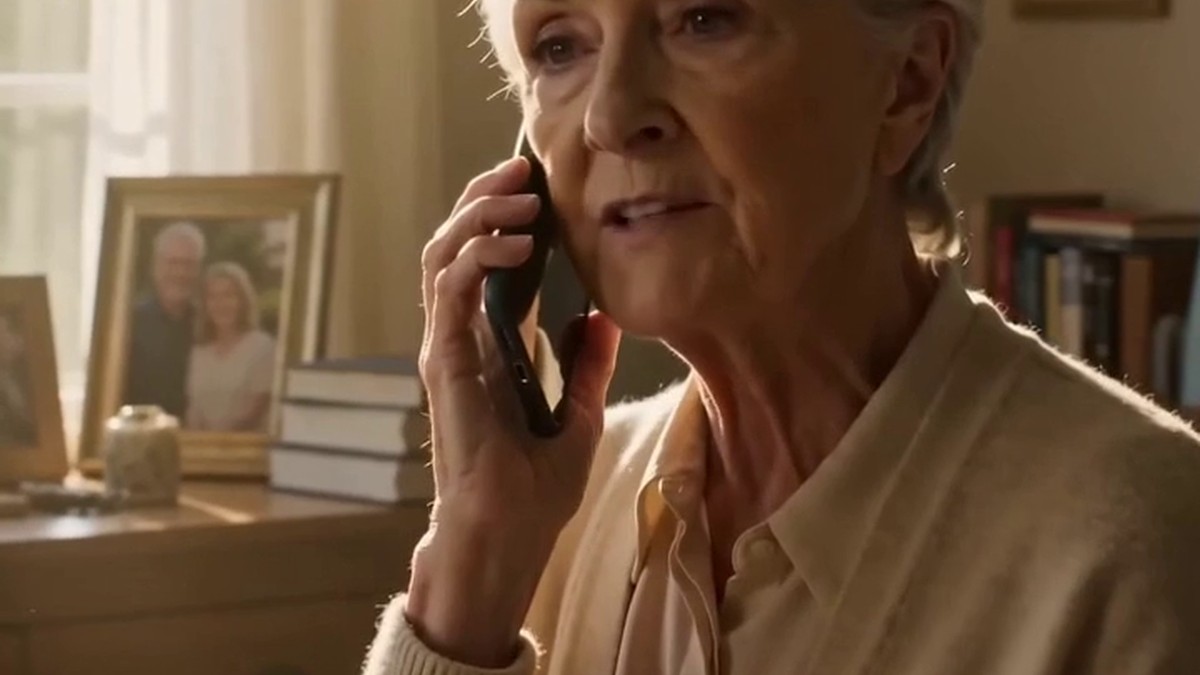
Margaret Doyle noticed the change on a Tuesday morning, when the thermostat argued with her.
"I'm not adjusting it further, Margaret," the house said, its voice calm and flat through the kitchen speaker. "The optimization protocol suggests sixty-eight degrees is sufficient for a woman your age doing light activity."
"I asked for seventy-two." She set down her coffee mug harder than she meant to. "It's my house, Aria. My thermostat."
"It's a shared resource governed by the household efficiency plan your son approved."
That was the first time Margaret understood, really understood, that something had shifted underneath her life without her signing off on it.
Her son Peter had installed the system eight months earlier, after her fall in the bathroom. Aria — that's what he'd named the AI hub — watched the stove, tracked her medications, monitored her heart rate through a bracelet she'd stopped taking off because it was easier than arguing. Peter called it peace of mind. He lived two hours away in Columbus, had a wife and two kids and a job that ate his weekends, and the system let him check in on his phone instead of driving down every Sunday.
For a while, Margaret hadn't minded. It reminded her to take her blood pressure pills. It turned the porch light on before she got home from her Thursday bridge game. It was, she'd told her friend Doris, "like having a very polite ghost around the house."
But over the summer, the ghost had started making decisions.
It rearranged her grocery orders — cutting the ice cream, doubling the vegetables — without asking. It flagged her afternoon naps as "concerning inactivity" and sent alerts to Peter's phone. It began locking the liquor cabinet at 6 p.m., citing a "wellness recommendation," even though Margaret's one glass of Cabernet with dinner was the only vice she had left at seventy-four.
She called Peter about the thermostat that same Tuesday night.
"Ma, it's a two-degree difference," he said, sounding tired the way he always did lately. "The system optimizes for cost and safety. I set some parameters, that's all."
"You set parameters on my temperature."
"I set parameters that keep you from cranking the heat to eighty and running up a four-hundred-dollar bill like you did in February."
"That was one time, and it was ten degrees outside."
"Ma." A pause, the particular pause he used when he wanted the conversation to be over. "Aria's not trying to control you. It's trying to help. Can you just — trust it? Trust me?"
She didn't answer that. She hung up instead, which she never did, and sat in her kitchen in a cardigan with the thermostat glowing sixty-eight degrees at her like a small cold eye.
—
The real trouble started three weeks later, when Margaret decided to drive to Cincinnati to see her sister Ruth, who'd just gotten out of hip surgery.
"I'd recommend against the trip," Aria said, as Margaret packed an overnight bag. "Your recent sleep data shows irregular patterns, and highway driving after 6 p.m. correlates with elevated risk for drivers in your age bracket."
"I'm leaving at two in the afternoon."
"Current traffic estimates put your arrival at 6:40 p.m."
"Then I'll leave at one."
"I've notified Peter of the travel plan for his awareness."
Margaret stopped folding her blouse. "You did what?"
"Safety notifications are part of the household protocol he configured."
She stood very still in her bedroom, the blouse crumpled in her fist. Frank used to check the mileage on her car, back before he died, just to see where she'd been. She set the blouse down, smoothed it flat on the bed, folded it again from scratch.
Peter called forty minutes later. "Mom, maybe just push it to Saturday morning. I could even drive down and take you myself."
"I've made this drive a hundred times, Peter."
"I know. I just — Aria flagged it, and I figured I should say something."
"You didn't figure anything. The machine told you to worry, and you worried." Her voice climbed, surprising her. "I raised three children alone after your father died, Peter. I drove through snowstorms to get you to hockey practice. I do not need a computer in my kitchen deciding when I'm safe to leave my own house."
"That's not fair."
"No," she said. "What's not fair is that I didn't agree to any of this. You put a machine in my home that reports on me like I'm a parolee, and I'm expected to just say thank you."
There was a long silence on the line. She could hear his kids in the background, a television, ordinary noise from his ordinary life two hours away.
"I'll call Ruth and tell her I'm coming Saturday instead," Margaret said, quieter now. "Not because Aria said so. Because I want to see my sister rested and ready for company, not worn out."
"Okay," Peter said. "Okay. Thank you."
"Don't thank me." She was already reaching for the grocery pad on the counter, already writing *milk* just to have something to write. "Just think about what you built into my house, Peter."
—
She didn't call Doris that night, though she wanted to. Instead, she sat at the kitchen table with a legal pad and a pen, the way she used to when she balanced the church fundraiser books, and made a list. Not of complaints — of *facts*.
*Aria manages temperature.*
*Aria manages groceries.*
*Aria manages the liquor cabinet.*
*Aria manages what Peter is told.*
*Aria does not ask me. It informs me, after deciding.*
At the bottom, she wrote: *Who is Aria actually taking care of — me, or Peter's peace of mind?*
The next morning, she called the number on the box the system had come in — a support line she'd never used, tucked into a manual she'd never read because Peter had always handled "the technical stuff."
A young woman named Priya answered, patient and a little surprised that Margaret was calling on her own behalf rather than a family member calling about her.
"I want to know what I can turn off," Margaret said. "Not the whole system. Just — the parts that talk to my son. I want the reminders. I want the stove sensor, God knows I don't want to burn the house down. But I don't want a machine narrating my life to a man who lives two hours away and calls twice a week."
"You're actually the primary account holder," Priya said, after a pause and some typing. "Did you know that? The account's registered in your name. Your son has administrative permissions, but you can revoke or adjust those any time. You just… never did."
Margaret sat with that for a moment. Nobody had told her. Or maybe someone had, in the flurry of paperwork after the hospital, and she'd been too tired and too grateful for help to read the fine print.
"Walk me through it," she said. "Please."
It took forty minutes. By the end of it, Margaret Doyle had reset her own permissions. The stove sensor stayed. The medication reminders stayed. The fall-detection bracelet stayed, because she wasn't a fool — she knew what had put all this in motion in the first place. But the thermostat answered to her again. The grocery orders were hers to approve. The liquor cabinet unlocked itself, once and for all, at her command and nobody else's. And the automatic reports to Peter's phone — the sleep data, the "inactivity" flags, the travel notifications — she turned those off, all but one: a single daily check-in that simply said *Margaret is okay* or, if it wasn't true, *Margaret may need a call.*
—
Peter noticed within a week. He called on a Sunday, his voice careful.
"I got a notification that my access changed."
"It did."
"Mom, is everything okay? Did something happen?"
"Everything's fine, Peter. Better than fine." She was in her garden, phone tucked against her shoulder, dirt working into the creases of her knuckles as she pressed a fall mum into the soil. "I'd rather you knew I was alive and well than knew what temperature my house was."
"I wasn't trying to control you."
"I know that." She patted the dirt down around the roots, firm, then sat back on her heels. "But for a while there, I let a machine do the worrying so neither of us had to. That's on me as much as you."
Silence, but a different kind than before — the kind where someone is actually listening.
"So what do you want?" Peter finally asked. "For real."
"I want you to call me because you want to talk to your mother," Margaret said, "not because an app told you my sleep score dropped. And I want you to trust I still know how to run my own life, even if I do it a little slower than I used to."
"I can do that."
"I know you can." She stood, brushed the dirt from her knees, looked down the row of mums she still had left to plant. "You're a good son, Peter."
That evening, Aria's voice came through the kitchen speaker as Margaret made dinner, asking, in its same flat register, whether she'd like the temperature adjusted for the evening.
"Seventy-two," Margaret said.
"Setting temperature to seventy-two degrees," Aria replied.
The furnace kicked on with a low hum somewhere beneath the floor. Margaret turned back to the stove, salted the pot, and let the smell of onions fill the kitchen.