The phone rang at 7:42 on a Tuesday night. I know because I'd been watching the clock, counting down to the moment I could lock the door and catch the 8:10 Brown Line home. My frozen lasagna was in the office fridge—I'd brought it Monday and never gotten around to eating it. The cleaning crew was already on three, dragging their carts across the tile. I shouldn't have answered.
I did.
The voice on the other end was Victoria Ashford. I knew her from the estate work—the Costa Rica property, the trust funds, the art collection that needed its own insurance rider. She'd sat in our conference room for three hours and never once removed her coat. Now she sounded like she was calling from inside a flooded basement.
"Dana. I need Margaret. Tell her it's an emergency."
Margaret was at a dinner in River North. I told her that.
"Then it's you." She gave me an address in Oak Park. "Bring the intake forms. All of them. And bring a notary stamp if you have one."
I had one. I'd gotten certified two years back when Margaret needed a notary for a custody case that ran long. I grabbed the stamp, a fresh legal pad, and my coat. The lasagna stayed in the fridge.
The house on Kenilworth Avenue was the kind that gets featured in home and garden magazines—red brick, a wraparound porch, a brass knocker shaped like a fox. The porch light was off, but a lamp burned in the living room window. I parked on the street and sat for a minute, watching the shadows move behind the glass. Two figures. One tall, one small. Something about the way the small one moved made me reach for my bag before I got out of the car.
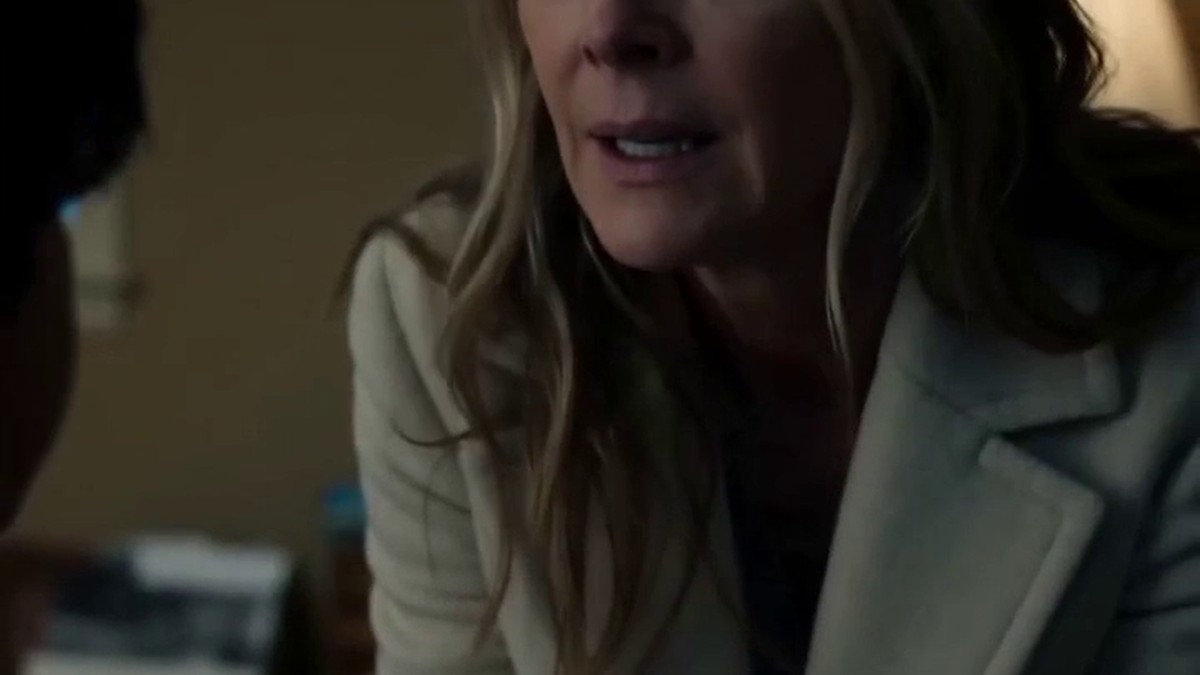
Victoria met me at the door in a cream coat that cost more than my monthly rent. Her hair was pinned back, but pieces had come loose, and she kept pushing them behind her ears with shaking hands.
"Inside," she said. "Quick."
The house smelled like floor polish and fireplace ash. But underneath—I caught it when I stepped into the living room—was another smell. The intake room at Legal Aid, where I'd volunteered in law school. Clothes worn too many days. Hair that hadn't seen shampoo. Skin that had forgotten what soap felt like.
Two boys sat on a leather sofa. Same face. Same dark eyes, same shape of the jaw, same slight tilt to the head. Twelve, maybe thirteen. One wore a navy blazer with a school crest—Fenton Academy, the kind of place where tuition runs forty grand a year and the waiting list starts before birth. The other wore a gray sweatshirt three sizes too big, sleeves rolled past his wrists. His bare feet rested on a Persian rug that looked older than I am.
Lucas Ashford I recognized from the file photos. The other boy I'd never seen before. Didn't need an introduction.
Victoria closed the door behind me and locked it. Then she walked to the barefoot boy and put a hand on his shoulder. He didn't flinch, but his eyes stayed on the floor.
"This is Eli," she said. "My son."
I wrote it down. Eleven years as a paralegal, and the first thing you learn is to write before you understand. The understanding comes later, if it comes at all.
She talked fast, the words tumbling over each other. St. Vincent's Hospital, twelve years ago. A difficult birth. Twins. Complications. Her husband—Richard Ashford, whose name was on a wing at the Art Institute and whose face appeared in the business section every January—had told her one of the boys didn't survive. She'd believed him. She'd mourned in private for years. She'd had a small funeral with no body and a closed casket.
And now here was this boy, sitting on her sofa, with her eyes.
"The woman who raised him," Victoria said. "Her name was Cora Vasquez. She worked at the hospital as a cleaning woman. She died last spring. Before she died, she told him the truth—that he'd been taken from St. Vincent's when he was a baby. She told him to find the woman in the photograph."
The photograph was in a silver locket on the coffee table. Dented, scratched, the chain broken and reknotted. Victoria opened it with fingers that wouldn't stay steady. Inside was a photograph, faded to sepia: a woman in a hospital bed, two tiny bundles in her arms. The woman was Victoria, younger, exhausted, but recognizable.
"When did you find him?" I asked.
"This afternoon," she said. "Outside Fenton Academy. He'd been waiting there for three days, watching Lucas. He didn't know how to approach." She stopped, pressed her lips together. "He thought I'd abandoned him. He thought I'd seen him and looked away."
Eli spoke for the first time. His voice surprised me—too calm for someone sitting in a house he'd never been in, with a mother he'd never met, wearing a sweatshirt that wasn't his.
"I watched the school for three days," he said. "I saw him go in and out, with his backpack and his friends. I kept thinking, that's my brother. That should be me." He paused. "But I didn't know if she wanted me. Cora said to ask her why she left me. So I needed to ask."
Lucas—the one in the school blazer—hadn't said a word since I arrived. He just sat there, looking from his mother to Eli, unfolding and refolding the edge of a throw blanket. When he spoke, his voice cracked.
"Dad knew," he said. It wasn't a question.
Victoria didn't answer. That was answer enough.
I set up in the kitchen. The counters were marble, the faucet was one of those touchless things. Victoria made tea and didn't drink it. Lucas sat at the island, and Eli sat next to him. Neither of them said anything for a long time.
Margaret arrived at 9:10. She took one look at the two boys, then at Victoria, and set her briefcase on the table like she was preparing for a deposition. That's when I knew this was bigger than a family reunion.
"DNA," Margaret said. "Urgent, private, no questions asked. And hospital records from St. Vincent's. Twelve years back. Maternity ward, discharge, death certificates if they exist."
She turned to Eli. "What do you remember, honey?"
Eli didn't answer right away. He was looking at the fruit bowl on the counter—apples, pears, a cluster of grapes. He reached out, then pulled his hand back. Lucas pushed the bowl toward him.
"Go ahead," Lucas said.
Eli took an apple. He gripped it in both hands like he wasn't sure it was real.
The house phone rang. Victoria checked the display. Her face went tight, and she let it go to voicemail. I saw the name before she clicked it off: Richard.
Margaret and I worked late. She made calls, I filled out forms. Emergency guardianship paperwork, a request for expedited DNA testing, a motion to seal the records. Victoria signed everything without reading it. Her signature was shaky—nothing like the crisp one I'd seen on the estate documents.
The DNA results came back Friday afternoon. I was the one who answered the phone. The lab confirmed a 99.99% match: identical twins, same mother.
Victoria was in the study when I brought her the report. She read it once, then again. Then she set it down on the desk and pressed both palms flat against the wood. She didn't cry. She didn't say anything. She just sat there, breathing in and out, like the air in the room had gone thick.
"Do you want me to call Margaret?" I asked.
"No," she said. "I need to call Richard."
She asked me to stay. I stood in the doorway while she made the call. She didn't raise her voice. She just said, "Come to the house. Now. And don't pretend you don't know why." Then she hung up.
He arrived in forty minutes. I heard the car before I saw it—a black Mercedes S-Class, the engine making barely a sound. Richard Ashford walked in like he owned the place, which technically he did. Silver-haired, gray overcoat, shoes that clicked on the marble floor like a metronome.
Victoria met him in the hallway. I stayed back, in the kitchen, but I could hear everything.
"Twelve years," she said. "Twelve years I've been mourning a child who was alive."
Richard's voice was calm. "I did what I thought was best. You were in no condition—"
"Don't." Her voice cracked. "Don't you dare."
"The baby was sick. The doctors said—"
"The doctors said he needed care. They didn't say he was dead." A long pause. "Did it cost much? To make him disappear?"
I looked around the corner. Richard's face had gone gray. He looked older suddenly, smaller, like someone had let the air out of him.
"He was a liability," Richard said. "The media, the inheritance, the family name. I made a decision to protect what we had."
"You protected yourself." Victoria's voice was flat. "You let a child grow up on the street. My child. Our child."
Eli appeared in the doorway. He must have come down the stairs at some point. He stood there in Lucas's pajamas, looking at Richard with an expression I couldn't read. Not anger. Not quite fear. Something closer to recognition.
"So you did know," Eli said. "The whole time."
Richard didn't answer. That silence said more than any confession.
Victoria turned to me. "Dana, will you bring the papers? The ones Margaret prepared."
I brought them. A police report, a motion for emergency guardianship, a request for a protective order. Victoria signed the last one without a word. Then she opened the drawer in the sideboard and took out a brass key with a green tag.
"This is for you," she said to Eli. "The locks have been changed. Richard won't be coming back here."
She handed him the key. He cupped it in both palms like it was made of glass.
"Margaret will file everything Monday morning," Victoria said to Richard. "You should get a lawyer."
Richard opened his mouth, then closed it. He looked at the boys—both of them, side by side, same face, same dark eyes. For one second, something flickered across his face. Then it was gone.
He walked out. The door clicked shut behind him, and the house went very still.
The next morning, I came back to the house to pick up the final paperwork. Victoria was in the kitchen, and both boys were at the island eating cereal. Eli was wearing clothes that fit. His hair was combed. He looked different—younger, softer, like a layer of something had been peeled away.
"One more thing," Victoria said. She handed me an envelope. "Make sure this goes to the trust fund by Monday."
I opened it later, in my car. It was a check for $250,000, made out to the Ashford Family Trust, with a note attached: "For Eli. For his future."
I sat in the parking lot for a long time, holding that check. The Brown Line rumbled past in the distance, and the Lake Michigan wind rattled the windows. I thought about the frozen lasagna still in the office fridge, about the apple in Eli's hands, about the way the black Mercedes had disappeared down Kenilworth Avenue.
I put the check in my briefcase and drove to the office.
Monday morning, I filed the police report at 8:55 AM. Richard's lawyer called at 9:15, then again at 10:30. At 4 PM, I walked past reception and saw Richard sitting in the lobby, his overcoat folded across his lap. He didn't look up.
At 4:30, Victoria arrived with both boys. Eli wore a navy blazer now, same as Lucas. The three of them walked past Richard without stopping. Victoria handed me a manila envelope. "The trust fund papers. File them with the rest."
She and the boys walked out through the glass doors. Richard watched them go, his mouth open like he wanted to say something. Then he closed it and sat there, alone in the lobby, holding nothing.
I went back to my desk and finished the filing. The lasagna was still in the fridge. I threw it away on my way out.