The bail bondsman had called me three times before the bank opened. Seven forty-one in the morning at the Huntington branch on West 25th. I was second in line. The woman in front of me was returning a Crock-Pot with no box, arguing about a restocking fee, and the security guard had a cough that sounded like a sump pump about to die. I had a paper clip in my hand and kept bending it straight, then bending it back.
I was there to take out eight thousand seven hundred dollars. My son Tyler had called collect from Cuyahoga County Jail the night before. His voice had that flat echo, like he was calling from the bottom of a bucket. “Ma, the judge set bail at eighty-seven thousand. I just need ten percent. I can pay you back by the end of summer.” He had said that the last two times. The first time I paid $4,200. The second time, $6,300. This time I had the money in an account labeled “Emergency,” but the emergency had a face I knew too well: DUI, possession of a controlled substance, driving on a suspended license. Tyler is twenty-seven.
I raised him in church. St. James AME on Cedar Avenue, every Sunday until he turned fourteen and told me the only thing he believed in was a bass drop. His father, Marvin, died of an overdose in a motel off I-77 when Tyler was nine. I told Tyler back then that God was our only hope. He had believed me. But sometime after that, I started acting like I was God. Every time he called in trouble, I showed up with a cashier’s check. I paid his rent, his fines, his court costs, his phone. I thought I was being a mother. I was being a replacement for Providence.
The night before, after Tyler’s call, I sat at my kitchen table with the drawer open. Kira, his girlfriend, had already called four times. She said if Tyler wasn’t out by Friday, she was taking their daughter Zoey to Jacksonville to her sister’s place. I told her to bring Zoey to me. She did at nine p.m. Zoey came in with a backpack that had one strap fastened together by a safety pin. She had a shoelace tied around her wrist, a lime-green one, and she wouldn’t take it off. She asked, “Is Daddy in jail because of what I said to him?” I said no. She said, “I prayed for him but God didn’t answer.” I didn’t have a good answer. I just made her a bowl of cereal and told her she could sleep in the room with the butterfly sheets.
After she fell asleep, I opened the Bible on the nightstand. Psalm 46. “God is our refuge and strength, a very present help in trouble.” I had read that verse at Marvin’s funeral. I read it again and thought about all the times I had been Tyler’s refuge. All the times I had been the one who showed up. I had never made him kneel on his own.
At the bank, the teller—a young man with acne along his jaw and a nametag reading Darnell—asked me which account. I told him savings. He typed. “How much?” I said, “Eight thousand seven hundred.” The woman behind me was telling the manager about a late fee on a credit card. A dead moth lay in the windowsill above the deposit-slip counter, its wings full of dust.
Darnell asked, “Cash or cashier’s check?”
“Cashier’s check. Make it payable to Shepherd’s House of Greater Cleveland.”
He paused. “That’s the rehab over on East 55th.”
“I know.”
The check printed. I put it in a manila envelope that already had Tyler’s name written on the front in my handwriting. The guard coughed again. I slid the envelope into my purse and walked out. The bus to the justice center took forty minutes. The fare was two-fifty. I passed a man selling fruit cups from a cooler and a nail salon with a cardboard sign in the window: “We do eyelashes.”
At the jail, I went through the metal detector, took off my shoes, and waited in a line of people with clear plastic bags of quarters and driver’s licenses. I had the manila envelope. A deputy told me to put it in the bin. I did. The bin rolled through the X-ray. The deputy waved it through. I put my shoes back on without untying them.
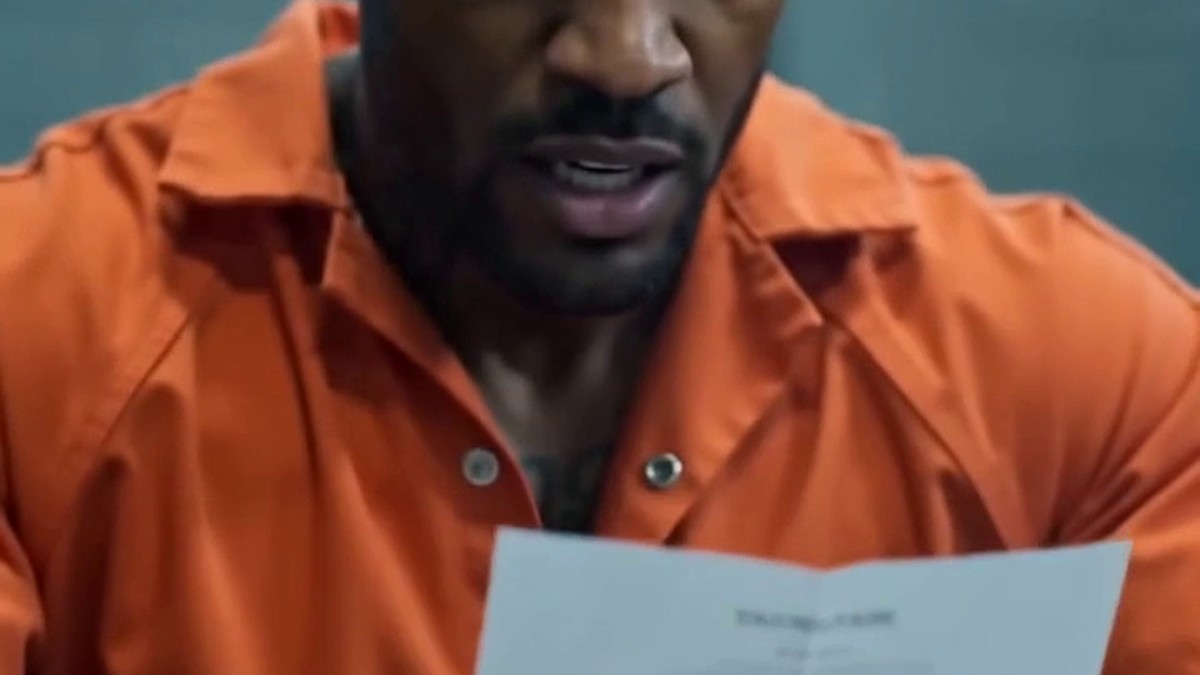
They gave me a seat at a cubicle and a phone. Tyler came out behind the glass in an orange jumpsuit. His hair was flat on one side. He sat down and picked up the receiver, the way he used to pick up the TV remote, like he was already bored.
“Did you bring the bond?” he asked.
“No.”
He frowned. “Ma, I can’t stay in here.”
“You can. You will, until Thursday. Then they release you.”
He shook his head. “Kira’s leaving.”
“I’ll keep Zoey. I already told her.”
He leaned forward. “Then what? You just let me sit in here?”
I took the envelope out of my purse and pressed it to the glass. The receipt was inside, but I had made another copy—a white sheet with the words “Shepherd’s House of Greater Cleveland” in bold at the top, and below it: “Paid in full: $8,700. Residential admission: Tyler Howard. Bed reserved through October 31.”
Tyler read it. His mouth moved but no sound came for a second. Then: “You spent my bail money on a Jesus program?”
“I spent eight thousand seven hundred dollars on your recovery. If you want to call it Jesus, fine.”
“I didn’t ask for that.”
“I know. I’m your mother, not your savior.”
He slammed the receiver against the metal counter. The sound came through the phone like a gunshot. The deputy behind him said something. I didn’t move. I put the extra copy of the receipt in the small slot under the glass. The deputy took it and gave it to him. Tyler left it on the counter.
I walked out of the jail at 11:03 a.m. I had $14 left in my checking account. I bought a pack of gum at a vending machine by the exit. It cost $2.00. I sat on the bus bench and chewed a piece. The gum had no taste.
That evening, Kira called six times. I deleted the voicemails without listening. Zoey had a school play the next day, something about a talking cactus. I ironed her costume. The iron had a burn mark on the front from the time Tyler set it down on the carpet. She wore the lime-green shoelace around her wrist to school.
Three weeks later, Tyler called from Shepherd’s House. His voice was different—not softer, but slower, like he was thinking before he spoke. He said, “They make us get up at six for prayer. I hate it.”
I said, “Good.”
He laughed. It sounded like a cough. “Zoey okay?”
“She’s fine. She asked about you at breakfast.”
“I’m not asking you for money.”
“I know.”
The line went silent for a minute. Then he said, “I read the receipt you gave me. It’s still in my Bible. They gave me a Bible with my name on it. I didn’t ask for it.”
“I know,” I said.
I hung up and put my phone on the kitchen counter. The receipt stub was tucked into the back of my Bible, next to Marvin’s death certificate. I ironed Zoey’s school uniform for the next day. The iron made a click when it heated up. Outside, the 7:10 bus rolled past the stop on West 25th.