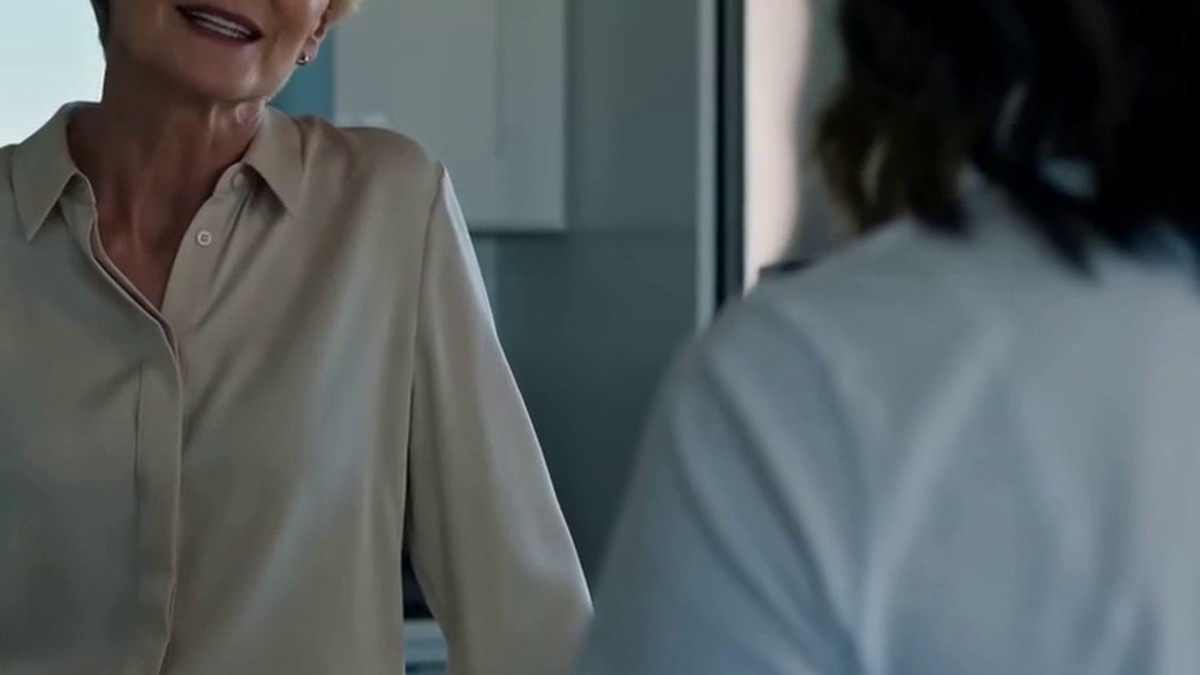
The first thing I smelled walking into Nora’s apartment that morning was burnt coffee. My mother, Evelyn, had been there for an hour already—she texted me a thumbs-up emoji from the driveway, like she was running a military operation and the target had been acquired. I sat in my truck for ten minutes after that, engine off, keys in my lap, watching a landscaper across the street wrestle with a leaf blower.
I knew what was happening inside. Evelyn was doing what she always did: filling the space with her voice, her plans, her absolute certainty about how other people should live. She’d shown up with packing boxes from Home Depot. The heavy-duty kind. I’d seen them in her trunk last Sunday when she’d outlined the whole strategy over meatloaf.
“The apartment is yours, Liam. You and Chloe need the room now. Nora will understand.”
I hadn’t said yes. But I hadn’t said no either. That was the thing about my mother—she mistook silence for agreement, and she’d been doing it since I was nine years old and she decided I’d be a lawyer before I even knew what one was.
The phone call I was about to make was going to detonate the entire morning. I knew it the way you know a storm is coming before the first drop hits—something in the air pressure, something in the way the palm trees outside my truck window were bending just a little too far east.
I dialed.
—
“Mom.” My voice came out rougher than I intended, like I’d been yelling at a game the night before.
“Liam! I’m almost done here. She’s a little stubborn, but I think we’ve reached an understanding. The spare bedroom will be empty by tonight.”
God, the satisfaction in her voice. That was what got me. Not the cruelty—she didn’t think she was being cruel. She thought she was being *effective*. Rearranging the chessboard while everyone else was still figuring out which pieces they were.
“Mom… stop talking. Please.”
A pause. I could picture her face exactly—the slight frown, the way she’d adjust her grip on the phone. My mother didn’t get interrupted. She interrupted.
“What do you mean, stop talking?”
“Because you don’t know what you’re talking about.”
I had just walked out of a legal office in a strip mall on Camelback Road. The building smelled like toner and old carpet, and the lawyer was a guy named Rosen who wore golf shirts to client meetings and had a mug that said *World’s Okayest Attorney*. He’d walked me through paperwork I should have read three years ago, twice, patient as hell.
“The apartment isn’t mine, Mom.”
A short, humorless laugh. “Don’t be ridiculous. You and Nora bought it together. Half of everything is—”
“No.” I cut her off. “It’s not. And it never was.”
Silence. My truck’s dashboard clock ticked over to 10:17. The landscaper across the street had finished with the blower and was now just standing there, drinking from a Gatorade bottle, looking at a patch of gravel as if it held the secrets of the universe.
“Remember when we were closing on the place?” I said. “Nora wanted a second review of all the documents. You said she was being paranoid.”
“She was dragging her feet.”
“She found that the down payment—the money from selling her grandmother’s house in Flagstaff—that was structured as a separate agreement. And then there was the prenup.”
The word landed like a stone in still water.
“What prenup?”
“The one I signed a week before the wedding because I was late for a Suns game and didn’t bother reading past the first paragraph.”
I heard a creak. That would be her lowering herself onto one of the kitchen chairs—the one with the wicker seat that Nora’s grandmother had left her, the one my mother had been trying to throw out for years. I’d sat in that chair a hundred mornings, drinking coffee Nora made, my feet cold on the tile floor, complaining about my boss at the dealership.
“Rosen explained the whole thing this morning,” I said. “After the divorce, the apartment belongs to Nora. One hundred percent. Legally. Non-negotiable.”
The silence stretched. I let it.
“But Chloe…” My mother’s voice had gone thin, like a radio station starting to lose signal. “The baby…”
“There is no baby, Mom.” I kept my voice flat, the way you’d report a weather forecast. “Chloe told me three days ago. She made it up. She showed me a sonogram picture she found online. There were never any doctor appointments. She just… lied. She was scared of being alone, and I was right there.”
That last word—*convenient*—tasted like pennies. I’d been chewing on it since Tuesday night.
On the other end, my mother’s breathing went jagged. A chair leg scraped the tile. She made a sound I couldn’t name.
“Tell Nora she can stay,” I said. “Tell her you’re sorry for showing up unannounced. And then leave. Please. This wasn’t your fight. It was never your fight.”
I hung up before she could answer. Not out of anger. Out of something closer to mercy.
—
I sat in the truck for a while. The landscaper packed his gear. A mail carrier pushed a cart up the sidewalk, earbuds in. My next-door neighbor’s sprinklers kicked on at 10:20, sputtering water onto the sidewalk. A normal Wednesday. My life had just come apart, and the sprinklers were on schedule.
A month ago, right after Chloe told me she was pregnant, I’d transferred the savings from the joint account—$6,400—into a new one under my name. I’d almost forgotten about it. The balance was still sitting there, untouched.
I thought about the prenup. The actual memory, not the shame of it. We’d been in a coffee shop on Mill Avenue, the one with the bad lighting and the sourdough toast that cost fourteen dollars. Nora had the papers. I had a notification on my phone that the Suns were tipping off in forty minutes.
“Just sign here and here,” she’d said, almost apologetically. “It protects both of us.”
I’d signed without reading. Scribbled my name—Liam James Callahan—in the rushed, slanted handwriting my third-grade teacher used to call “enthusiastically illegible.” Then I’d kissed Nora on the forehead, grabbed my keys, and said something stupid like “Go Suns.”
That signature took six seconds. Three years later, it would sit in a manila folder on Rosen’s desk like a bomb I’d built myself and forgotten about.
—
Around noon, I drove to the dealership even though it was my day off. The lot was empty except for a couple of sales guys smoking near the service bay. I unlocked my office, sat at my desk, and picked up the framed photo of Nora and me at the Grand Canyon two summers ago. She was squinting into the sun. I was mid-laugh about something. The frame’s glass was cold against my fingers, and there was a smudge in the corner I’d never bothered to clean. I wiped it with my sleeve, then set the photo down face-down.
Chloe texted three times. I didn’t open any of them. The last message preview read: *“I know you’re angry but can we just—”* I swiped it away and dropped the phone in my desk drawer.
—
I went back to the apartment four days later. Not to move back in—I’d been staying at a Courtyard Marriott near the airport, the kind of place where the breakfast buffet tastes like a decision you’ll regret by checkout. I went because I had to pick up the last of my things, and because my mother had called me twice a day since that morning, her voice quieter each time, asking questions she’d never asked before.
“Did I do this?” she’d said on Tuesday.
I carried the phone to the window and watched a plane take off. “No, Mom. You didn’t help. But I did this.”
The apartment looked different when I walked in. Same walls, same floors, same view of the Catalina Mountains in the distance. But the air had changed. It didn’t feel like my space anymore. It felt like a place I’d once visited and had fond memories of, which is a strange thing to realize about the place where you lived for three years.
Nora was in the kitchen. She’d just made tea—I could smell the bergamot even from the doorway. She didn’t look up right away. She was reading something, a small piece of paper, her lips moving slightly the way they did when she was concentrating.
“Hey,” I said.
“Hey.”
She set the letter down. Her grandmother’s handwriting, I recognized it immediately. The old woman had written Nora letters on birthdays, steady as a clock, all in this careful script.
“I’m just here for the rest of my stuff,” I said. “I’ll be fast.”
“Okay.”
I went to the spare bedroom—the one my mother had wanted to empty for a baby that never existed—and started loading the last boxes into my truck. Old running shoes. A pair of speakers I’d bought on Black Friday two years ago. A framed poster from a music festival in Tucson where Nora and I had stood in the rain and pretended we didn’t mind getting soaked because the band was that good.
When I came back out, Nora was still at the kitchen table. She’d poured a second cup of tea and set it across from her. My old spot.
“You don’t have to,” I said.
“I know.”
I sat and cupped the mug in my hands. The heat burned my palms. Outside the window, a hummingbird worked the feeder Nora had hung last spring.
Nora pushed the letter across the table. “She left me her recipe box. The one with the broken latch. She said the cinnamon roll recipe uses buttermilk, not milk, and I’d know I was homesick when I started craving them.”
The handwriting was neat and even, like every letter had been chosen the night before. I let my fingers rest an inch from the paper. “She was a practical woman.”
“Yes.”
Nora wrapped her hands around her own cup. “Chloe came by a few days ago. She brought the money you transferred—most of it. Minus a month’s rent. She signed a statement, in case I needed it for legal reasons.”
I looked down at the tea. The steam had stopped.
“She also said,” Nora’s voice stayed level, “that there was never a baby. She told me about the fake sonogram.”
“She told me too. Three days ago.”
Nora didn’t react much. She just took a drink.
“She said she’d been lying so long she forgot her own voice,” Nora went on. “Then she found out you’d been trying to protect her—about the apartment—and she realized she didn’t want to be someone else’s wreckage.”
I could see the hummingbird had moved on. The feeder swung in the breeze.
“I’m moving,” I said. “To Phoenix. There’s a job at a dealership out there, one of the big ones. I start in two weeks.”
“That’s good.”
I stood up, the chair scraping the floor. “I’m sorry, Nora. For all of it.”
She didn’t say it was okay. She didn’t say anything at all. I was glad.
—
I carried the last box to the truck and got behind the wheel. Through the apartment window, I could see Nora’s silhouette moving around the kitchen. She was watering the plant on the windowsill—the one her grandmother had given her.
The sun was almost down. The mountains had gone full dark purple against the sky. I started the engine and backed out, heading toward the freeway.
In the rearview, the apartment lights stayed on. A kid on a skateboard was working a kickflip in the empty lot next door. The board clattered on the asphalt each time he missed. He got up, reset, and tried again.
I merged onto I-10 and didn’t look back.