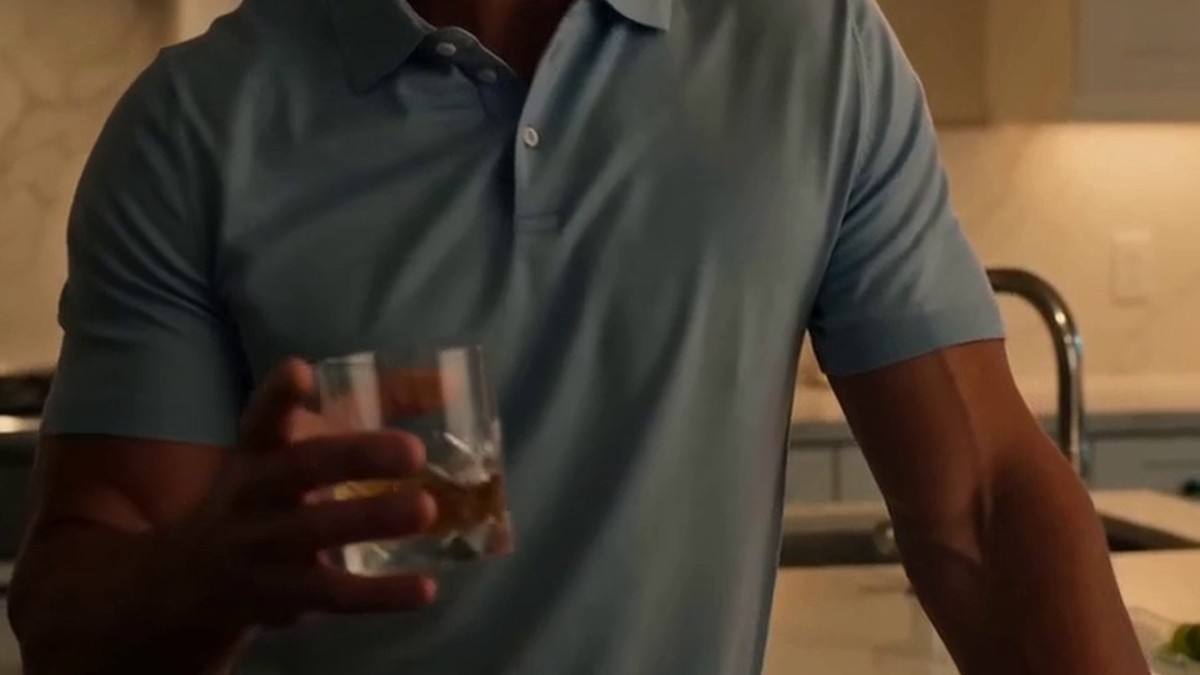
Marcus always had a tell. He’d swirl the bourbon in his glass—one, two, three turns—and then he’d look up with that slow-blooming smile that crinkled the skin around his eyes. I used to think it was warmth. Now I knew it for what it was: the smile of a man about to close a deal.
“Just think about it, Mo,” he said that Friday night, leaning against the kitchen island of his condo in Scottsdale, the one he’d bought six months before we got married. It was June, and the air conditioning hum was a low, constant note beneath his voice. “Your grandma’s casita in Bisbee. That place is a hundred years old if it’s a day. Adobe walls, ancient plumbing. It’s a money pit.”
He was right about the adobe. He was right about the plumbing, which made a sound like a wounded moose every time you turned on the shower. But what he didn’t mention—what he never mentioned—was the cottonwood tree in the courtyard, the way the high-desert light slanted through the kitchen window in October, hitting the Saltillo tile floor just so. What he didn’t mention was that it was mine. The only thing that was mine.
We’d been married two years. Long enough for the sheen to wear off, not long enough for me to have stopped believing, deep down, that he had my back.
“We sell it,” he went on, “and we roll the money into something here. A real place. A home with a pool and a three-car garage. Build equity together. You’re still renting it out to those art students for peanuts, anyway.”
Together. That was the word he kept landing on, soft as a feather.
I traced the rim of my wine glass with one finger. “Let me sit with it.”
He nodded, satisfied. Marcus was always satisfied when I didn’t push back. It confirmed something for him.
He didn’t know I’d already made up my mind. Had, in fact, made it up nine days earlier, standing frozen in the open doorway of his home office at eleven-twenty on a Tuesday night, a half-empty bottle of water in my hand and my entire life about to tilt on its axis.
—
He was on the phone. I could tell by the cadence, the long pauses, the occasional low murmur of agreement. His office door was ajar, and the light inside was the blue-white glow of his laptop screen.
“The property’s in her name alone,” he said, and my hand stopped an inch from the door. His voice was different. Not the voice he used with me. It was sharper, more efficient, the tone of a man discussing logistics. “Inherited directly from the grandmother. Arizona’s a community property state, but inheritances are separate property. You know that, Mom.”
A pause. I heard the faint buzz of a voice on the other end. His mother, Yvonne. A retired real estate broker from La Jolla who never missed an opportunity to remind me that her son was “a builder” and I was “a yoga instructor.”
“Sure, Mo’s my wife,” Marcus said, and I could almost hear him shrug. “But if she sells and we buy something new together, the new property’s marital. Commingled. That changes everything.”
Another pause.
“No, I haven’t floated it yet. I’m laying groundwork. She’s… sentimental about it. But I’ll bring her around.”
The laugh that followed wasn’t loud. It was a low, private chuckle, the kind two people share when they’re in on the same joke. The joke was me.
I backed away from the door. On the nightstand in our bedroom, my phone was charging. I picked it up and texted my mother, who was probably asleep in her little two-bedroom in Flagstaff.
*Can we talk tomorrow? It’s important.*
She replied in three minutes, despite the hour: *I’ll put coffee on.*
—
The drive to Flagstaff takes about two and a half hours north from Scottsdale. I had plenty of time to think. The saguaros gave way to pines as the elevation climbed, and my hands were steady on the wheel. That was the thing that surprised me—how steady they were. I kept waiting for the anger, the shaking, the tears. They didn’t come. What came instead was a bone-dry clarity, the kind you might get from a month alone in the desert.
My mom, Elena, was in her garden when I pulled up, on her knees in the dirt with a trowel, her gray-streaked braid hanging over one shoulder. She looked up, squinted, and dusted off her hands without a word.
Inside, over coffee at her small pine table, I told her everything. The conversation I’d overheard. The careful way Marcus had started to plant the seed about selling. The laugh.
Elena listened the way she always had: still and attentive, her dark eyes on my face, not interrupting. When I finished, she took a long sip of her coffee and set the mug down with a soft clink.
“Your grandma Dolores left you that house for a reason,” she said. “She didn’t trust men who smiled too much. She told me that once. About your father, actually, back in ’89. She was right then, too.”
I almost laughed. Almost.
“I want to sign it over to you,” I said. “Temporarily. Just for a little while.”
Elena nodded slowly. “You don’t have to explain.”
—
We went to a title company in downtown Flagstaff the next morning. My mother didn’t ask a single question about what I planned to do or how long this would last. She signed where she was told to sign, and then she squeezed my hand once—hard—and we went out for breakfast burritos. The whole thing was done by noon.
The next ten days had a surreal, double-exposure quality. At home in Scottsdale, Marcus was in full campaign mode. He’d come back from work, loosen his tie, and talk about the housing market with the enthusiasm of a man describing a winning lottery ticket. Interest rates were still manageable. There was a new development in Fountain Hills with a view of the mountains. We could build. We could have something that was ours, a real foundation.
I listened. I made dinner. I asked polite questions about school districts and HOA fees. I was performing, but the performance didn’t feel hollow. It felt like gathering evidence.
Yvonne, his mother, came to stay with us for a long weekend. She was kinder to me than she had ever been. She complimented my roasted vegetables. She asked after my mother’s health. On Sunday afternoon, she suggested we all go look at model homes “just for fun.” I smiled and said I had a class to teach. During savasana, as my students lay in stillness on their mats, I thought about the word *commingled* and let it dissolve into the quiet of the room.
I was ready. I just needed the right moment.
—
It came on a Thursday. Yvonne had flown back to California. Marcus came home with a bottle of Sancerre and an energy I recognized: the deal-closer’s glide.
We sat on the back patio. The pool light made the water glow an unnatural turquoise, and a neighbor’s wind chimes tinkled somewhere in the distance. He poured the wine. He talked about our future, about having kids one day, about needing a place we could grow into, a place that was ours from the ground up.
“Here’s the thing,” he said, leaning forward. “I’ve run the numbers. If we list the Bisbee house now, while the market’s hot, we could clear enough for a serious down payment. I’m talking twenty percent, Mo. We could break ground by fall.”
I let the silence hang for a few seconds before I spoke.
“Marcus.”
“Yeah?”
I set my wine glass on the side table. “The casita isn’t mine anymore.”
The wind chimes kept going. Marcus’s smile stayed in place for a full second longer than it should have, like a frame of film that had gotten stuck.
“What?”
“I transferred ownership to my mom. It’s done.”
His mouth opened and closed. “Why would you—when did you do this?”
“A couple of weeks ago,” I said. “I heard you. On the phone with Yvonne. The part about commingling. The part about bringing me around.”
The color drained from his face by degrees. First his cheeks, then his neck above the collar of his polo shirt. For a long moment, he just stared at me, and I could practically see the calculations clicking behind his eyes—damage assessment, legal precedents, angles of attack. He was a builder. That’s what builders do when the ground shifts.
“Mo. That conversation wasn’t—you’re taking it totally out of context. My mom and I were just discussing hypotheticals, estate planning stuff. It had nothing to do with—”
“We’re done, Marcus,” I said. “I want a divorce.”
Then came the silence. The real one. The one that fills the space where a marriage used to be.
“You’re serious,” he said.
“I’m leaving in the morning.”
He stood up. Walked to the edge of the pool and stood there with his back to me, hands in his pockets. I didn’t wait. I went inside and packed one bag.
—
The divorce took four months, which in Arizona is practically warp speed for a contested filing. Things moved faster after his attorney took one look at the title transfer and explained the facts of life. The Bisbee property was my mother’s. My mother had nothing to do with the marriage. There was nothing to commingle. The house Marcus had bought in Scottsdale before we met remained his, which was fine by me. I didn’t want it. I didn’t want a single thing from him except my freedom.
I moved into a small rental apartment in the Garfield neighborhood of Phoenix, a 1940s bungalow with a lemon tree in the yard and floors that creaked. My mother came down to help me paint the living room a dusty sage green. We worked in companionable silence, and she didn’t bring up the casita once.
I taught my classes. I walked the neighborhood in the early mornings, when the heat was still bearable and the mourning doves were calling from the telephone wires. I let myself feel the loss in small, manageable doses. Some nights it was sadness. Some nights it was relief so sharp it felt like euphoria. Most nights, it was just quiet.
Marcus didn’t fight for me. For the marriage, I mean. He sent a few long texts in the beginning—apologetic, then defensive, then something that bordered on threatening—and then he went silent. Yvonne unfriended me on Facebook. I lost maybe four pounds and gained a new set of calluses from a pull-up bar I installed in my bedroom doorway.
In May, seven months after I’d said the words *I want a divorce* on his patio, I drove south to Bisbee.
The town was the same as it had always been: old miners’ cottages tumbling down the canyon, a main street full of art galleries and dive bars, the smell of creosote bush and dust. My grandmother’s casita sat on a quiet slope at the edge of town. The gate to the courtyard creaked when I pushed it open.
The cottonwood tree was in full leaf, its shade dappling the flagstone. One of the planters was full of weeds. The other had a single, stubborn rosemary bush hanging on.
I unlocked the front door.
It smelled exactly like I remembered: sun-warmed adobe, a faint trace of the piñon incense my grandmother used to burn. And underneath that, something harder to name. A kind of stillness that had nothing to do with emptiness.
I opened all the windows. I swept the floors. I carried the dead rosemary bush to the compost pile out back and made a list of what I would need: new herbs, some pots, a couple of tomato starts. Food, for the kitchen. A new mattress.
I texted my mom a photo of the cottonwood tree. She responded with a heart emoji and a single line: *She knew what she was doing.*
The casita was mine again, or it would be, as soon as I got around to the paperwork. But the paperwork wasn’t the point. The point was the light coming through the east-facing window in the late afternoon, pooling on the Saltillo tile the color of cinnamon and clay. The point was the quiet, which was not the quiet of absence but the quiet of waiting.
I sat down on the floor, my back against the cool adobe wall, and listened. Somewhere in the canyon, a bird was calling. In the courtyard, the cottonwood rustled its leaves. The house breathed around me, old and solid and mine. I thought about my grandmother, Dolores, who had bought this place with her own money in 1963, when women didn’t do that, who had lived in it alone for thirty years and died in it at ninety-two with her boots still by the door. She had known something about me before I knew it myself.
I pulled out my phone and called the plant nursery downtown. I asked about tomato starts and basil. The woman on the other end had a warm, gravelly voice, and she said she’d set aside a flat of marigolds for me, too—they kept the aphids away.
I told her I’d be there in an hour.