The dress sat alone in the middle of the boutique, locked inside a glass pedestal taller than a coffin. A single warm spotlight hit the fabric like it was catching something holy. It was deep blood-red, silk so thin you could practically see the hours of hand-stitching underneath. Tiny crystals climbed the bodice in jagged, deliberate lines—not just decoration, but a signature.
The pedestal had a brass plate: *Unique Piece. Do Not Touch.*
Lena Weaver stood five feet from the glass and forgot to exhale. Twenty-three years old, frayed denim jacket, sneakers that had seen two cities and a rainy funeral. Her canvas bag hung heavy against her hip. The women gliding past her smelled like vanilla and old money. Their heels clicked Morse code on the marble floor. Lena didn’t fit. She knew it. The security guard near the entrance knew it too—she caught him shifting his weight, waiting.
She wasn’t staring at the dress because she wanted to own it.
She was staring at it because she’d grown up in the same room as that dress.
She pulled out a creased photograph from her bag. The photo showed her mother, Sylvia, thirty years ago. Sylvia sat at a treadle sewing machine in their old apartment in Echo Park, one hand on her swollen belly, the other guiding emerald silk. And behind her, pinned to the plaster wall, hung that exact red dress—unfinished, daring, already full of fury.
Lena reached toward the glass just to feel the heat of the spotlight.
“Don’t,” someone snapped.
The word hit the back of her neck like a car door slamming.
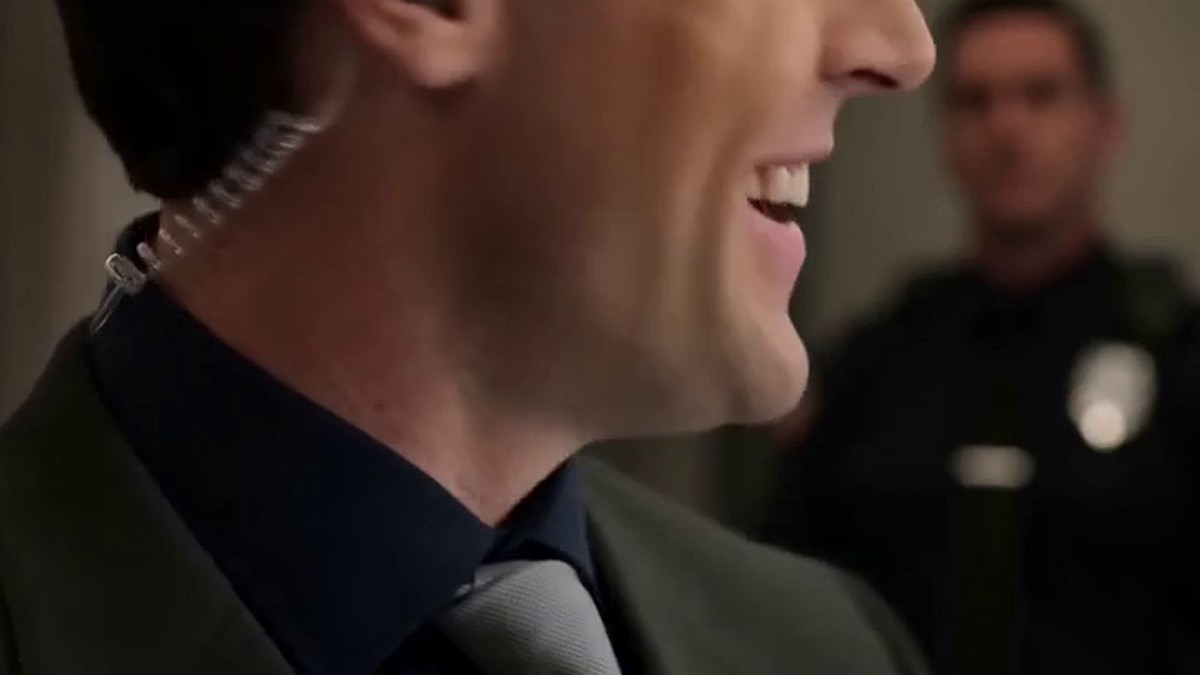
A guy in a charcoal suit strode over. His name tag said *Ashton.* Smile tight as a zipper. He gave her the full scan—shoes, bag, nails worn down from cutting patterns at three in the morning.
“Sorry,” Lena said. “I just wanted to see it up close.”
Ashton tilted his head. “That dress isn’t a museum exhibit. And it’s definitely not for window shoppers with empty pockets.”
Two clients by the perfume counter turned. One of them let out a breathy little laugh.
Lena didn’t move. Her thumb pressed into the photograph hard enough to crease her mother’s face.
“I’m not shopping,” she said, voice quieter now. “I’m here to pick it up.”
Ashton blinked. Then he actually chuckled, looking toward the security guard as if to say *are you hearing this?*
“Pick it up? Honey, that dress is the centerpiece of our fall archive. It’s valued at forty-eight thousand dollars. You’d need a down payment bigger than your whole life.”
Lena slid the photograph back into her bag and pulled out a slim leather folder. She didn’t open it yet. She just held it in both hands like a shield.
“The dress is stolen,” she said.
The boutique suddenly got loud with silence. Someone’s phone stopped clicking.
Ashton’s face tightened. “What?”
“This dress. Every stone. Every stitch. My mother designed and hand-sewed it in 1991 for the Garnier fashion house competition in New York. It was called *Ember.* The design was hers. The labor was hers. And four months before the show, her creative director erased her name from every record and locked the archive in his private collection. He sold it piece by piece over thirty years. This is the last piece. And it belongs to her estate.”
She opened the folder. Ashton saw the court order first—the official seal, the file number, the phrase *recovery of stolen property.* Then a photograph of the dress in a cluttered studio, the same red silhouette with a handwritten label in the corner: *Sylvia Weaver, 1991. Property of the artist.*
“I’m not here to buy it back,” Lena said. “I’m here to load it into my car and drive it home. My lawyer already sent the documentation to your corporate office an hour ago. They’re faxing your manager right now.”
The security guard took a step forward, confused. Ashton’s lips moved but no words came. The two perfume clients stared openly now, eyes hungry for a scandal.
Lena didn’t raise her voice. She just looked at the red dress, at her mother’s hands in her memory, and then back at Ashton.
“So you can either unlock the pedestal yourself,” she said, “or I can wait for the police to do it for you. Your choice. But I’m not leaving without what she built.”
Ashton’s fingers went to his earpiece. He muttered something, panic cracking through his professional voice. Lena didn’t hear the reply, but she saw his shoulders drop half an inch. He walked stiffly toward the back office. A minute later, a woman in a beige blazer emerged—the manager, face pale, holding a printout that trembled slightly in her grip.
She nodded at Lena once, the kind of nod that admitted defeat and tried to dress it up as courtesy.
The glass pedestal beeped three times. The locks released.
Lena breathed in. She set down her bag, stepped forward, and lifted the dress from its stand herself. The silk slipped over her arms like it remembered. She didn’t put it on. She folded it with the same care her mother used to fold embroidery before bed, then tucked it into a garment bag she’d brought from home—an old one, the zipper a little stubborn, but it worked.
The whole boutique stayed frozen. Even the soft music overhead felt stupid now.
Walking out, Lena passed Ashton. He wouldn’t meet her eyes. She stopped just long enough to say, “Her name was Sylvia Weaver. You might want to learn it. You’ll be hearing it a lot.”
She pushed through the glass doors onto Rodeo Drive. The November air hit her face. She didn’t look back at the boutique. She just clutched the garment bag against her chest and walked toward the parking garage, where her beat-up Corolla waited in a shadow too deep for the California sun.
Her mother’s dress rested on the passenger seat. Through the plastic window of the garment bag, one crystal caught the dashboard light and threw a tiny red prism against Lena’s cheek.
She sat in the driver’s seat for a full minute, hands on the wheel, staring at that flicker of color.
Then she started the engine and drove east, toward home.