The letter from the HOA arrived on a Tuesday, tucked between a credit card offer and a flyer for gutter cleaning. I remember the weight of it—almost nothing, but it pulled my whole day sideways. “Resident has been observed feeding feral cats on common property. This must cease within fourteen days or a fine of $100 per occurrence will be assessed.” Underneath, someone had handwritten in blue pen: *We’re done asking nicely.*
I’d lived in this four-unit condo building in Evanston for twenty-two years. My wife Rita and I bought the place back when the maple out front was just a stick tied to a stake. Now the tree shaded half the parking lot and Rita had been gone for three years, and I’d started feeding the cats about six months after the funeral. Not because I was lonely, exactly—maybe because the quiet in the kitchen at six a.m. was the kind of quiet that made you forget to eat.
There were nine of them at that point. The gray one with half an ear showed up first, skinny as a zip tie, and I’d put out a can of tuna because the can was there and so was she. Within a month she’d brought the others: a little black tom with gold eyes, an orange tabby who slept under my neighbor’s rhododendron, a calico with a limp. I named them in my head—Millie, Socks, Carrot, Twist—but I never used the names out loud. That would have made it harder to pretend they weren’t mine.
The complaints started small. Janine Marshall from unit 3B stopped me near the mailboxes in late September. “Frank, the cats are using my flower beds as a litter box. I can’t even open my windows.” She had a point—her marigolds were looking rough. I told her I’d try to feed them closer to my back patio, but the truth was, the cats went where they wanted. Her husband, Doug, was less diplomatic. He cornered me on a Saturday morning while I was setting out a bowl of dry food under the old Weber grill I never used anymore. “You need to knock this off,” he said. “We’re going to the board. This isn’t a barnyard.”
I didn’t argue. Doug drove a BMW X3 he washed every Sunday, and his tone had the kind of clipped efficiency that didn’t leave room for discussion. I just nodded and kept pouring kibble. The gray one—Millie—was watching from the top of the fence, her half-ear twitching.
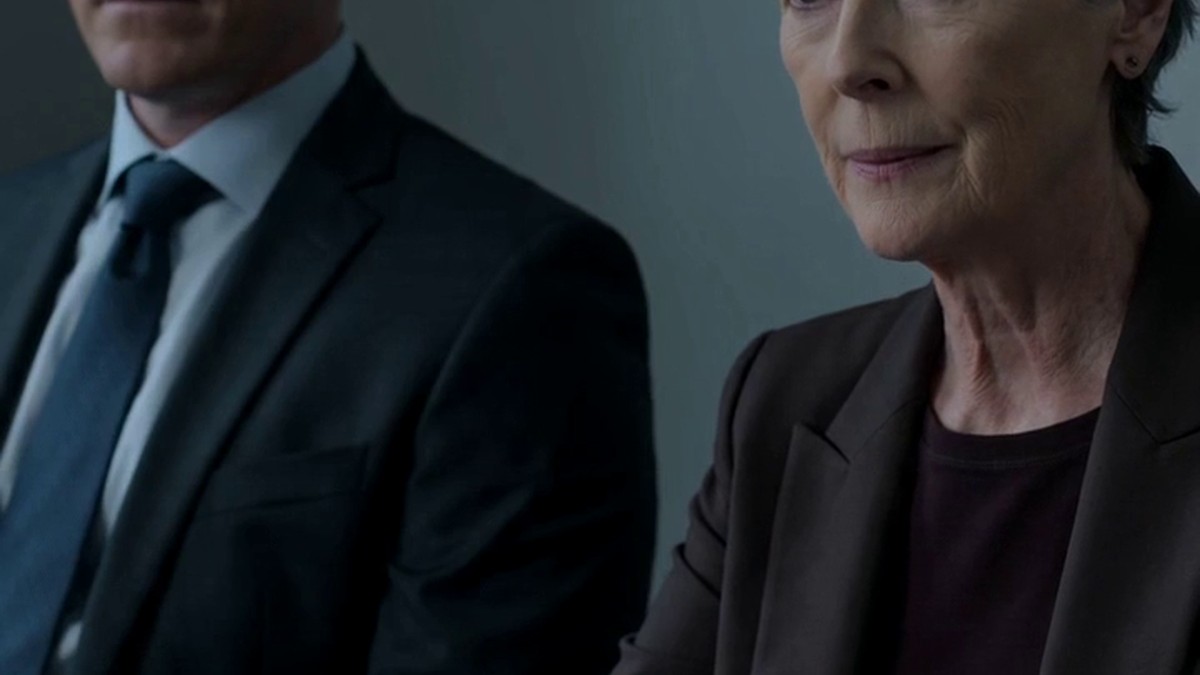
The board meeting was held in the community room of the building next door, a space that always smelled like lemon Pledge and old carpet. Six of us sat around a folding table: me, Janine and Doug Marshall, the Trivedis from unit 2A, and Carol Henshaw, the board president, who had the exhausted look of a woman who’d hosted too many of these things. Carol read the complaint out loud. Property damage. Odor. “Potential health risk.” Doug rattled off a list of diseases—toxoplasmosis, ringworm, rabies. Janine said she’d seen a cat “the size of a small dog” hissing at a toddler on the sidewalk. I said the cats had been vetted as far as I could tell, but my voice sounded thin, even to me.
Carol folded her hands. “Frank, we’re sympathetic. But this is a liability. The board’s position is that feeding has to stop by the end of the month or we’ll have to start issuing fines.”
“And if I don’t pay the fines?”
“Then we can place a lien on your property. I don’t want to do that. Nobody wants that.”
So there it was: stop feeding them or risk losing the home my wife and I had spent half a life paying for. I walked back to my unit under a sky that was already spitting cold November rain and found Millie waiting by the patio door, her eyes like two little moons. I filled her bowl anyway.
That night I sat in my recliner with Jeopardy on mute and scrolled through my phone until I found a group called Felines & Ferals, based out of a strip mall in Skokie. Their website talked about TNR—trap, neuter, return. The idea was that if you sterilized the cats and got them vaccinated, the colony stopped growing and the health arguments went away. And, crucially, the city of Evanston had an ordinance that recognized managed feral colonies as a legitimate exception to nuisance laws. If the colony was registered and maintained, the HOA couldn’t legally force you to stop feeding.
I called the number the next morning. A woman named Rhonda answered, her voice so cheerful it almost hurt. “Nine cats? That’s a medium colony. We can do a mass trapping—it’ll take a couple of days. Cost is four hundred per cat, that includes spay or neuter, rabies shot, ear tip, and microchip registration. You’d be looking at thirty-six hundred dollars.”
Thirty-six hundred dollars. I had about five thousand in a savings account marked “Alaska cruise,” a trip Rita and I had been planning the year she got sick. I’d never touched it after she died. Seemed like the money was just waiting for a reason to exist again.
“Do it,” I said. “Can I come in and sign something?”
I drove to Skokie that afternoon in my eight-year-old Subaru, past the Dunkin’ on Howard and the storefront church that used to be a laundromat. Rhonda was a short woman with a ponytail and a clipboard already waiting with a contract. I wrote the check right there at the counter—$3,600. My hand barely shook. She handed me a copy of the form and a schedule. Trapping would happen that weekend.
The trapping turned out to be a production. Two volunteers from the organization brought humane traps baited with mackerel, the really stinky kind, and set them up around my patio and behind the dumpsters. By Saturday evening we’d caught all nine. I stood in my driveway at dusk, watching them load the last carrier into the van: the gray one, Millie, pressed against the wire door, her half-ear flat against her head. I almost said something to her. Instead I just touched the metal cage with two fingers and told the volunteer, “Take care of her.”
They came back two days later, all nine groggy but alive, each with a tiny green tattoo inside the ear and a missing sliver of the right ear tip—the universal sign of a sterilized street cat. Rhonda handed me a manila envelope. Inside was a colony registration certificate stamped by the city, a list of each cat’s microchip number, and a receipt for $3,600.
“You’re now the official caretaker of a managed feral colony,” she said. “Nobody can touch them. Nobody can make you stop feeding.”
The next HOA meeting was the following Thursday. I’d put the envelope on my kitchen counter for three days, just looking at it, feeling its shape. That evening, I put on a clean shirt and walked back to the community room with the envelope under my arm. Same folding table, same lemon Pledge smell. Doug was already there, scrolling through something on his phone. Janine sat beside him with a coffee cup she kept tapping with her nails.
Carol opened with the usual business—snow removal, a busted gutter on unit 3—then looked at me. “Frank, do you have anything to add regarding the cat situation? The deadline’s in two days.”
I pulled the certificate out of the envelope and set it on the table. Then the receipt. Then the nine microchip registration printouts, each with a cat’s code and the Felines & Ferals letterhead. The paper made a small stack, white and clean under the fluorescent lights.
“These cats are now a registered managed colony with the city,” I said. “They’ve been sterilized, vaccinated, and microchipped. I paid for all of it.” I tapped the receipt. “Three thousand six hundred dollars. It’s done. They’re legal.”
Doug snatched the certificate and read it twice, his mouth a tight line. Janine stopped tapping her cup. Carol picked up the receipt and just stared at it, like she was trying to solve a math problem that didn’t add up.
“This doesn’t mean they won’t be a nuisance,” Doug said. “They’re still—“
“They’re still here,” I said. “And I’m still going to feed them. But the colony won’t grow, and they’re vaccinated. If you want to take this further, you’ll have to call the city, and they’ll tell you what I’m telling you.”
Nobody spoke. The radiators hissed. Somewhere down the hall, a door opened and closed.
I stood up, gathered my papers back into the envelope, and slid it under my arm. “I’ll be on my patio if anybody needs me. Seven a.m., same as always.”
I walked out and didn’t look back. Through the window of the community room I could see Janine still holding her coffee, not drinking it, and Doug reaching for his phone. Let them call whoever they wanted. I had the receipt. I had the numbers.
The next morning, I filled nine bowls under the old grill and Millie was there, her half-ear flicking in the cold, waiting like she’d already known I’d show up. I poured the kibble and watched her eat, and for a second I could’ve sworn I heard Rita laugh in the kitchen, nothing more than the memory of a sound, but enough to warm my hands around.