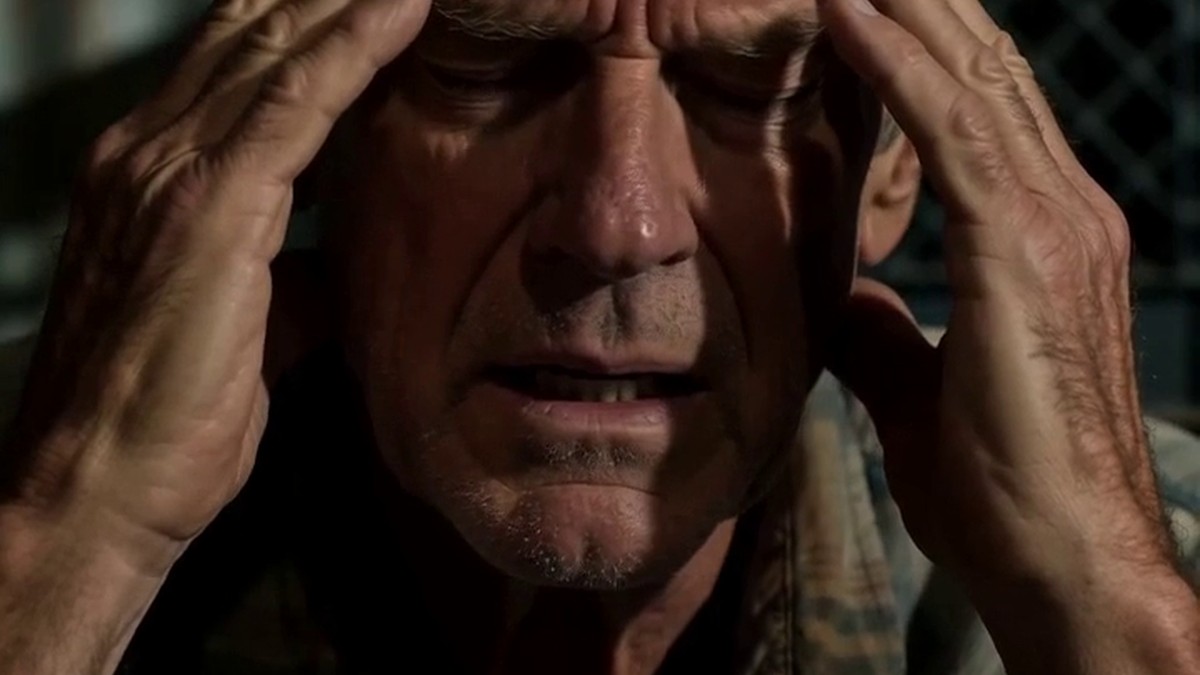
**A Note on the Cover**
The bell above the shop door had a crack in it, so it didn't ring so much as cough — a dry, apologetic little sound Martin Doyle had grown to love over eleven years of ownership. He was wiping down the register counter when his daughter came in carrying a cardboard box that had clearly been taped and retaped more than once.
"Found these in Uncle Ray's storage unit," Claire said. "Dad, some of this is going to wreck you."
Ray had died in March. A heart that gave out on a Tuesday morning while he was proofing galleys at his kitchen table, red pen still capped in his hand when the paramedics found him. He and Martin had started the press together in a rented garage in Providence, Rhode Island, back when neither of them owned a car worth driving to another state. Doyle & Doyle Books had published exactly one title that year — a poetry chapbook nobody bought — and forty-three titles in the years since, including three that had made regional bestseller lists and one that a film studio had optioned and never made.
Martin set down his rag and opened the box.
On top was a stack of cover proofs, mockups for a novel they'd shelved four years ago — a thing about two brothers who ran a hardware store in Maine, one of those quiet Americana novels that never quite found its market. Ray had rejected every cover the designer sent. Eleven rejections, each with his handwriting scrawled in the margins: *too soft. too loud. doesn't smell like sawdust.* Martin remembered the arguments, half of them conducted by phone at midnight because Ray never slept properly once a book was in production.
Under the proofs was a manila folder marked, in Ray's blocky print, DO NOT OPEN UNTIL I'M DEAD OR RETIRED, WHICHEVER COMES FIRST HA HA.
Martin's hands weren't steady when he opened it.
Inside was a manuscript. Two hundred and eleven pages, double-spaced, a novel Ray had apparently been writing in secret for years — about two brothers who built a small press from nothing in a garage in Providence, who fought over commas and covers and money they didn't have, who stayed partners for three decades because neither one could imagine doing the work with anyone else. The last page wasn't fiction anymore. It was a letter.
*Marty — if you're reading this, I either chickened out of showing you or I'm gone. Probably the second one, knowing my luck. Don't let the imprint die with me. And for God's sake, hire a better cover designer than the one we've got now. Love, your brother in ink, Ray.*
Claire found her father forty minutes later, still sitting on the stockroom's step stool, the manuscript open across his knees, the cracked bell silent above a door he hadn't thought to lock.
"Dad?"
"We're publishing it," Martin said. His voice came out rougher than he intended. "Ray's book. We're putting it out this spring, under his name, exactly as he wrote it."
"Even the ending? Claire had scanned the last chapter over his shoulder — in it, the surviving brother closes up the shop for the final time and, rather than selling the name, changes the sign himself, alone, on a ladder, in the rain.
"Especially the ending." Martin closed the folder and held it against his chest the way he used to hold the very first book they'd ever bound. "He always did know how a story should finish. I just never thought he was writing about us."
He carried the manuscript to his office, past the shelf where all forty-three Doyle & Doyle titles stood spine-out in publication order, and set it down where the forty-fourth belonged. Outside, late afternoon light came through the shop window and landed on the dust motes turning slow circles above the counter, and for a while Martin let himself sit with the sound of nothing — no cough of the bell, no customers, just the particular quiet of a room that had just been handed one more thing to say.
*This story is a work of fiction. Its characters and events are invented and are not intended to depict any real person, living or deceased.*