"Sit down," he said, his voice stripped of everything warm. His face was a wall — cold, smooth, impenetrable.
The young woman in the shimmering gown didn't flinch. She held his gaze, steady as stone. "Is she always going to pull the strings for you?"
The slap came fast and clean.
The ballroom went silent in the way only rooms full of expensive people can — a collective inhale, manicured hands pressed to painted mouths, champagne flutes frozen mid-air.
A single tear traced a slow line down her pale cheek.
The matriarch watched it fall with something close to pleasure. Her lips curved, sharp and dismissive. "You don't belong here, darling. Every moment you stay, you embarrass us all."
The room assumed she was shattered. Another ambitious girl who'd climbed too high and been cut back down to size. Another casualty of old money and older cruelty.
But something was wrong with the picture.
Her chin didn't drop. Her shoulders didn't cave. And those trembling lips — they weren't trembling from grief. They were trembling from the effort of holding back a smile.
A smile that came anyway.
Quiet. Knowing. Devastating.
In her palm, a screen glowed like a lit fuse.
Hidden financial records. Property transfers buried under layers of shell companies. Legal documents that were never meant to see daylight.
That tear wasn't surrender.
It was a starting gun.
She wasn't there to embarrass the family.
She was there to dismantle it — brick by gilded brick.
The matriarch's smile died first.
It didn't fade gracefully — it collapsed, the way a wall collapses when you pull the wrong stone. Her eyes dropped to the glowing screen, and something ancient and reptilian shifted behind them.
"What," she said, very quietly, "is that."
Not a question. A warning.
But warnings had stopped working on Mara Voss approximately three months ago, the night she'd found the first file. The one with her mother's name on it. The one that explained everything — the accident, the settlement, the nondisclosure agreement signed by a woman too broken and too desperate to read the fine print.
"This?" Mara turned the screen outward, letting the light wash over the nearest faces. Senators' wives. A deputy minister. Two men she recognized from the financial pages. "This is just the preview."
The heir — beautiful, hollow Dominic — took a step toward her. His hand was already moving, reaching for the phone, and his eyes had gone the flat dark color of someone who'd done this kind of thing before.
"Don't." Her voice stopped him cold. "There are fourteen people in this room with the same file in their inbox right now. It delivered the moment he touched me."
She let that land.
Fourteen pairs of eyes found their phones. The sound was almost comic — the collective rustle of silk and wool, the soft percussion of screens unlocking, the silence that followed when the files opened.
Dominic's jaw tightened. He looked to his mother.
The matriarch was already moving.
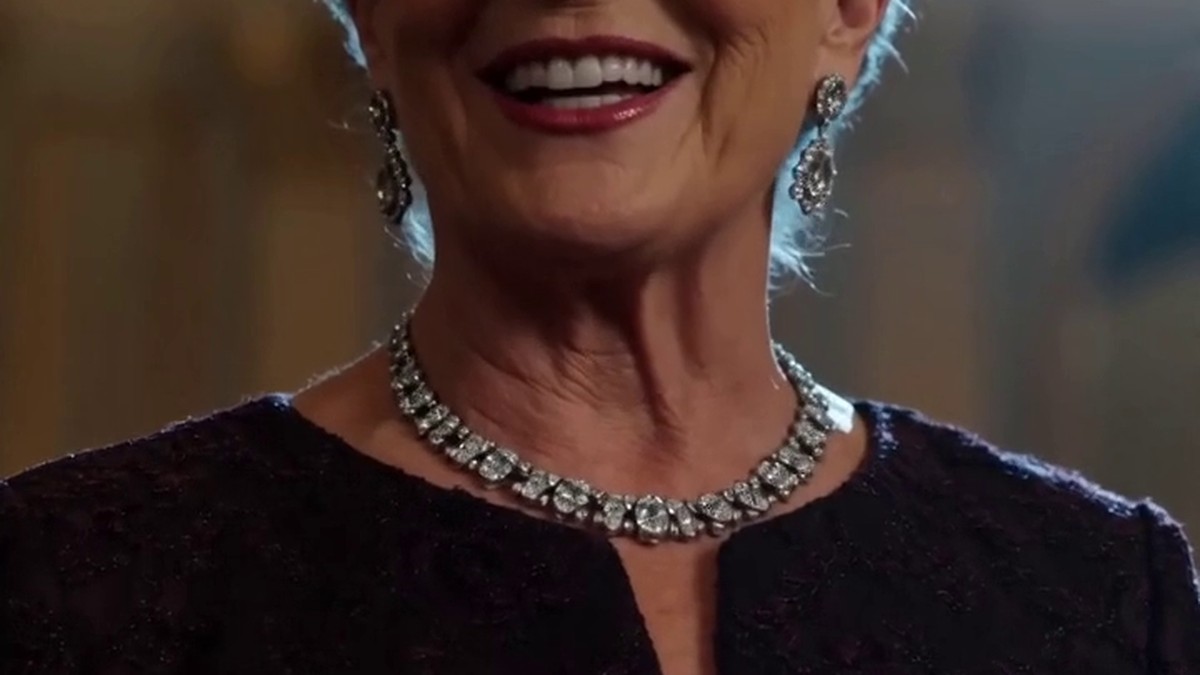
She crossed the ballroom floor with the practiced grace of a woman who had never once in sixty years allowed herself to be cornered — head high, pearls gleaming, a smile reconstructed with surgical precision.
"Ladies, gentlemen," she said, her voice hitting every corner of the room with effortless projection. "I'm afraid our guest has had too much champagne. These things happen. If someone could call—"
"Elspeth." The voice came from the far end of the room.
An old man in a charcoal suit had risen from his chair. Howard Kellner. Seventy-three years old, dry as parchment, and the closest thing to God that European banking had. He was looking at his phone with the expression of a man defusing a bomb.
"These accounts," he said carefully, "are mine."
"Howard—"
"My accounts, Elspeth. Accounts I was told were closed in 2019." He looked up. The room looked with him. "Where did this money go?"
The matriarch's smile didn't waver. But her knuckles, wrapped around the stem of her champagne flute, went white as bone.
Mara spoke before anyone could redirect the moment.
"Forty-seven million euros, Mr. Kellner. Moved in tranches of under nine hundred thousand to avoid automated flags. Laundered through three Luxembourg subsidiaries and one Irish property trust." She paused. "Your family's Irish property trust, actually."
Kellner's face went the color of old ash.
"You used his own vehicle against him," someone said from the crowd. Not an accusation. Almost admiring.
"I learned from the best," Mara said, and she looked directly at the matriarch when she said it.
Dominic moved suddenly — a sharp, jerking motion, crossing the space between them with his hand outstretched — and Mara stood her ground so completely it looked like a choreographed choice.
"Dominic." She held up her free hand, one finger raised, the same gesture his mother had used four minutes ago. The mirror image of it, perfect and deliberate. "Sit down."
He stopped like he'd hit glass.
Something passed across his face — shock first, then something more complicated, something that in a different life, in a different family, might have been recognition.
He sat.
Not because she was threatening him. Because for the first time in thirty-eight years, someone had shown him exactly what he looked like.
The matriarch set her champagne flute on a passing tray with absolute precision. When she turned back to Mara, the performance was over. What was underneath was older and colder and considerably more honest.
"What do you want," she said. Flat. Direct. The first real thing she'd said all evening.
"What do I want." Mara tilted her head, as if considering the question. "I want the NDA voided. I want the settlement renegotiated with an attorney my mother actually chose, in a jurisdiction you don't own. I want the Voss property returned — not purchased, returned — and I want the company records for 2009 through 2014 handed to the financial crimes unit by Monday morning."
A beat.
"You can keep the crystal," she added. "I know it means a lot to you."
The matriarch stared at her for a long moment. The room was so quiet Mara could hear the ice shifting in someone's glass twenty feet away.
"You're your mother's daughter," the old woman said finally.
"Yes." Mara felt the tear on her cheek, nearly dry now, and didn't bother to wipe it away. "She was remarkable. You should have known that before you ruined her."
It wasn't a threat. It was an epitaph.
The matriarch turned — slowly, without hurry, because she had never allowed anyone the satisfaction of watching her flee — and walked toward the far doors. Her assistant materialized at her elbow. Whispered voices. The flat tap of her heels diminishing across marble.
Dominic didn't follow.
He stayed where he was, hands resting on his knees, staring at the floor with the expression of a man taking stock of a house he'd lived in his whole life and noticing, for the first time, that none of the walls were load-bearing.
Kellner was already on the phone, speaking in urgent German, gesturing at two younger men who moved through the crowd toward the exits with the purposeful quiet of lawyers.
The room unfroze. Slowly, unevenly, the way ice cracks — sounds came back first, then movement, then the low urgent surge of conversation as people found each other and began speaking in the rapid shorthand of those who have witnessed something they will be describing for years.
A waiter appeared at Mara's elbow with a fresh glass of champagne.
She took it.
She had been standing in this ballroom for exactly forty-two minutes. She had planned this for nineteen months. She had spent three of those months sleeping in her car outside her mother's care facility because the money was gone and the job she'd taken to fund the investigation paid just enough to keep her mother's room and nothing else.
She had not allowed herself to think past tonight. Tonight was the wall. She'd built her entire will around it.
Now it was done.
She stood in the shimmer of her borrowed gown — a friend's, altered twice — and looked at the room full of people who were already reconfiguring themselves around this new reality, and she felt not triumph but something much quieter.
Something that felt like a window opening.
Dominic looked up from the floor. Across the room, their eyes met — the man who had struck her and the woman who had let him, because the audio and the video and the timestamp had needed to be impeccable.
He looked, she thought, genuinely lost.
She felt something for him that surprised her. Not sympathy, exactly. But the specific sadness you feel for a person who has been raised to be a weapon and never told they had a choice.
She held his gaze for a moment. Then she looked away.
Outside the tall windows, the city was vast and indifferent and alive. Somewhere across it, her mother was asleep in a narrow bed, dreaming of a house that no longer existed.
By Monday it would exist again.
Mara raised her glass — not to anyone, not for anyone — just a small private gesture to the night and to the nineteen months and to the woman who had handed her a box of old files with shaking hands and said *I don't know what any of it means, baby, but I kept it. I kept all of it.*
She drank.
The champagne was very cold and very good.
She had always known it would be.