Her hair was knotted badly in places. Sarah worked through each tangle slowly, with two fingers instead of a comb, the way she did for Alice on mornings when time was short and patience had to stretch further than it wanted to.
Brooke did not flinch. But she held her breath.
"You can breathe," Sarah said quietly.
Something in the small shoulders released.
Sarah separated the hair into three even sections and began.
"My daughter has a doll too," she said. "Hers is missing one shoe. She named her Margaret but calls her Maggie."
Brooke's fingers tightened around her own doll.
"What's yours called?" Sarah asked.
A pause long enough to wonder if the question had been a mistake.
"Rose," Brooke said.
Sarah finished the braid, secured the elastic, and smoothed the end flat against Brooke's back.
"That suits her," she said.
She never made a bigger deal of it than that.
—
The locked door was on the second floor, east side, tucked at the end of a short corridor that bent away from the main hall like something ashamed of itself.
Sarah had walked past it a dozen times without stopping. The other staff moved past it without slowing, the way people walked past car accidents on the highway — eyes forward, pace steady, pretending the thing beside them did not exist.
There was no label on the door. No keypad, no chain. Just a brass handle and the particular stillness of a room that had not held air in a long time.
Sarah asked about it once, casually, while folding clean rags in the laundry room.
The other cleaner, a woman named Doris who had been with the estate seven years and communicated mostly in sighs, went quiet in a way that was its own kind of answer.
"We don't touch that room," she finally said.
"Why?"
"Because Mr. Whitmore said so."
Sarah waited.
Doris folded a rag with the focus of a woman defusing something.
"It was Mrs. Whitmore's room," she said. "Before."
Before.
That word did a lot of work in the Whitmore house.
—
Richard Whitmore was not a man who appeared without warning. He moved through his own home like a weather system — you felt the pressure drop before you saw him. Doors clicked shut in other rooms. Staff straightened their posture. The temperature seemed to drop a degree.
He was tall, dark-haired, somewhere in his early forties, with the kind of face that had probably been easy once and had since learned to keep its expression locked behind glass.
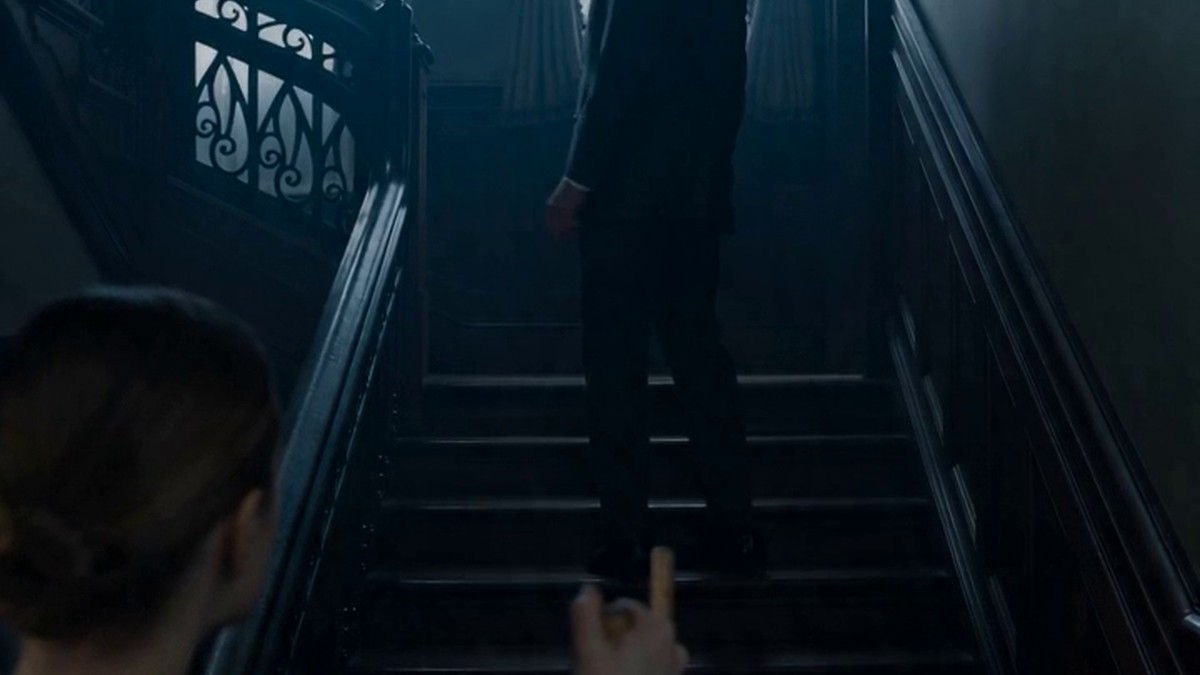
Sarah first spoke to him on a Wednesday afternoon in late March when she rounded the corner of the main staircase and very nearly knocked him sideways with a mop handle.
She caught it. Barely.
"I'm sorry," she said immediately.
He looked at the mop, then at her. His expression did not change, but something behind his eyes registered mild surprise, as though physical near-misses were outside his usual experience.
"Sarah Miller," he said. Not a question. He had the voice of someone who reviewed employee files the way other men read the paper.
"Yes, sir."
A beat.
"You've been working Tuesdays and Thursdays."
"And Mondays now," she said. "Nancy extended the schedule two weeks ago."
He nodded once, the way people nodded when information confirmed what they already knew. Then he moved past her up the stairs.
That was the whole conversation.
But three steps up, he paused.
"My daughter," he said, facing the landing above him. "She seems less agitated lately."
Sarah said nothing.
"Whatever you're doing," he said, "continue it."
He did not wait for a response.
—
April came in cold that year, gray and restless, the ocean throwing itself against the shore every night like it was trying to make a point.
Brooke had started meeting Sarah in the hallway without being summoned. She would materialize in the doorway of her room when she heard the cleaning cart's wheels on the floorboards — arms crossed, bare feet, Rose tucked under one elbow — and settle herself against the wall to watch.
Sometimes she talked. More often she didn't. Both were fine.
She told Sarah that Rose had a stomach ache.
She told Sarah that she didn't like the tutor's shoes, which squeaked.
She told Sarah that her mother used to sing something but she could not remember what it was anymore, only that it was there and now it wasn't, and she said this last part the way children said things that were actually about something enormous — quietly, matter-of-factly, as if shrinking the words made the weight of them smaller.
Sarah stopped cleaning when Brooke said that.
She sat down on the floor.
Not across from her. Beside her. Right there on the hallway floor with her back against the wall, the way Brooke sat.
"That happens sometimes," Sarah said. "Something important lives inside you and you can't find the exact shape of it anymore. But it's still there."
Brooke looked at Rose.
"How do you know?"
"Because you remembered that it existed," Sarah said. "That's already most of it."
—
She opened the door on a Thursday in early May.
She had not planned to.
She was changing a light bulb in the second-floor sconce nearest the short east corridor, standing on the second rung of a step stool, when she heard Brooke behind her.
The child had drifted down from the third floor in her sock feet and stood at the entrance of the bent corridor, staring at the locked door.
"Mama's room," Brooke said. Simply. Without drama.
Sarah climbed down from the step stool.
She had been in the house long enough now to know the rules were real. She had been in the world long enough to know that some rules existed to protect people and some existed to protect something else entirely.
She stood beside Brooke and looked at the door.
"Have you ever been inside?" she asked.
Brooke shook her head.
"Do you want to?"
A silence so long and careful that Sarah could hear the house breathing around them.
Then: "Yes."
Sarah tried the handle.
It wasn't locked.
The door opened on a room that smelled of cedar and something floral and faint, like perfume that had been living there in the curtains for two years, waiting for someone to disturb it. Late afternoon light came through gauze curtains in pale sheets. A dressing table against one wall, a silver brush still sitting on it. Framed photographs. A folded quilt on an armchair in the corner.
Brooke stepped inside.
She did not run to anything. She walked slowly, the way people walked into churches, or into rooms where someone had recently gone. She stopped at the dressing table and looked at the brush. Then she looked at the photographs.
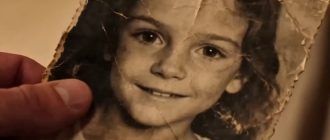
Her mother. Younger than Sarah had imagined, laughing in the photographs, dark-haired, caught mid-motion in most of them, as if she'd been the kind of person who was always just about to do something.
Brooke reached out and touched the edge of one frame with one finger.
Then she started to cry.
Not the thin hidden sound Sarah had heard on her first day. This was different. This was full and open and right out in the air where it could be heard, and it had weight to it, the weight of something that had been pressed down for two years under silence and closed doors and a grief nobody had known how to hand back to a five-year-old.
Sarah knelt beside her.
She did not say it was okay. She did not say don't cry. She did not reach for a solution because there was not one and inventing one would have been a lie.
She just stayed there.
On the floor of that room, in that late light, Brooke cried until she was finished.
When the crying stopped, she sat quietly for a while and looked at the photographs.
"She made a silly face when I had my picture taken," Brooke said. "So I would laugh. So my eyes would be happy in the photo."
"She knew exactly what she was doing," Sarah said.
Brooke looked at her.
"She sounds like she was good at being your mom," Sarah said.
Brooke thought about this seriously, the way only children thought about serious things.
"Yeah," she said. "She was."
—
Richard Whitmore found them there.
Sarah heard him stop in the doorway and felt the silence shift around him. She did not turn around.
Brooke looked up at her father.
Something passed across his face that he clearly had no practice allowing there in front of other people. He looked at his daughter, small on the floor of his wife's room, and then he looked at Sarah, kneeling beside her, and then he looked at the photographs on the dressing table.
He said nothing for a long time.
Then he crossed the room in four steps and lowered himself to the floor beside Brooke the way a large man lowered himself carefully when he was afraid of breaking something.
Brooke leaned into him.
He put his arm around her and held her with the particular tightness of a person who had needed to do that for longer than they had allowed themselves to know.
Sarah quietly stood.
She picked up her step stool from the hall, replaced the light bulb in the sconce, and walked back to the service stairs with her cart.
She gave them the room.
—
She did not think she would be fired. She was not certain she wouldn't be.
When Nancy called her into the service office the following Monday morning, Sarah stood with her hands folded and her face still and waited for whichever version of the conversation was coming.
Nancy looked at her across the desk.
"Mr. Whitmore has requested you be added to the permanent roster," she said. Her voice carried the tone of someone delivering news they hadn't expected to be delivering. "Full schedule. Benefits. The agency rate becomes direct employment."
Sarah let a breath out slowly.
"The only condition," Nancy said, and here she paused, and something in the old woman's tight expression softened by a fraction, "is that you continue doing what you've been doing."
She didn't specify what that was.
She didn't need to.
—
On a Friday afternoon in late May, Sarah was cleaning the second-floor windows when she heard something unfamiliar.
She stopped. Lifted her head.
Laughter.
A child's laughter, sharp and sudden and real, coming from the third floor. Followed by Richard Whitmore's voice, lower, and then the laughter again, higher, unstoppable, the kind that had a reason behind it that didn't need to be explained.
Sarah pressed the cloth flat against the glass.
Outside, the ocean sat blue and wide and entirely itself. The iron gate at the end of the drive stood open. The March wind had finally given up.
She stood there a moment, listening to that sound move through the house like light through a cracked door.
Then she went back to work.
She had three more windows to finish before four o'clock.
The glass came clean in long strokes, and she worked steadily, the way she always worked — not fast, not slow, just present. The laughter upstairs went quiet after a while, replaced by the ordinary sounds of a house in late afternoon. A door. Footsteps. Somewhere above, a television, low and indistinct.
She thought about Alice.
She thought about the way Alice left her shoes by the front door in exactly the wrong place every single time, so that Sarah tripped over them every single morning, and how she had stopped being annoyed by this somewhere around month three and had started simply stepping around them the way you stepped around something you'd decided to keep.
She thought about Maggie the doll, missing one shoe, waiting on the third shelf of Alice's bookcase.
She would be home by six.
—
The last window faced east, toward the short corridor.
The door to Mrs. Whitmore's room was open an inch. Not wide. Just ajar, the way a door looked when someone had passed through it recently and not yet decided whether to close it all the way.
Sarah did not go closer.
She could see only a sliver of what was inside — the pale edge of the gauze curtain, one corner of the armchair, the faint geometric shadow of a picture frame.
The silver brush was still on the dressing table. She could just see the handle.
Still there. Same as it had always been. Only the air around it had changed.
She finished the window and moved her cart to the service stairs.
—
Brooke found her on the way down.
She came around the corner of the landing with Rose tucked under one arm and a piece of paper in the other hand, folded twice into an uneven square, offered out at arm's length the way children offered things they had decided were important.
Sarah took it.
She unfolded it carefully.
It was a drawing in crayon — two figures, one tall and one small, both with circular heads and straight-line hair. The tall one had a braid going down her back, rendered in careful brown zigzag. The small one held something rectangular and pink.
At the top, in large uncertain letters, someone had helped with the spelling. Or maybe not. The letters were uneven but deliberate.
*SARAH AND ROSE AND BROOKE.*
Sarah looked at it for a moment.
Then she looked at Brooke.
The girl watched her with that particular serious attention she had — the kind that asked nothing out loud but was listening for everything.
"Can I keep this?" Sarah asked.
Brooke nodded. Solemnly. Like a notary completing a transaction.
"I'm going to put it on my refrigerator," Sarah said. "Right in the middle where I can see it every morning."
Something moved in Brooke's face. Not quite a smile. Something quieter than a smile, and more durable.
She turned and went back up the stairs on her sock feet, Rose swinging loosely at her side.
—
Sarah folded the drawing once and slipped it into her jacket pocket.
She felt it there the whole drive home — that small folded square, lighter than anything, heavier than most things she'd carried in a long time.
When she pulled into the driveway, Alice was at the window. She watched her mother's car with the focused intensity of a child who had been counting minutes.
By the time Sarah had the door open, Alice was on the porch.
"You're four minutes late," Alice announced.
"I know. I was listening to something."
"What?"
Sarah picked up her bag, came up the porch steps, and put one hand briefly on the top of her daughter's head.
"Someone laughing," she said.
Alice considered this, decided it was an acceptable reason for four minutes, and went back inside to tell Maggie that dinner would be soon.
Sarah stood at the door for a moment.
The evening light was coming in sideways, gold and level, the kind of light that made ordinary things look briefly like they'd been chosen. The yard. The cracked edge of the front step. The pair of small shoes sitting in exactly the wrong place just inside the door.
She stepped over them and went inside.